PM’s calls for restraint on gold to fuel as Rupee feels West Asia heat
Amid the ongoing Iran-US conflict and soaring crude oil prices, Prime Minister Narendra Modi’s appeal to adopt cost-cutting measures — from postponing foreign travel to avoiding gold purchases — may initially have sounded unusual in a country where gold is woven into tradition, family celebrations and household savings.
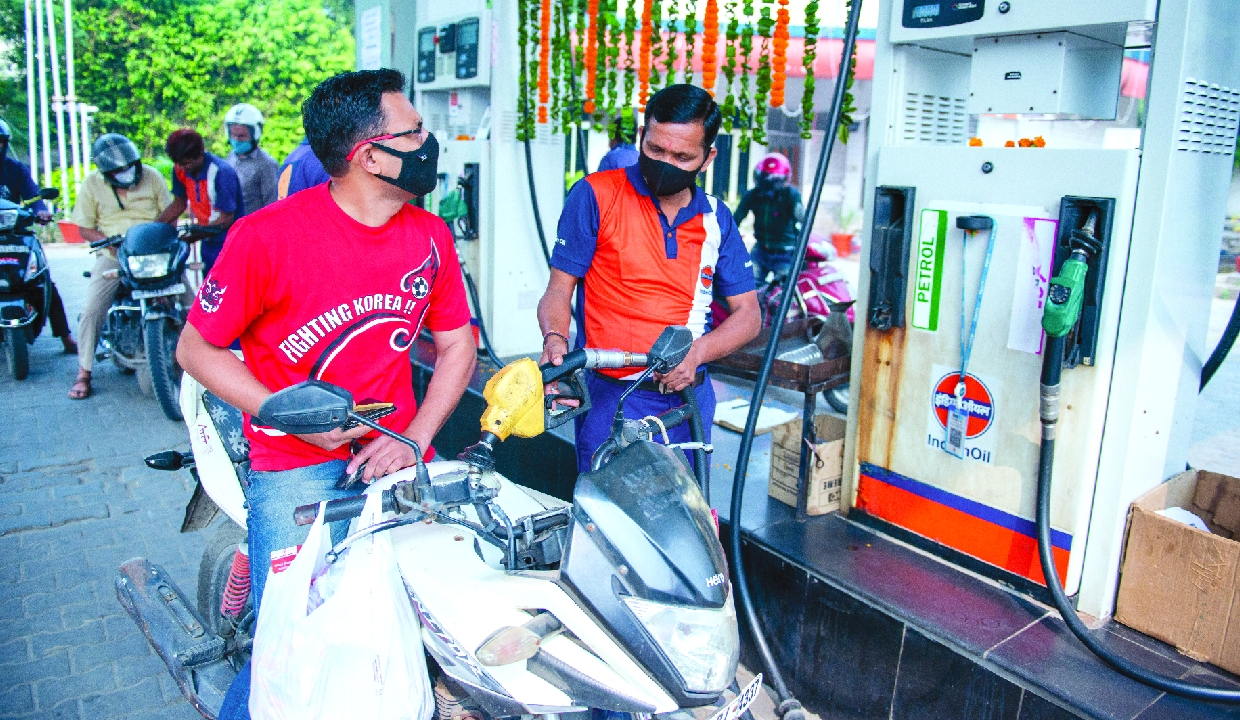
But behind the appeal lies a hard economic reality. India imports the vast majority of both its crude oil and gold, and when global uncertainty drives oil prices higher, every additional dollar spent on these imports increases pressure on the rupee, foreign exchange reserves and the broader economy. Without announcing the hike in oil prices, Modi has repeatedly appealed to people the need to reduce petrol and diesel consumption and conserve foreign exchange
But his message is loud and simple: to save dollars to protect India’s foreign exchange reserves, so that the rising price of crude oil can be checked or kept under control. This does not mean that people cannot buy gold in domestic markets for weddings and other purposes. Interestingly, gold prices dropped to Rs 600 on Monday.
Oil trade is in dollars and the prime minister’s exhortation is in that context. If countrymen heed to him, India ends up saving 32 billion dollars, which will be needed for maintaining a regular flow of fuel. Or end up paying more for the critical item, which sustains daily living.
India imports nearly all of its gold, spending over $72 billion on the metal last year — roughly $6 billion every month. Gold’s unique role as both a consumer good and a reserve asset makes this especially significant. India is also the world’s second-largest gold buyer, and since most of that gold is imported, every ounce is paid for in US dollars.
RBI data shows reserves rising close to $728 billion in February before slipping back to around $691 billion in April as global uncertainty intensified. Gold is typically regarded as a “safe haven” asset amid geopolitical crises, which is why investors flock to purchase it in times of conflict or unpredictability. The rise in gold demand led to the import of the item in large amounts, which put pressure on India’s currency as it increased dollar outflow and widened the country’s import bill.
If Indians sharply reduce gold purchases even for a single year, the impact on the economy could be substantial. A 30-40 per cent decline in gold imports could save the country an estimated $20-25 billion in foreign exchange outflows, while a 50 per cent reduction could conserve nearly $36 billion. India’s total import bill stood at $775 billion in the last fiscal year. The largest component was crude petroleum, with imports worth $134.7 billion. Gold imports surged to a record $72 billion, while vegetable oil imports stood at $19.5 billion and fertiliser imports rose to $14.5 billion.
Global crude oil prices have jumped from around $60 per barrel to nearly $126 per barrel in recent weeks and India imports 88 per cent of its oil needs, those saved foreign exchange matter. However, the current conflict is making conditions more complicated because rising crude oil prices are also fuelling concerns about extended inflation and increased interest rates worldwide.
The war has kept the Strait of Hormuz — one of the world’s most critical oil shipping routes — partially disrupted for weeks, triggering fears of prolonged supply shortages. India, which imports more than 88 per cent of its crude oil requirements, has been hit hard from the spike in global oil prices. The rupee has also weakened sharply against the US dollar in recent weeks.
India is one of the world’s largest importers of gold, and purchases rise significantly during weddings and festive seasons. Since gold is largely imported, higher demand increases dollar outflow and widens the country’s import bill.
At the same time, the IMF has projected that India’s current account deficit (CAD) could widen to $84.5 billion in 2026, roughly 2 per cent of GDP. A widening CAD means one thing: more dollars going out than coming in. And gold is a big reason for that. India imported about $72 billion worth of gold in FY26 — this is a 24 per cent jump from the previous year.
As far as avoiding foreign visits is concerned, data shows Indians spent approximately $31.7 billion (Rs 2.72 lakh crore) on international travel in the 2023-24 financial year. This represents a massive 25 per cent jump from the previous year, driven largely by younger travelers and a surge in leisure trips. Indians are now spending about $1.42 billion (Rs 12,500 crore) every month on foreign trips. Travel has overtaken education to become the single largest category of outward remittance for Indian individuals, accounting for over 53 per cent of all money sent abroad under the Liberalised Remittance Scheme (LRS).
Inventory of fuel adequate: Govt
New Delhi: A day after the Prime Minister’s address to the nation on cutting down fuel use, the Union Government on Monday assured citizens that adequate crude oil inventories are available and fuel supplies remain stable.
Addressing an inter-ministerial briefing, Joint Secretary (Marketing and Oil Refinery) in the Ministry of Petroleum and Natural Gas, Sujata Sharma said oil refineries are functioning at optimum capacity and there is no shortage of petrol, diesel or LPG. “There have been disruptions in the global energy supply chain across the world. Significant price volatility is being observed in the international market. However, the Government of India has taken several effective measures and has ensured that fuel supplies are maintained for the common consumer with minimal inconvenience,” Sharma said.
The ministry’s clarification comes amid panic buying and speculation in some regions over possible shortages of LPG cylinders and transport fuels. India has 60 days of crude oil, 60 days of natural gas and 45 days of LPG rolling stock says the Union Government clarified after fifth meeting of the Informal Group of Ministers on West Asia.