PM Modi dials Gulf as 149 Indians return home
Prime Minister Narendra Modi on Tuesday reached out to key Gulf leaders as West Asia plunged deeper into conflict. The PM personally spoke to Haitham bin Tarik, the Sultan of Oman, and Sheikh Sabah Al-Khaled Al-Hamad Al-Mubarak Al-Sabah, Crown Prince of Kuwait, expressing solidarity and voicing concern over attacks on their soil.
Over the past 48 hours, the PM has spoken with leaders across West Asia, including UAE’s president, Mohamed bin Zayed Al Nahyan and Israeli Prime Minister Benjamin Netanyahu. The conversations have focused on de-escalation, respect for sovereignty and the urgent need to prevent further civilian casualties.
India has deep strategic, economic and diaspora ties across the Gulf, and any escalation carries immediate consequences for its energy security, trade routes and the safety of nearly 10 million Indians living and working in the region.
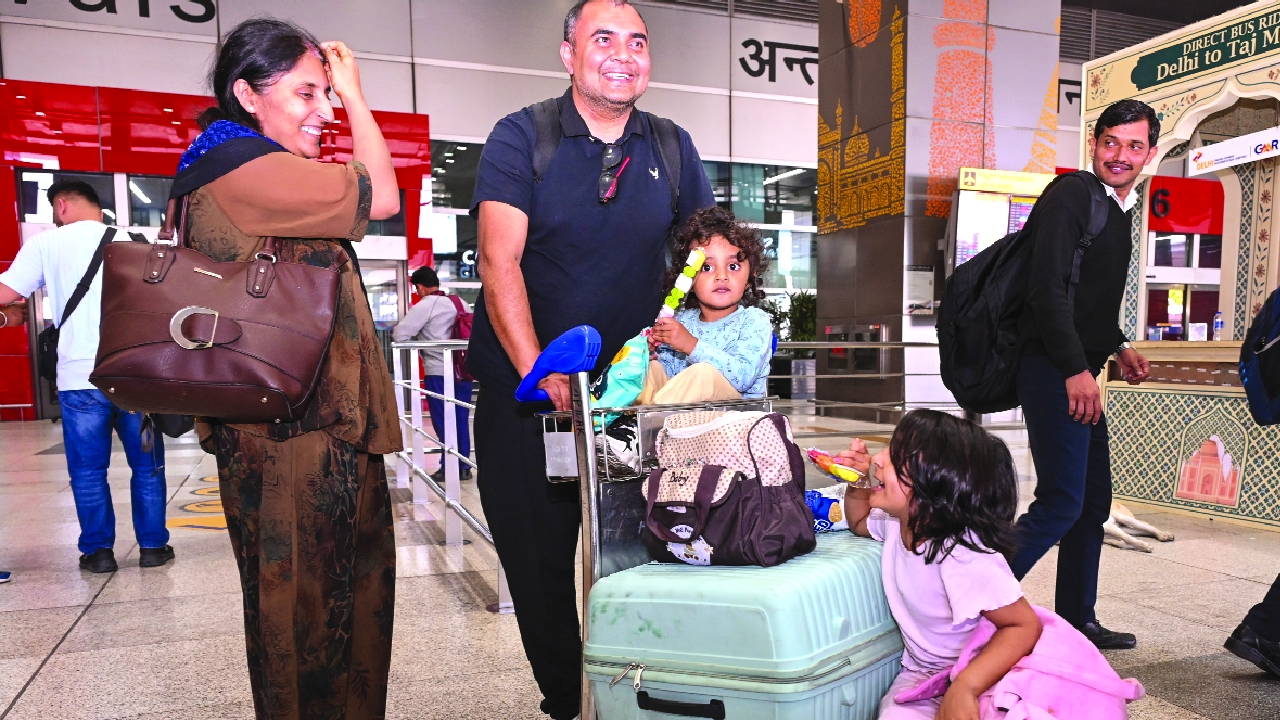
Meanwhile, as parts of the UAE’s efforts to reopen its airspace following days of regional hostilities, an aircraft operated by Air India landed at Indira Gandhi International Airport on Tuesday, bringing back 149 Indians and eight crew members from Dubai. The flight marked the first international arrival by an Indian carrier into the Capital since services were disrupted.
Inside the arrivals terminal, scenes of reunion unfolded quietly but powerfully. Families embraced. Some passengers wiped away tears. Others appeared drained after days of uncertainty in a region where missile strikes and airspace closures had upended travel plans overnight.
‘We were watching the news constantly. Every day of delay meant more hotel bills. It was mentally and financially stressful,’ said a tourist from the Noida, expressing gratitude to Indian authorities and the airline for arranging the return.
Several passengers described a tense but controlled atmosphere on the ground in Dubai. One traveller recalled hearing emergency sirens but said there were no direct incidents in her vicinity. ‘Security was strong. The situation felt stable, but the uncertainty about flights made everyone anxious,’ she said.
Operations resumed in a limited capacity at Dubai’s two main airports late on March 2, allowing restricted outbound movement. That partial reopening offered hope to thousands of foreign nationals stranded across the Gulf as commercial aviation across much of West Asia remained suspended or severely restricted.
The disruption was not confined to the UAE. Indians returning from Muscat in Oman described a comparatively calm environment but similar travel chaos. Flights were suspended for roughly 24 hours, affecting multiple carriers. ‘Life around us felt normal,’ said one passenger. ‘But when flights stop, you suddenly feel cut off from home.’
Another returnee, Mohammad Idris, said Muscat remained peaceful and comparable to daily life in Delhi, though uncertainty over flight schedules created concern among expatriates.
The human dimension of the crisis extends beyond tourists. Millions of Indian nationals live and work across the Gulf, forming one of the world’s largest expatriate communities.
The United States has also advised its citizens in multiple Middle Eastern countries to depart if commercial options are available, reflecting the broader international concern over the deteriorating security environment.
For now, as limited flights resume and governments scramble to assist nationals abroad, the scenes at Delhi’s airport capture the emotional toll of geopolitical conflict on ordinary lives. For those who have returned, relief outweighs fear - but uncertainty still hangs over the region they left behind.