PM dials world leaders on West Asia crisis
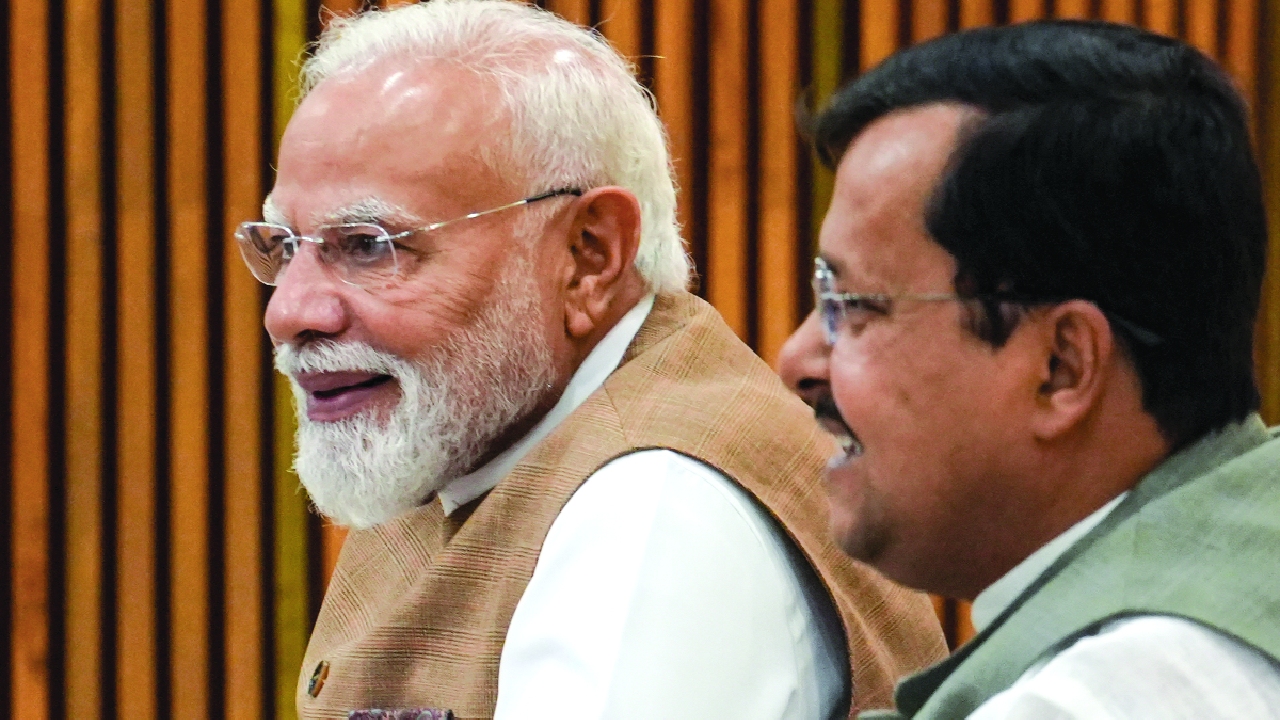
Prime Minister Narendra Modi on Thursday held a series of high-level calls with global leaders amid escalating tensions in West Asia, focusing on the security of the Strait of Hormuz and the wider implications of the ongoing conflict involving Iran, the United States and Israel.
Modi spoke with French President Emmanuel Macron, Oman's Sultan Haitham bin Tariq, Jordan's King Abdullah II, Malaysian Prime Minister Anwar Ibrahim, and Sheikh Tamim bin Hamad Al Thani of Qatar, stressing the urgency of de-escalation as hostilities intensify.
During his conversation with Macron, Modi called for dialogue and diplomacy to ease the crisis, with both leaders agreeing to maintain close coordination to support peace and regional stability. Macron echoed the need to prioritise diplomatic engagement as the conflict deepens.
The conflict, now in its third week, has seen expanding military strikes, including attacks on energy and civilian infrastructure, raising concerns over global supply disruptions and economic fallout.
A key focus of the discussions was the Strait of Hormuz, a critical maritime corridor through which nearly a fifth of the world's oil supply passes. Rising tensions have heightened risks to shipping and energy flows, triggering volatility in global oil and gas markets.
In his call with Sultan Haitham, Modi conveyed Eid greetings while underscoring the importance of restoring stability. Both leaders agreed that dialogue remains the only viable path forward. He also reiterated India's position on respecting sovereignty and appreciated Oman's role in facilitating the safe return of stranded foreign nationals, including Indians.
During his conversation with Sheikh Tamim bin Hamad Al Thani, the Amir of Qatar, Modi also extended warm Eid greetings to him and the people of Qatar. Calling him his brother, Modi reiterated that India stands in solidarity with Qatar and strongly condemned the attacks on the region's energy infrastructure. He expressed gratitude for the care and support provided to the Indian community in Qatar and hoped for peace and stability to prevail in the region. "We stand for safe and free navigation through the Strait of Hormuz," Modi said, sharing the conversation on his social media platform.
Speaking with King Abdullah II, Modi condemned attacks on energy infrastructure and warned of further escalation, while highlighting the shared commitment to ensuring uninterrupted movement of goods and energy supplies.
In a separate conversation with Anwar Ibrahim, Modi reiterated the need for early restoration of peace through diplomatic means.The outreach comes as India faces heightened vulnerability due to its dependence on energy imports routed through the Strait of Hormuz. Over 85% of its crude oil is imported, with nearly half transiting through the route, while strategic reserves cover just over a week of demand.
Recent attacks on energy infrastructure in the Gulf, including a strike on Qatar's Ras Laffan Industrial City, have further raised concerns. However, some relief has come from Iran allowing India-bound shipments to pass through the strait, easing immediate pressure.
The latest diplomatic engagement follows Modi's conversation a day earlier with UAE President Mohamed bin Zayed Al Nahyan, during which he condemned attacks on civilian and commercial infrastructure in the Emirates.
With the conflict widening and casualties crossing 800, strikes are increasingly targeting critical infrastructure across a region central to global energy production. In the absence of a diplomatic breakthrough, Modi's outreach underscores India's push for de-escalation as the crisis begins to directly threaten global energy flows and economic stability.