Own platform, not hardware
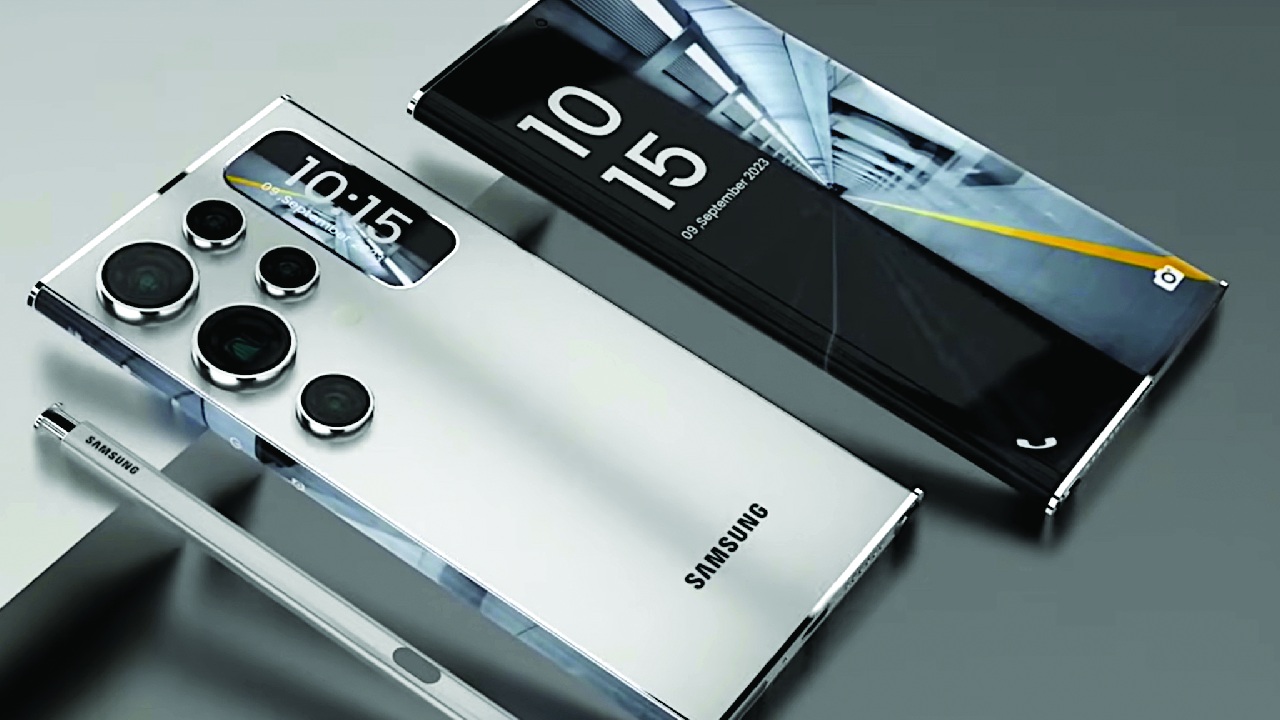
When Samsung recently unveiled the Galaxy S26 Ultra, experts and social influencers were not talking about features such as a camera upgrade, or faster-super charging. Despite the talk of Artificial Intelligence (AI), the buzz was not about it as a feature of the phone. Instead, the South Korean giant presented it as an operating layer that ran across phones. The current Ultra generation will come with Agentic AI, which implies that unlike chatbots that respond to prompts, the former acts proactively, and uses reason, planning, and tools to achieve complex goals with minimal human oversight.
For many, this AI move shows that Samsung is in a reassessment mode, and feels that scale in hardware will not be enough to maintain dominance in smartphones. Hence, there is a repositioning strategy that is in play. What the company now describes as an “AI OS” is not a replacement for the former operating system, Android. The former is more like an intelligence (intelligent) layer that sits across one user interface, and connects other devices. Thus, the AI-OS works within, and across devices, and cumulates data in a single place.
In other words, while the phone is positioned as the primary interface, intelligence travels from and to various places and destinations. For example, health data may come from a Galaxy watch to the handset, or content discovery may shift from the phone to a Samsung TV. Hence, the so-called contextual controls extend to connected appliances in two-way directions. The logic mirrors the operational-intelligence strategy that Apple has adopted for years. In both cases, the ecosystem that comprises the smartphones and other devices matter more than the individual products. Connectivity is, and holds, the key.
However, there are several factors to contend with. First, the Samsung strategic shift comes at a time when a structural change has engulfed the global smartphone business. Annual shipments have plateaued at 1.15-1.2 billion units, with growth increasingly concentrated in premium devices. In premium, ecosystem continuity, and software-led experiences outweigh incremental hardware improvements. Samsung, which ships around 250 million smartphones a year, and remains the world’s largest vendor by volume, hopes to transform breadth into stickiness. In effect, once the OS works across devices, customers will be ready to stick to the company, and its products.
TM Roh, president, Samsung’s mobile business, said earlier that the Galaxy AI is intended to be “meaningful and practical across devices.” It is an articulation of intent that underlines the firm’s movement beyond phone-centric thinking. Remember, apart from hundreds of millions of smartphones, Samsung sells tens of millions of TVs, and operates one of the world’s largest appliance businesses. Given this breadth of the ecosystem, AI, it hopes will provide the long-missing glue (or link) between the various categories that hitherto functioned in silos. Buy a Samsung, and get hooked to its S26 Ultra, and wearables.
Some experts feel that while the promise sounds grand, and vision seems futuristic, Samsung may arrive at the destination without the benefit of full-scale vertical integration. For, the ambition runs against a constraint that the firm cannot resolve easily. The AI-OS vision, for example, sits on top of Google's Android platform. The former, thus, relies heavily on Google’s AI models. Of course, Samsung controls the hardware, display tech, semiconductor integration, and the user interface. But, at the same time, Google is in-charge of the OS, app ecosystem, and foundational intelligence (user experiences).
Although, this division of powers traditionally had several benefits, including costs and tech-sharing. But today, as overall and complete control matters more in the smartphone cycles, it seems like a burden. As AI becomes the primary interface through which users search, create, and interact, the value migrates upward from the hardware to platform. In essence, the platform owners gain leverage. Hardware firms risk becoming the makers of ‘commodities’, regardless of scale. In this scenario, owning a platform is critical for future growth, and owning both the platform and hardware is a killer strategy.
One needs to remember that Google is no longer a neutral platform provider. Its Pixel smartphones may account for only low single-digit market share globally. But they shape the Android’s AI narrative. Pixel devices are often the first receivers of Google’s latest AI tools, and set expectations that the competitors, even the most dominant Samsung, need to match. This seems like a role reversal. The largest smartphone maker depends on a puny hardware player to stay competitive because of the platform effect. This dependence may, and can, limit the control that Samsung can exercise in the future.
Obviously, the Korean giant is aware of the hardware-platform standoff, and linked risks, and has initiated efforts to widen its AI partnerships, and veer itself away from Google. This includes the reported work with Perplexity. Experts feel that the current moves are less about consumer differentiation, and more about preserving optionality as AI platforms consolidate power. In such a situation, one is not sure if Samsung can meaningfully abstract intelligence, and platform-related essentials, away from Google’s core stack. The interplay between Samsung and Google, Samsung and other AI players, and Google and others, will define who will come on top.
There are pressures from below. Chinese smartphone makers have spent the past five years to compress the value gap. Fast charging, advanced camera hardware, and aggressive pricing have become prominent, especially in markets like India and Southeast Asia. The Chinese are building multi-device ecosystems. Samsung’s long lead in foldables offers insulation. It has dominated the category since 2019, and is estimated to hold over half of the global shipments. Yet, the volumes are meagre, and account for less than two per cent of Samsung’s annual figures. This is unlikely to remain uncontested.
Apple is expected to enter foldables. It has captured more than half of global revenues, even though it sells only a fifth of the total units. In this context, Samsung’s AI-OS push can be construed to be both ambitious, and a defence strategy. It is an attempt to bind a hardware portfolio into an ecosystem. The Galaxy S26 Ultra makes it clear that the firm understands the shift, and is working towards solutions. Whether the latter can navigate safely towards a future where it depends on competitor-platform provider, Google, will define the next phase of Samsung’s smartphone and consumer electronics empire.
The best way is to wean away from Google. But it is the toughest one. The easiest is to combine the competitors’ synergies. But it is the riskiest. Partnerships always need to be win-win.