NITI Aayog makes a big push for tourism
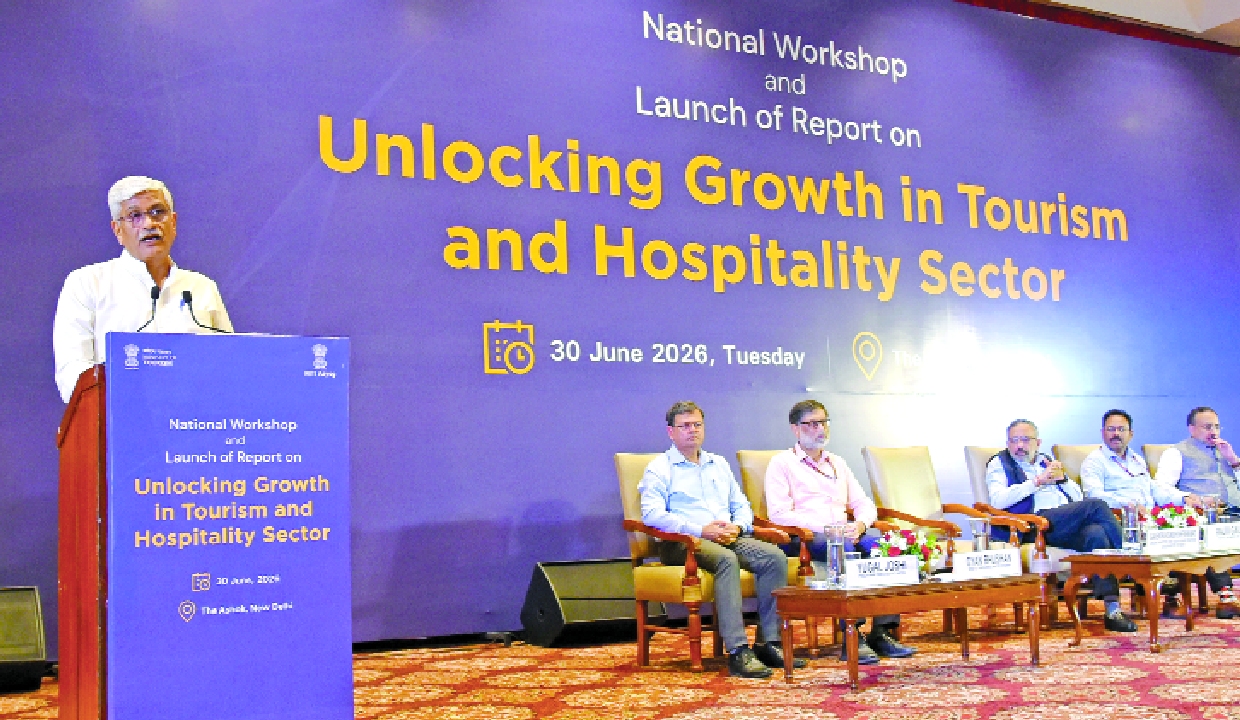
NITI Aayog has proposed a sweeping overhaul of India’s tourism regulations, recommending multiple-entry Visa-on-Arrival (VoA) for travellers from select countries, easier approvals for hotels, simpler licensing norms, removal of eating house license for eating establishments, extending the validity of bar licenses for five year, the re-registration requirement for vehicles relocated to another State for more than twelve months and and major regulatory reforms aimed at attracting investment and boosting international footfall.
The recommendations are part of NITI Aayog’s latest report - Unlocking Growth in Tourism and Hospitality Sector. It was prepared in consultation with the Ministry of Tourism and industry stakeholders. The policy think tank has argued that India’s tourism potential remains constrained not by a lack of demand, but by regulatory bottlenecks that delay investments and discourage international travellers.
According to the report, India welcomed around 20.6 million international tourists, including NRIs, in 2024. Foreign tourist arrivals stood at 9.95 million. Tourism contributed 15.73 lakh crore, or 5.22% of the GDP in FY24, supporting an estimated 84.6 million jobs.
It also called for rationalising e-visa categories into broader classes — tourism, business, short-term medical, short-term student and dependents — alongside strengthening digital and payment infrastructure through real-time verification, global payment integration and biometric checks.
The report said restrictive visa requirements depress inbound travel, citing research indicating reductions of up to 70 per cent. It noted that visa liberalisation and facilitative measures such as E-Visas and VoA have increased arrivals in other markets. Between 2008 and 2023, global pre-departure visa requirements declined from about 77 to 47 per cent, while e-visa usage rose sixfold. Evidence from countries from the Organisation for Economic Co-operation and Development (OECD) and the Association of Southeast Asian Nations (ASEAN) suggested that visa facilitation could raise tourist arrivals by up to 25 per cent.
India’s visa openness remained below that of its peers. Its UN Tourism Visa Openness Index score of 38.14 was below the global average of 40 and trailed countries such as Malaysia, Sri Lanka, Thailand and Indonesia. India currently offers visa-free entry only to Nepal, Bhutan and the Maldives, while VoA is limited to a small set of nationalities. Although the e-visa covers 175 countries, it is constrained by category complexity, short stays, annual caps and limited flexibility for repeat travel.
Among its biggest recommendations is the introduction of a 90-day, multiple-entry Visa-on-Arrival for travellers from selected countries. Eligible visitors would be able to obtain visas at designated airports and seaports without applying in advance, reducing paperwork and making India a more accessible destination.
It identified persistent frictions in the e-visa process, including fragmented portals requiring repeated data entry, extensive form fields, technical failures such as crashes and session timeouts, incompatibility with browsers and mobile devices, rejection of foreign card payments and weak customer support.
The report also noted that a poor interface has led to the proliferation of fraudulent lookalike sites. Industry concerns, including those raised by the World Travel & Tourism Council, were cited as highlighting reputational and operational costs. The report acknowledged recent measures such as expanded e-visa access, upgraded ports of entry, a multilingual helpline, an e-Arrival card and the National Payments Corporation of India’s UPI One World pilot, but said further improvements are required to ensure reliability. It concluded that a more facilitative entry regime, balanced with digital security, could increase arrivals, drive repeat visitation and raise tourism revenues.
It has also recommended removing the requirement for an Eating House Licence for food and beverage establishments, extending the validity of liquor licences and FSSAI registrations, and simplifying approvals through digital integration and single-window mechanisms.
It also proposed to extend the minimum validity of the All India Tourist Permit from 90 days to one year. And removal of the state-level entry taxes/ fees on motor vehicles already holding the All India Tourist Permit.
The NITI Aayog report also proposed to liberalise building standards for hotels to enhance usable floor area and reduce construction costs to boost the hospitality sector.