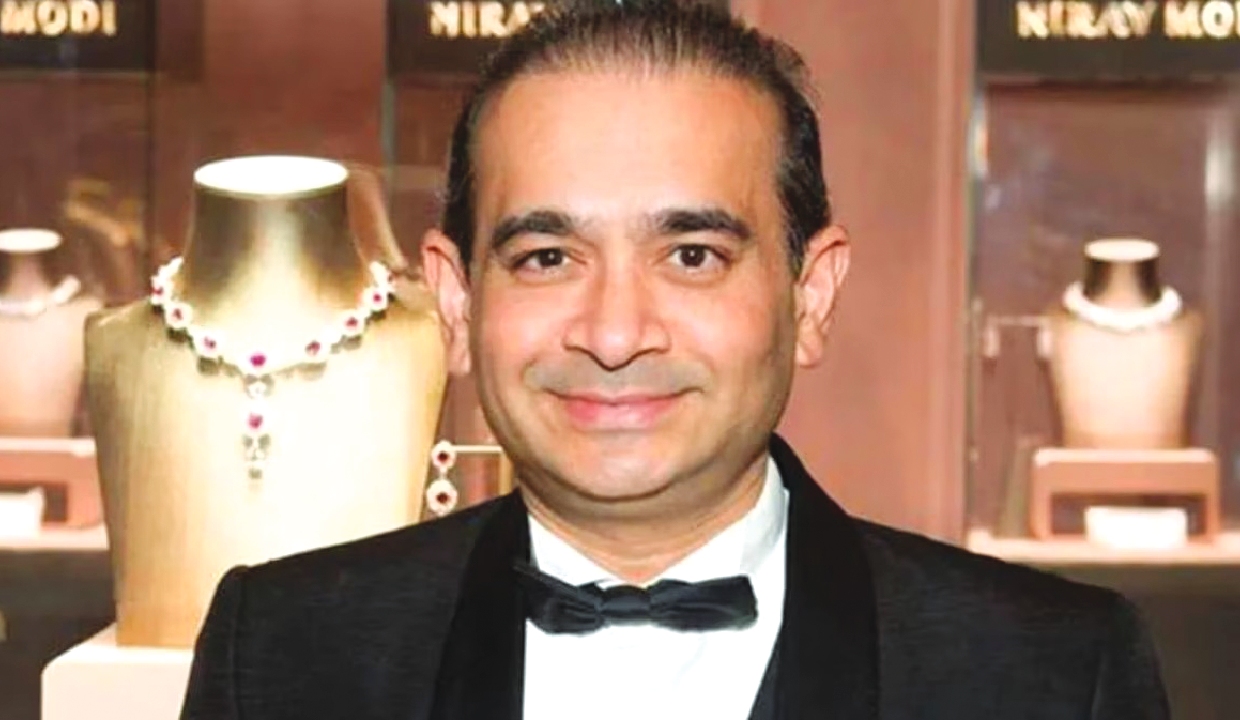
Nirav Modi’s case against extradition denied by UK court
The London High Court relied on the “quality of assurances” given by the Government of India in its note verbale while rejecting fugitive diamantaire Nirav Modi’s petition to reopen his case against extradition.
“In our judgment, it is sufficient for present purposes that the assurances are cognisable at a diplomatic level because the consequences of any breach would be extremely damaging to the relationship of mutual trust and confidence between India and the United Kingdom, particularly in the context of such a high-profile individual as Mr Modi,” the High Court said in its 18-page ruling.
A bench comprising Lord Justice Stuart-Smith and Justice Jay “refused” Nirav Modi’s plea to reopen his extradition appeal under the Criminal Procedure Rules on Wednesday, noting that diplomatic undertakings given by India between September 2025 and February 2026 “provided a sheaf of assurances that are comprehensive, detailed and reliable”.
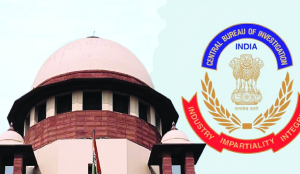
The pivot in the case was a ‘note verbale’ sent to the UK Government on December 2, 2025, by the Indian home ministry, signed by Joint Secretary Rakesh Pandey, assuring that Nirav Modi would not be interrogated by the Central Bureau of Investigation (CBI), the Enforcement Directorate (ED), the Serious Fraud Investigation Office (SFIO), the Directorate of Revenue Intelligence (DRI), or the Central Board of Direct Taxes (CBDT).
It also included a detailed plan for keeping Nirav Modi in Mumbai’s Arthur Road prison, the facilities he would have access to, and the legal help available to him during the trial.
“The assurances are specific and not general and vague (cf. those given in Bhandari). The assurances have been given by an official within the Ministry of Home Affairs competent to bind the GoI, as well as the State of Maharashtra and the five investigating agencies (which are also bound in our view by the terms of the assurances). Although India is not a signatory to UNCAT, we do not doubt that torture is not permitted under Indian law,” the Court held.
The United Kingdom and India have a long history of friendly bilateral relations. Although there is no evidence that the assurances will be formally monitored by the GoI, it is relevant that Mr Modi, under previous assurances given by the GoI, will have daily access to his lawyers and medical team. As we have said, the reliability of the GoI’s assurances was addressed in Bhandari but we do not understand this Court as in any way questioning its good faith,” the Court held.
A subsequent note verbale from the Indian High Commission on February 12, 2026, reinforced that the assurances are “binding and will be scrupulously adhered to by all the law enforcement agencies/authorities in India. Further, the assurances are also enforceable, including through courts in India, the court noted.
“Were it not for the statements made and assurances given by the GoI between September 2025 and February 2026, culminating in the note verbale to which we accord considerable weight, we would be minded to reopen this appeal in the exercise of exceptional power,” the court held.
Nirav Modi’s application to reopen the appeal rested on a February 2025 judgment in the extradition matter of defence consultant Sanjay Bhandari, in which the high court had termed the use of torture by Indian agencies to extract confessions as “commonplace and endemic”.
“When Mr Modi’s case came before us in the autumn of 2022, the material underpinning the decision in Bhandari was either not available or was not drawn to our attention.
“This court’s judgment in the Bhandari case presents a worrying picture of the use of proscribed treatment to obtain confessions, which was characterised as commonplace and endemic,” the UK court said in its judgment.
The judges distinguished the assurances in Nirav Modi’s case from those found wanting in Bhandari, where the unnamed “investigation agency” and the absence of express written commitments from individual bodies proved detrimental.
The “quality of assurance” premise was used by the European Court of Human Rights in the ‘Othman vs United Kingdom’ case to examine the specificity, candour, and practical enforceability of diplomatic assurances on 11 parameters, a senior official said.
“Turning to the Othman factors, the terms of the assurances have been disclosed sufficiently to the court. The assurances are specific and not general and vague (cf. those given in Bhandari),” the court held.