Mizoram seeks disaster status for African swine fever outbreak
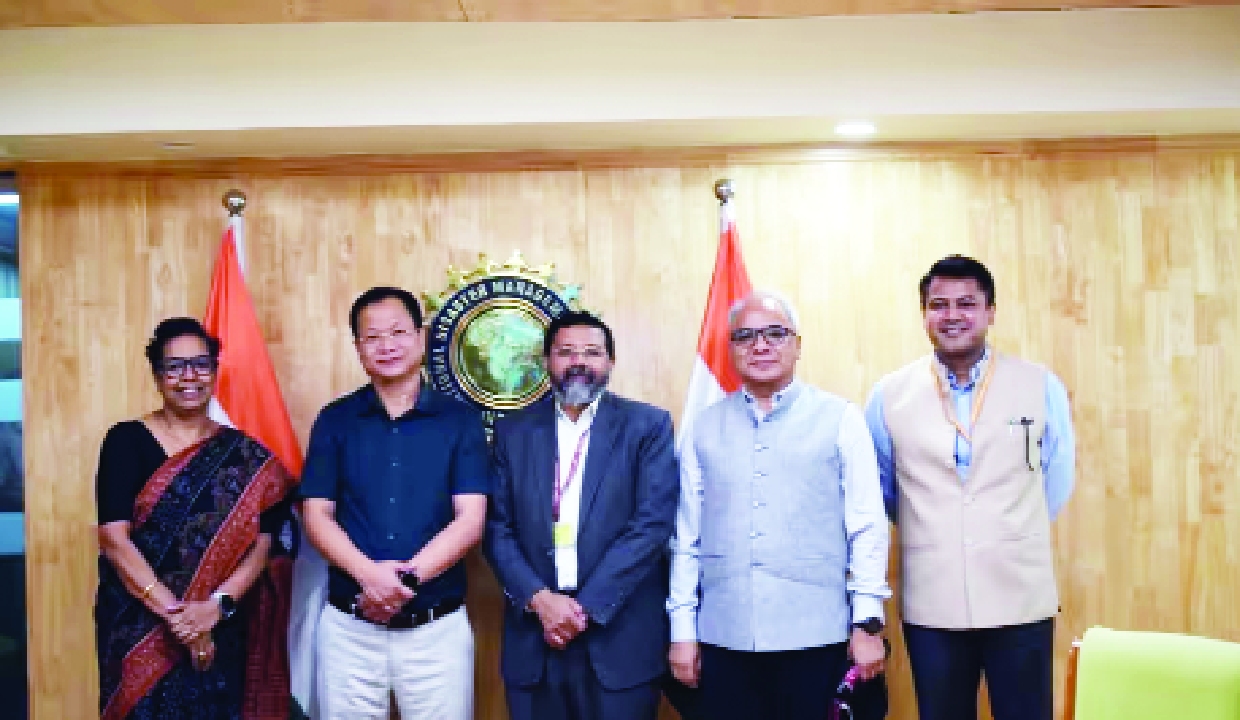
Mizoram Minister of State for Disaster Management and Rehabilitation Prof Lalnilawma met senior leadership of the National Disaster Management Authority in New Delhi on Sunday. The aim of the meeting was to review the State’s disaster risk reduction priorities, requesting that African Swine Fever (ASF) be notified as a disaster to enable financial assistance for farmers affected by the outbreak, while also discussing progress on earthquake and landslide mitigation proposals.
The meeting focused on Mizoram’s vulnerability to earthquakes, landslides, forest fires, and other natural hazards. Discussions reviewed the status of proposals submitted under the National Earthquake Risk Mitigation Programme and the National Landslide Risk Mitigation Programme, along with mitigation projects the state has put forward for consideration.
On African Swine Fever, Lalnilawma told NDMA that the outbreak has caused significant economic losses in the state and requested that the disease be formally notified as a disaster. Such a notification would allow the state to access disaster relief funds and other financial assistance mechanisms to support affected livestock owners and farmers. ASF has devastated pig populations across several northeastern States in recent years, causing severe economic damage to communities where pig farming is a primary livelihood.
The meeting also covered the strengthening of the State Disaster Management Authority’s institutional capacity, expansion of community-based disaster preparedness through the Aapda Mitra programme, and the promotion of greater regional coordination among the north-eastern states on disaster preparedness matters.
NDMA emphasised the importance of risk-informed land-use planning, resilient infrastructure, enforcement of building by-laws, and community awareness as essential tools for reducing disaster risk. The authority also encouraged Mizoram to continue strengthening school safety measures, including school disaster management plans and regular preparedness activities.
NDMA reaffirmed its commitment to extending technical guidance and institutional support to the Government of Mizoram for implementing disaster risk reduction initiatives.
Mizoram’s geographic and geological profile makes it one of India’s more disaster-prone states. It falls in Seismic Zone V, the highest risk category for earthquakes in India. The state’s hilly terrain and heavy monsoon rainfall make it acutely vulnerable to landslides, which have caused deaths, displacement, and infrastructure damage repeatedly in recent years. Forest fires are an additional seasonal hazard. The combination of these risks, set against limited financial and institutional capacity, makes central government support and the kind of technical engagement reflected in Sunday’s meeting particularly important for the State.
The Aapda Mitra programme, which the meeting discussed expanding, trains community volunteers in first response to natural disasters. It is designed to reduce the dependence of vulnerable communities on state and central response machinery during the critical first hours and days after a disaster, when professional rescue teams may not yet have reached affected areas.
The request to notify ASF of a disaster is part of a broader national debate about whether animal disease outbreaks that cause large-scale economic damage should be formally classified under the disaster relief framework, which would give affected states access to the State Disaster Response Fund and the National Disaster Response Fund for compensation and recovery support.