MHA bans new renewable projects near borders
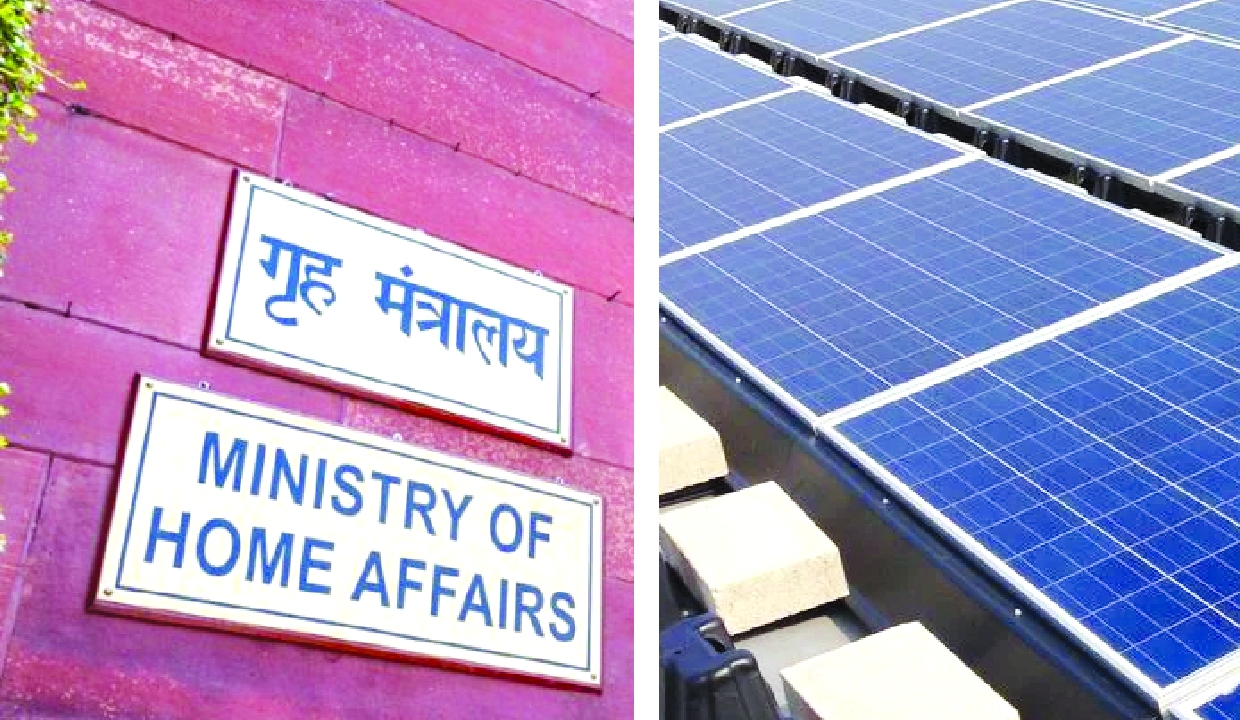
The Ministry of Home Affairs (MHA) has issued comprehensive national security guidelines that prohibit any new solar, wind and hybrid renewable energy projects within one kilometre of the Line of Control (LoC), Line of Actual Control (LAC), and the International Border.
The internal security division has set strict rules for hiring workers from countries that share a land border with India and added extra clearance steps for projects in larger sensitive zones. Any area within 50 km of the LoC, LAC, or International Border is now called a “sensitive area.”
All new solar, wind, and hybrid projects in these zones must get security clearance from the MHA before starting.
No project work is allowed within the first kilometre of these borders. Proposals for projects between 1 km and 50 km will be reviewed by both the MHA and the Ministry of Defence on a case-by-case basis. Projects within 20 km of the International Border also need a separate No-Objection Certificate from the Defence Ministry. The guidelines say applicants “should not engage engineers, staff, employees and labour from land border countries, especially Pakistan, Bangladesh and China,” for project work unless they have permission from the Central Government.
This is not allowed without Central approval, including a new security clearance from the MHA. Officials said these “uniform transparent guidelines” were finalised after a memo on June 5 and discussions with stakeholders.
The ministry said the new rules are meant to balance national security with making it easier to do business. Projects that already received MHA security clearance or a Defence Ministry NOC before these rules do not need to apply again. This change follows a big increase in applications for renewable energy projects in border districts like Jammu and Kashmir, Ladakh, Punjab, Rajasthan, Gujarat, Arunachal Pradesh, Himachal Pradesh, and Uttarakhand.
While large solar and wind parks help India reach its clean-energy goals, they can also create surveillance risks, offer vantage points for hostile mapping, and make it harder for security forces to move and respond quickly.
Recent drone activity near large projects along the western border has highlighted these issues. To address these risks, the guidelines require a strong security plan for approved projects. Developers must install anti-drone systems operated by the Central Industrial Security Force (CISF) and state police. Internal roads should be built so the military can use them if needed. Building heights will be limited based on how close they are to the border, and projects that could attract large crowds, such as hotels or permanent housing, are discouraged.
The Ministry of New and Renewable Energy has been asked to ensure that land allotments do not create long stretches of infrastructure along the international border.
By mid-2026, India’s renewable energy capacity exceeded 288 GW, with most new growth coming from solar and wind. Border areas like Rajasthan, Gujarat, and Ladakh have strong solar and wind potential, which attracts many developers.
The new rules do not stop development. Instead, they create a process that puts national security first without banning projects beyond the one-kilometre zone. By setting up a clear and uniform process, the MHA aims to reduce confusion between state land allotments, central security clearances, and defence needs. States still manage land allocation, but the Central government has the final say on security clearance in these sensitive areas.
The guidelines acknowledge that building energy infrastructure near the borders now involves security concerns, not just economic or environmental ones. With new threats like drone attacks and cyber warfare, projects near disputed borders can pose risks for both civilian and military use. Still, India remains committed to its energy transition and renewable goals. Projects outside the restricted zones, or those that meet the new clearance rules, will continue to support the national grid.
Now that the guidelines are in place, developers with pending applications for projects in the 1-50 km zone must send their proposals to the Ministry of New and Renewable Energy. The ministry will then forward them to the MHA and, if needed, the Defence Ministry.