Marvels of India - Chittorgarh
Chittorgarh is a remarkable example of strategic defence, resilience, and long-term security planning.
Why Chittorgarh Was a Security Marvel
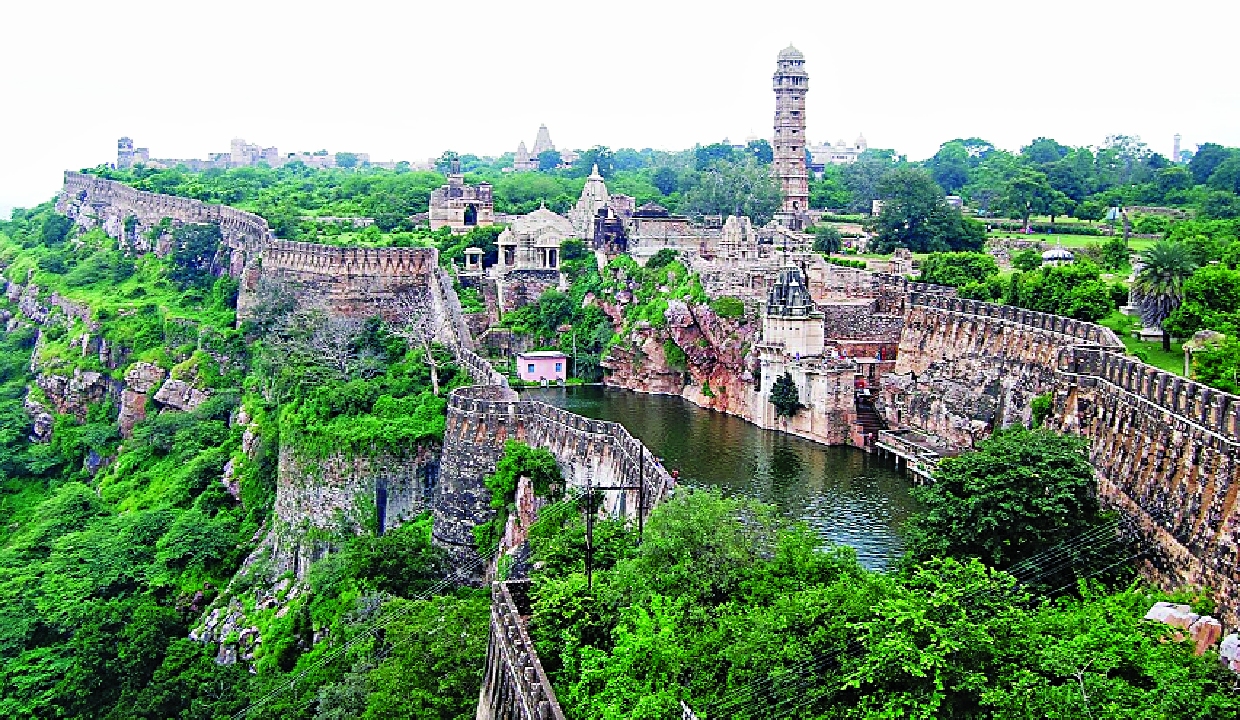
Built atop a steep hill rising about 180 metres above the surrounding plains, its location provided a commanding view of the surrounding region, allowing defenders to detect approaching armies well in advance. Access to the summit was deliberately difficult, with a winding ascent protected by a series of heavily fortified gates known as pols. An attacking army had to pass through these successive defensive barriers while exposed to attacks from above. This created a powerful layered defence system.
Security Through Self-Sufficiency
What makes Chittorgarh remarkable is that it was not merely a fort—it was the political heart of Mewar for centuries. Different rulers expanded its walls, palaces, reservoirs, gates, and defensive systems. Under rulers such as Rana Kumbha and Rana Sanga, Chittor became one of the most powerful military centres in northern India.
One of Chittorgarh's greatest strengths was its ability to withstand long sieges. The fort contained numerous reservoirs, tanks, wells, and water-harvesting structures capable of sustaining a large population during prolonged conflicts. In military terms, Chittorgarh was not simply a fort; it was a self-sustaining defensive city.
The Lesson for National Security
Chittorgarh endured three famous sieges—by Alauddin Khalji in 1303, Bahadur Shah in 1535, and Akbar in 1567-68. While the fort was eventually captured on these occasions, its prolonged resistance demonstrated an important security principle: National security is not only about military strength; it is also about preparedness, resilience, logistics, and the ability to endure under pressure.