Mandate, uncertainty, same rates
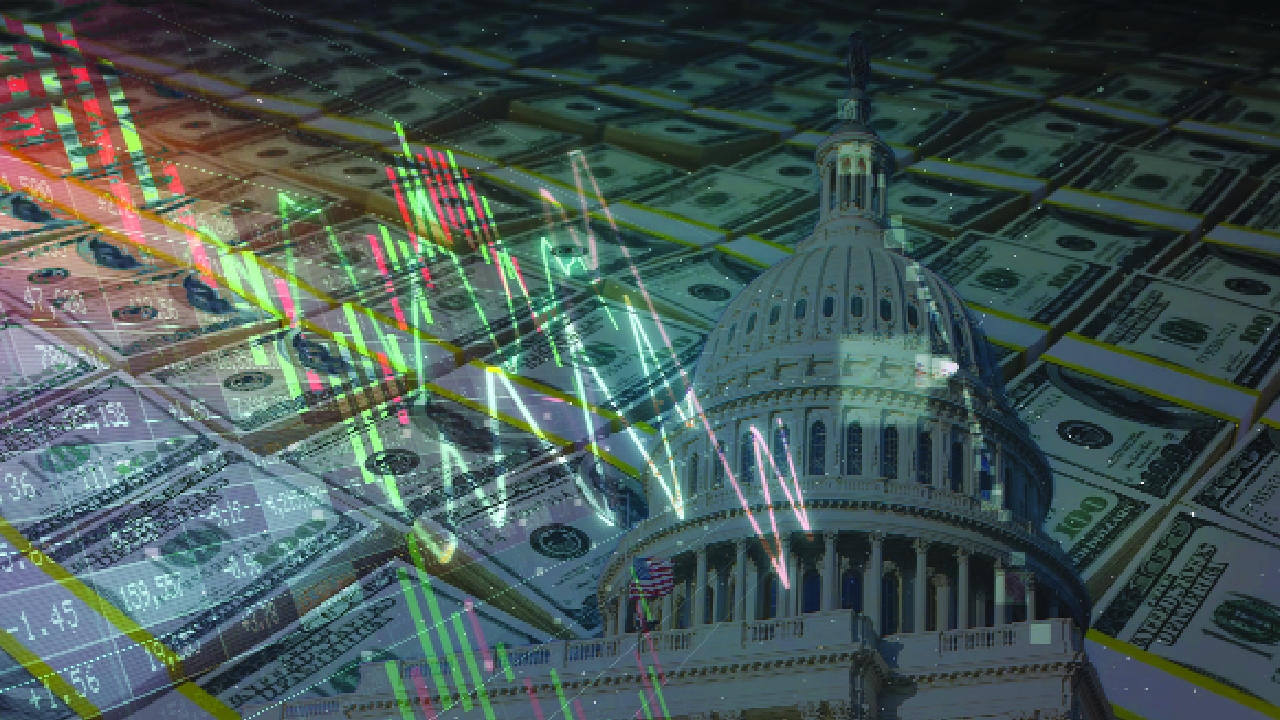
There are several positives about the American economy, which include higher-than-predicted GDP growth, higher business fixed investments, and stable consumer spending. There are a few doubtful less-than-positive trends, which include low job gains that keep joblessness “little unchanged,” and elevated inflation. Based on a monetary mantra that aims to check prices, and ensure maximum jobs, the US Federal Reserve Board kept the interest rates unchanged. This is contrary to the expectations of President Donald Trump, who has criticised, even threatened, Fed chair, Jerome Powell, for not cutting rates fast enough. The conundrum between executive and regulator continues.
On the jobs front, there are confusing signals. Job gains have happened, but on the lower side. However, the unemployment rate, 4.4 per cent in February 2026, remains almost the same since late last Summer. What explains a contradictory mix of job growth, though low, and little changed joblessness are several factors such as “a decline in the growth of labour force, due to lower immigration, and (lower) labour force participation.” Hence, there are fewer outsiders who seek jobs, and more Americans wish to opt out of jobs.
Immigration numbers are a direct result of Trump’s ‘America First’ policies, which make it more difficult for foreigners to get jobs. One of the foremost examples is in IT, software, and tech, where high visa fees keep inflows in check. New H-1B visa rules will impact the trends more visibly from March 2026 onwards. The reasons why Americans are not interested in jobs may be because of multiple trends. Educated graduates and postgraduates do not find jobs that suit them, either financially or in terms of satisfaction and skills. In highly-paid segments, firms have slashed jobs at the mid- and higher-levels, and hired people at the lower-levels, or with different skills.
Other indicators on the job front, such as job openings, layoffs, hirings, and nominal wage growth, “show little change in recent months,” according to Powell’s speech after the latest interest rate decision. The unemployment rate, states the Fed Board, will remain at 4.4 per cent by the end of the year (2026), and “edge down thereafter.” Since maximum employment is a part of the twin objectives of the Fed, rate cuts this year may happen possibly once, and the regulator will wait till jobs perk up at the end of this year, or early next year.
Although inflation has “eased significantly from its highs in 2022,” it remains higher than the Fed’s internal target and goal of two per cent. Over the past 12 months till February 2026, prices rose by 2.8 per cent. If one excludes the volatile food and energy categories, the figure was three per cent. With the recent increase in energy costs, as global crude oil prices zoomed from around $60-65 to more than $110, the price situation seems challenging, and quite uncertain. Indeed, the trade-related tariffs boosted the price rises in the goods sector.
In a landmark ruling, the Supreme Court deemed the tariffs imposed under the president’s emergency powers illegal. But Trump introduced tariffs of 10 per cent under the trade Act, and wants to impose higher ones under Section 301 investigations that were ordered against 16 nations, including India. These may keep the goods’ prices high, and coupled with energy costs may keep the overall inflation higher than the Fed’s benchmark. Despite the recent fuel added to the inflation fire, Powell stated, “Most measures of longer-term expectations remain consistent with our 2 per cent inflation goal. The median projection… for… this year is 2.7 per cent, and 2.2 per cent next year….”
However, there are several risks to these estimates, and much will depend on the state of the Iran war. Powell admitted that the “implications of the events in the Middle East for the US economy are uncertain. In the near term, higher energy prices will push up overall inflation, but it is too soon to know the scope and duration of the potential effects on the economy.” Hence, the Fed will wait for the incoming data, monitor the evolving outlook, and analyse the balance of risks before it decides on “extent and timing of additional adjustments.”
During the meeting of the members of the Fed Chair, which was held before the interest rate announcement, the participants “wrote down their individual assessment of an appropriate path of the federal funds rate, under what each participant judges to be the most likely scenario for the economy. The median participant projects that the appropriate level… will be 3.4 per cent at the end of this year, and 3.1 per cent at the end of next year,” said Powell. But these are individual forecasts, subject to uncertainty, and they are “not a Committee plan or decision.” At present, the Fed rate is 3.5 per cent to 3.75 per cent.
Despite the challenges, growth remains high, and seems to expand at a “solid pace.” The Fed expects GDP to grow by 2.4 per cent this year (2026), and 2.3 per cent next year, somewhat stronger than projected in December (2025).” The growth in the past two quarters, and predictions for the future, surprised most experts. The earlier consensus was that growth will dip due to high Trump’s tariffs, which has not happened as consumer spending remains strong. But higher inflation, even if temporary, and lack of jobs, may change this scenario. Neither economics nor monetary policy is, therefore, a “preset course.”
However, Powell refused to use the word ‘stagflation,’ or an era of lower growth and higher inflation, in his speech, or in the answers at a press conference. “I always have to point out that this was a 1970 term, at a time when unemployment was in double figures, and inflation was really high. We actually have unemployment close to longer-run normal, and we have inflation that is one percentage point above that. I would reserve the term stagflation for a much more serious set of circumstances.” Productivity gains may make up for lower growth.
In effect, what one may witness in the US economy over the next few quarters may be higher-than-expected inflation coupled with higher-than-predicted GDP growth. Instead of signs of stagflation, there may be visible trends of a slightly-overheated economy. If this happens, the Fed, instead of lowering rates this year, or possibly the next one, may need to keep them intact, or even raise them once. The world is riddled with ongoing uncertainties and, hence, it is full of possibilities.