Lokpal in dilemma over Mahua Moitra case
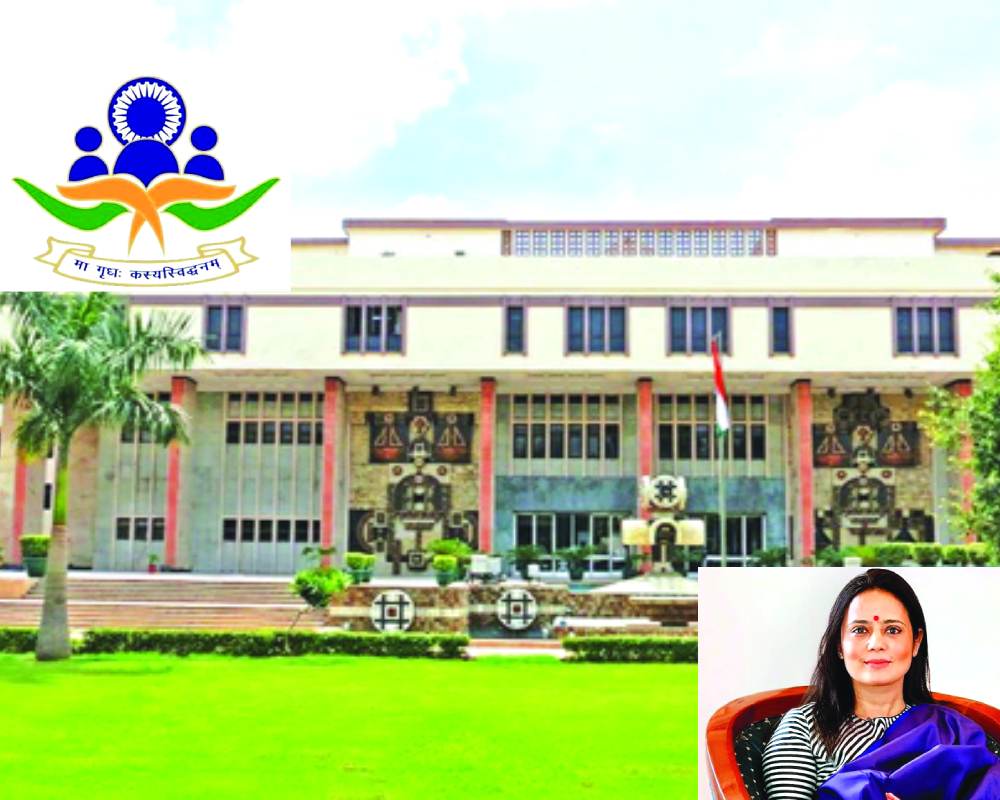
The Delhi High Court recently set aside the Lokpal’s order granting the CBI sanction to file a charge sheet against the Trinamool Congress (TMC) MP Mahua Moitra in the ‘cash-for-query’ case. While the ruling provides significant legal relief to Moitra, it serves as a notable judicial rebuke to the Lokpal institution regarding its adherence to procedural mandates.
The December 19, 2025, judgment has raised questions on the working and independence of the anti-corruption body, which was born out of a massive public movement of 2011. The High Court ruled that there was a “clear departure” on the part of the Ombudsman from the procedures mandated under the Lokpal and Lokayuktas Act, 2013.
The two-judge Bench found that the Lokpal had erred in its interpretation of the Act, specifically regarding the requirement to consider the public servant’s comments before granting sanction.
While there are hard-hitting observations in the judgment against the anti-corruption body, the findings of the High Court have been endorsed by some legal experts who said the Lokpal went beyond the limited powers conferred to it.
Senior Advocate Vikas Pahwa observed that the High Court has rightly held that the Lokpal fundamentally misapplied the statutory scheme laid down under the Act.
He said the sanction order was issued without properly considering the statutory requirement under Section 20(7)(a) that the public servant’s comments must be obtained and considered before sanctioning prosecution.
The High Court, Pahwa said, had further observed that Mahua Moitra’s submissions were effectively ignored. The Lokpal, he said, attempted what the High Court described as “statutory ingenuity or re-engineering” — splitting the sanction process into multiple stages (initial sanction followed by a second sanction after investigation/charge sheet), a procedure for which there is no support in the plain text or structure of the Act. “By doing so, the Lokpal went beyond the limited powers conferred to it. The Act does not permit an oral hearing or allow the public servant to adduce further documents at the sanction stage,” the Senior Advocate said.
At that stage, only written comments are envisaged; giving a “mini-trial” or re-hearing is beyond its jurisdiction, he said, and elaborated that the High Court found that the procedure adopted was “wholly alien” to the Act, inconsistent with its scheme, object, and express provisions. He said that because of these legal defects, not because of any finding on the merits of the allegations, the sanction order was set aside. The High Court, the Senior Advocate said, has directed the Lokpal to reconsider the grant of sanction afresh, strictly following the statutory procedure.
“I feel this judgment is significant because the Delhi High Court has not quashed the proceedings on merits but has intervened solely on procedural illegality. The Court found that the Lokpal’s order directing investigation suffered from a clear departure from the procedure envisaged under the Lokpal and Lokayuktas Act, 2013. By emphasising that statutory safeguards cannot be diluted or bypassed, the Court has strengthened institutional accountability and ensured that investigative powers are exercised lawfully, transparently and fairly,” Pahwa said. Agreeing with the verdict of the High Court, another Senior Advocate Siddharth Luthra, said there was a basic error in the order of the Lokpal, and Moitra used the remedy of a writ petition to overcome it.
“When there is a basic error of jurisdiction or breach of natural justice, a writ petition is maintainable in the High Court,” he said.
The critical part of the High Court judgment, as some said, is that the “watchdog” (Lokpal) has been reminded that it must follow its own rulebook and there is a directive to the quasi-judicial body headed by a retired Supreme Court judge to reconsider the sanction “strictly in accordance with the law,” within a month. This directly calls into question whether the institution is working independently or has become, as Moitra’s petition argued, a “rubber stamp” for investigative agencies.
The decision of the High Court has put the Lokpal in a piquant situation, and there is a possibility that the matter may reach the Supreme Court with the Original Complainant, according to Pahwa, making an attempt to defend the interpretation of the Act and the Lokpal’s “quasi-judicial” powers. The complainant may seeka stay of the High Court order.
The stand of the complainant will become clear in the coming days. However, as of now, Moitra’s strategy has been successful. By challenging the process rather than the merits of the case, she has effectively stalled the CBI’s ability to file a charge sheet and forced the Lokpal to restart a critical part of its work.
The High Court judgment has shifted the narrative. For now, the story isn’t about the “cash-for-query” allegations; it’s about the Lokpal of India, whose chairman is the former judge of the Supreme Court, allegedly failing to follow the law.
The use of the phrase “statutory ingenuity or re-engineering” by the High Court in its judgment must be disturbing for the Lokpal, which must be working out a remedy to maintain public confidence in the anti-corruption body.
A way forward could be that the Lokpal can still grant sanction for a charge sheet by the end of January 2026, by properly considering the directive of the High Court. The loopholes have to be plugged, and the law has to be applied in its true spirit.
So, the Lokpal has both the options, either wait for the Complainant to get redressal from the Supreme Court (if the Complainant takes such a legal step) or take corrective measures as pointed out by the High Court.
While it is expected that the Lokpal would do everything to protect its reputation, Moitra must be working hard with her legal team to meet the coming challenges in the matter, in which the allegations were serious and grave. The Complaint was filed before the Lokpal by Nishikant Dubey, a Member of Parliament from the BJP, alleging misconduct and acts of corruption on the part of Moitra. Dubey, who represents Godda Lok Sabha Constituency in Jharkhand, filed the complaint based heavily on a letter and evidence provided to him by Moitra’s former close acquaintance, a lawyer.
The High Court in its judgment noted the five allegations, which included that the TMC MP allegedly shared her Lok Sabha Member Portal login credentials with a businessman based in Dubai, enabling him to access the portal and post Parliamentary Questions in her name. Secondly, Moitra allegedly received Rs 2 crores in Indian and foreign currency from him in lieu of asking Parliamentary Questions furthering his business interests, and had also allegedly received Rs 75 lakhs, prior to the 2019 Lok Sabha elections.
Thirdly, of the 61 questions asked by her, approximately 50 allegedly pertained to the business interests of the Dubai-based person, and fourthly, Moitra allegedly demanded and accepted various gifts, luxury items, travel expenses, holidays, and logistical assistance for domestic and foreign travel from him. Lastly, she sought and received assistance from the businessman in the renovation of her officially allotted bungalow at New Delhi, including architectural drawings prepared by the in-house team of his company, allegedly in violation of CPWD norms.
Since the charges against Moitra, the Krishnanagar MP from West Bengal, are serious, the case needs to reach a logical conclusion.
The High Court’s decision is a major wake-up call for the Lokpal. While the High Court didn’t say Moitra was innocent of the corruption charges, it ruled that the Lokpal bypassed mandatory procedures by not following the specific legal steps required to charge her.
By stopping the CBI’s current progress, the High Court has sent a clear message: even a powerful anti-corruption body must follow its own rules and respect the legal rights of the person being investigated. Now, the Lokpal must decide whether to wait for the Complainant to fight his case in the Supreme Court or restart the process properly to ensure their actions are legally valid.