LG approves Master Plan for Delhi 2047
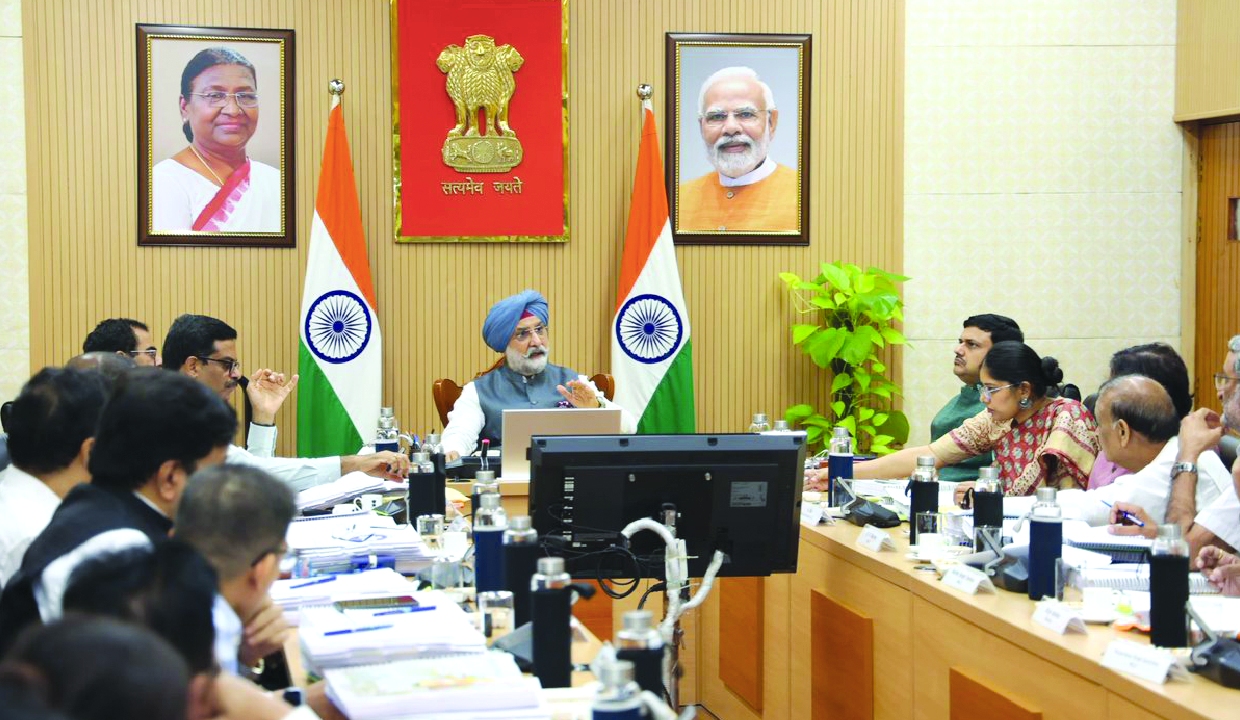
Lieutenant Governor Taranjit Singh Sandhu approved the Master Plan for Delhi (MPD) 2047 at the Delhi Development Authority (DDA) meeting on Wednesday. Earlier, the DDA was working on MPD 2041 after the expiry of the MPD 2021, which has now been changed to MPD 2047 to align with the Union Government’s vision of Viksit Bharat 2047.
Announcing the approval on social media, Sandhu posted on X: “The new Master Plan for Delhi 2047 was approved for further consideration, aligning Delhi’s long-term vision with Hon’ble PM Shri @narendramodi Ji’s mission of #Viksit bharat@2047. Deliberated on a roadmap for sustainable and inclusive urban growth, with greater Ease of Doing Business, Ease of Living, and a cleaner, greener capital for all.”
The document will end a five-year delay and set the course for how the Capital grows, houses its population and manages its environment for the next two decades.
The plan will now be sent to the Union Ministry of Housing and Urban Affairs for final approval and subsequent notification. The first master plan for Delhi was promulgated in 1962 under the Delhi Development Act of 1957, followed by the master plans of 2001 and 2021, the last of which was also delayed and eventually notified in 2007.
A master plan is a long-term planning document that is supposed to provide a conceptual layout to guide a city’s future growth and development. It includes analysis, recommendations and proposals covering a city’s population, economy, housing, transportation, community facilities and land use.
With Delhi’s population projected to grow significantly by 2047, the Master Plan adopts an integrated approach towards housing, economic growth, mobility, environmental sustainability, infrastructure, heritage conservation, urban regeneration and citizen-centric governance.
The new plan is expected to move the needle forward on some of Delhi’s most contested urban questions, including the land pooling policy meant to unlock large tracts of Outer Delhi for planned development; the Green Development Area (GDA) policy; and the fate of unauthorised colonies in the Yamuna’s O-Zone, an ecologically sensitive floodplain housing over five lakh people, which the Delhi High Court ruled in May cannot legally have residential colonies.
Apart from this, important decisions included, Policy for Reconstruction and Redevelopment of Old DDA-built Two-Storey Units, and Change of Land Use for development of Metro Depot of Rithala-Kundli Corridor in Narela Sub-City for expansion of metro corridor. Amendments to Unified Building Bye-Laws (UBBL)-2016 were also approved to reduce compliance burden and improve Ease of Doing Business.