Lebanon’s Christians face Easter displacement crisis
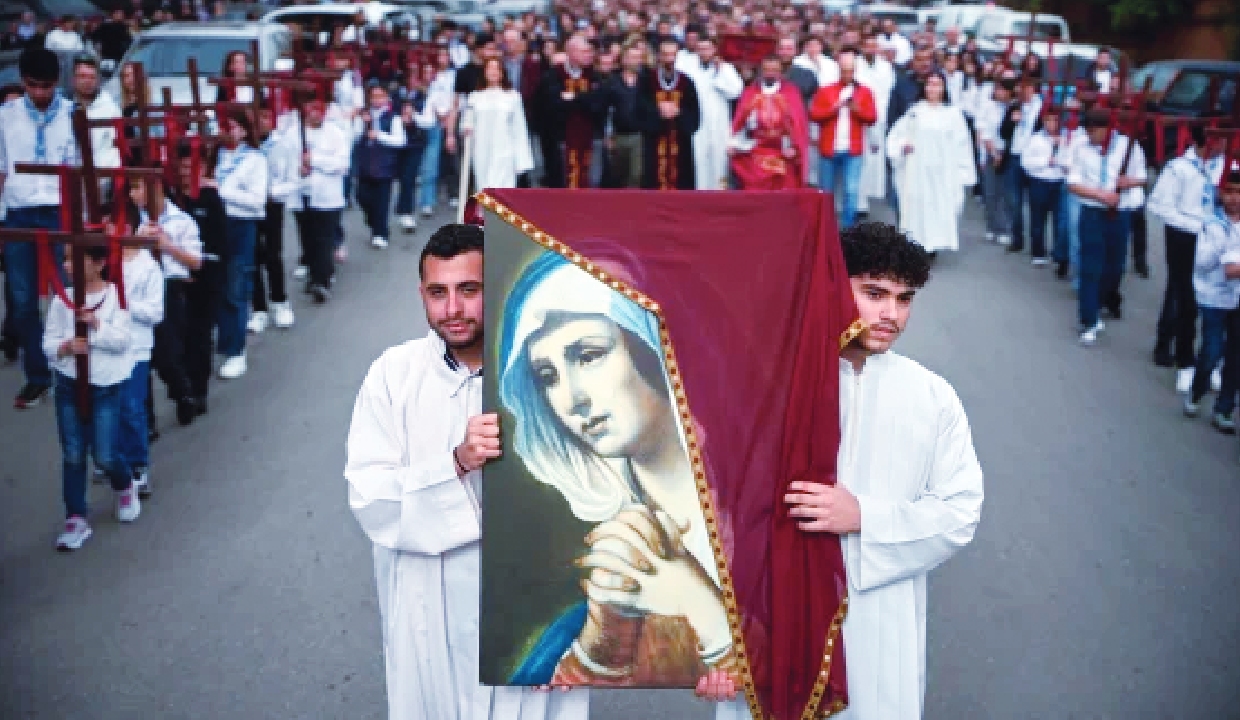
It was not how the Rev Maroun Ghafari had envisioned this Holy Week - for years, he had held Easter sermons in his predominantly Christian village of Alma al-Shaab in southern Lebanon, near the border with Israel.
This year, he is preaching from a Beirut suburb, beside a cardboard cutout depicting his church in Alma al-Shaab, now caught in the crossfire between Israeli forces and Hezbollah fighters.
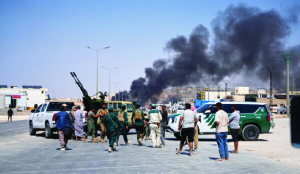
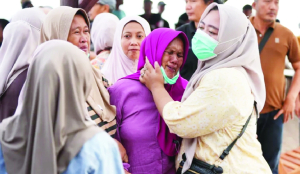
Since hostilities erupted last month between Israel and Lebanon’s Iran-backed Hezbollah militant group — in the shadow of the wider, US-Israeli war on Iran — over 1,400 people have been killed in Lebanon, and more than 1 million have been forced to flee their homes.
Among those displaced from the war-torn south are thousands of Christians. They now find themselves far from their ancestral churches in Lebanon, where Christians have maintained a strong presence through centuries of Byzantine, Arab and Ottoman conquest and plenty of modern-day crises.
Christians are estimated to make up around a third of Lebanon’s population of roughly 5.5 million people. With 12 Christian sects, the country is home to the largest proportion of Christians of any nation in the Arab world.
Christian villagers who stayed behind in southern Lebanon, ignoring Israel’s blanket evacuation warnings for the area, have increasingly hardened into enclaves surrounded by fierce clashes.
And though villagers in Alma al-Shaab had been uprooted before, in the 2024 Israel-Hezbollah war, this time around, they were adamant they wouldn’t leave, even as airstrikes came closer and closer.
The villagers huddled in their church for protection as Israeli warplanes pounded large swaths of southern and eastern Lebanon while Israeli troops stepped up a ground invasion and Hezbollah kept firing rockets at Israel.
In his annual Easter homily, Patriarch Beshara al-Rai of Lebanon’s Maronite Church blamed both Hezbollah and Israel for the suffering wrought by the war.
“The country is going through a critical situation due to Iranian interference through Hezbollah and Israeli aggression,” he said. “Our hearts bleed for the victims of the conflict imposed on Lebanon.”
Ghafari’s brother, 70-year-old Sami Ghafari, was among the villagers who sought refuge at the church in Alma al-Shaab.