Leader of Myanmar’s military-backed Govt seeks political legitimacy in Thailand visit
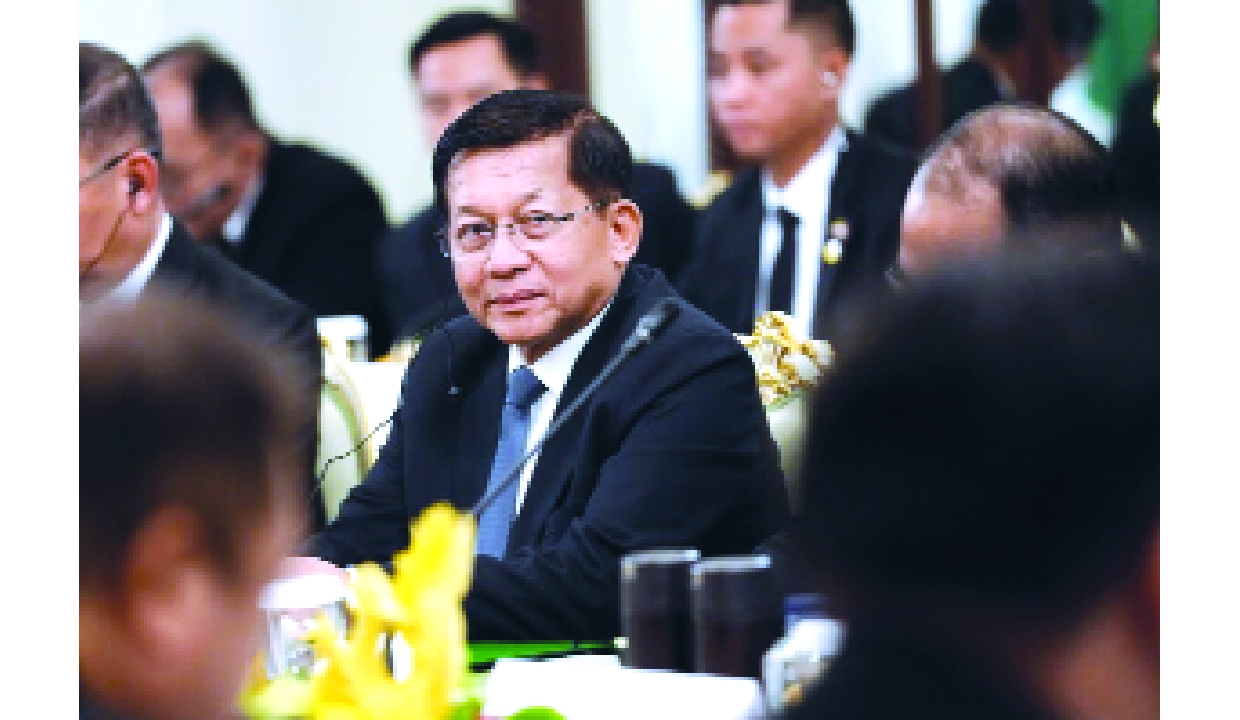
The head of Myanmar’s military-backed Government arrived in Thailand on Thursday for an official visit that could serve as a major stepping stone in his effort to win political legitimacy more than five years after seizing power from an elected civilian government.
President Min Aung Hlaing’s two-day visit with members of his Cabinet included meetings with Thai Prime Minister Anutin Charnvirakul and other officials at Government House, where several memorandums of understanding were signed covering Myanmar migrant workers, water quality management in rivers shared by the two countries and space technology for Earth observation.
Following the meetings, the two leaders were scheduled to deliver speeches at a Thailand-Myanmar Business Forum.
At the meeting with Anutin, Min Aung Hlaing sought to reassure Thailand that his government was restoring stability and steering Myanmar toward democracy.
“Myanmar has now reestablished itself on the path to democracy and is moving toward a better future,” Min Aung Hlaing said. “As the new government, we have now begun working on national stability, peace, and national reconciliation.”
The visit has drawn criticism from activist groups such as Justice For Myanmar, which stated that the trip lends “false legitimacy” to Min Aung Hlaing and the ruling generals.
Min Aung Hlaing took a significant step toward would-be political rehabilitation in April when he was sworn in as president following an election held in phases in December and January. Critics dismissed the polls as a sham designed to consolidate the military’s grip on power while ostensibly restoring civilian rule.
The diplomatic outreach is the latest in a series of moves to re-engage with countries in the region and the international community after relations became frayed or frosty following Min Aung Hlaing’s ousting of Aung San Suu Kyi’s government in February 2021 while serving as army chief.
Western governments have shunned and sanctioned Min Aung Hlaing and his associates for overthrowing Suu Kyi’s government. Subsequent serious rights violations followed a deadly military crackdown on protests, which subsequently triggered a nationwide armed resistance movement and a bloody civil war.
The visit is among Min Aung Hlaing’s most significant diplomatic engagements and the latest in a series of trips to neighbouring countries, including China, India and Laos, as he seeks to strengthen regional ties since assuming the presidency in April.
Despite visits to those countries and close relations with Russia, he has remained largely isolated internationally.
While he attempts to refurbish his image, Myanmar’s military continues to wage a brutal war across much of the country against pro-democracy resistance fighters and armed ethnic minority groups seeking greater autonomy.
According to the Assistance Association for Political Prisoners, an independent organisation that keeps detailed tallies of arrests and casualties linked to the civil war, more than 8,200 civilians have been killed and 31,645 arrested by Myanmar’s security forces as of Wednesday.