Kharge, Chugh win RS seats unopposed
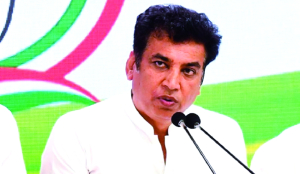
Congress President Mallikarjun Kharge, his party colleague Pawan Khera, BJP leaders Tarun Chugh, Satish Poonia, and Rajubhai Shukla were amongst several others from both the parties and others who were declared elected unopposed for the Rajya Sabha on Thursday.
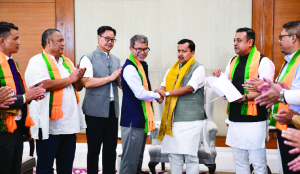
Manipur BJP president Adhikarimayum Sharda Devi too secured an upper house berth after she was elected unopposed to the lone Rajya Sabha seat from the northeastern state. Contestants from Karnataka, Madhya Pradesh, Odisha, Rajasthan, Gujarat, Meghalaya, Arunachal Pradesh, Manipur will not have to face the scheduled Rajya Sabha elections on June 18.
The only State where the polls for RS membership will have to be conducted is Jharkhand, where the Congress-JMM ruling party has one candidate each and the third is sitting member Parimal Nathwani, an independent backed by BJP.
According to the Election Commission’s designated Returning Officers (RO), three Congress candidates, including Kharge, and one BJP nominee were declared elected “unanimously” to the Rajya Sabha from Karnataka. Alongside Kharge, the other newly elected members are AICC Secretary Mansoor Ali Khan, Congress’s Media and Publicity Department chairperson Pawan Khera, and BJP’s M Nagaraja.
In Andhra Pradesh, all four NDA candidates — Bashyam Ramakrishna, Chintakayala Vijay and Sana Satish Babu from TDP and Lingamaneni Ramesh of Jana Sena were elected unopposed for the RS. Though Babu retired from the Rajya Sabha recently, he secured another term in the latest biennial election. Other members who retired include A Ayodhya Rami Reddy, Parimal Nathwani, P Subhash Chandra Bose, all from YSRCP.
Similarly in BJP ruled state of Gujarat all four candidates — Rajubhai Shukla, Mansinh Parmar, Mukeshbhai Rathwa and Jitendra Kanjariya- were elected unopposed to the Rajya Sabha. Opposition Congress did not field its candidate hence no other contestant was in the poll fray.
The elections to the Rajya Sabha were necessitated as the six-year term of four sitting MPs — Rambhai Mokariya, Narhari Amin, and Ramilaben Bara (all from BJP), and Shaktisinh Gohil (Congress) — is to end on June 21.
BJP candidate Debashish Samantaray was elected unopposed to the Upper House from Odisha. Samantaray, who joined BJP recently had quit the BJD and resigned as its MP from the Rajya Sabha.
Further, even as Congress candidate Meenakshi Natarajan has moved the Supreme Court against the rejection of her nomination, the Madhya Pradesh returning officer declared the three BJP candidates elected unopposed in the biennial elections in the State. Tarun Chugh, Rajneesh Agarwal and Mahesh Kewat were declared elected.
Congress had nominated Natarajan but her nomination was rejected on the ground that she concealed information about a court complaint filed. BJP has 164 MLAs in the 230-member Madhya Pradesh Assembly, while the Congress has 62 MLAs eligible to vote. With each Rajya Sabha candidate requiring 58 votes to win, the BJP was assured of winning two seats comfortably, while the Congress had enough votes to win a single seat. BJP fielded a third candidate, whose victory would have depended on cross-voting or abstention by opposition members had polling taken place.
From Rajasthan three candidates, two from ruling BJP, Satish Poonia and Alka Gurjar, and one from Congress Neeraj Dangi were elected unopposed to the Upper House.
While Tai Tagak was declared elected unopposed to the lone Rajya Sabha seat from Arunachal Pradesh, National People’s Party (NPP) national vice president James K Sangma was elected unopposed to the lone RS seat from Meghalaya. James K Sangma, the brother of Chief Minister Conrad Sangma, was declared elected after no other candidate remained in the fray.
SC to hear Congress plea
New Delhi: The Supreme Court will hear on Friday Congress leader Meenakshi Natarajan’s plea against her nomination papers for the Rajya Sabha election from Madhya Pradesh being rejected. Senior advocate Abhishek Singhvi, appearing for Natarajan, urged the bench to consider the unlisted mentioning of her plea on the ground that the nomination paper was wrongly rejected by the returning officer, citing alleged non-disclosure of a criminal case under the Representation of the People Act.