Keep faith, drop cruelty: Delhi urges temples to swap live jumbos for mechanical ones
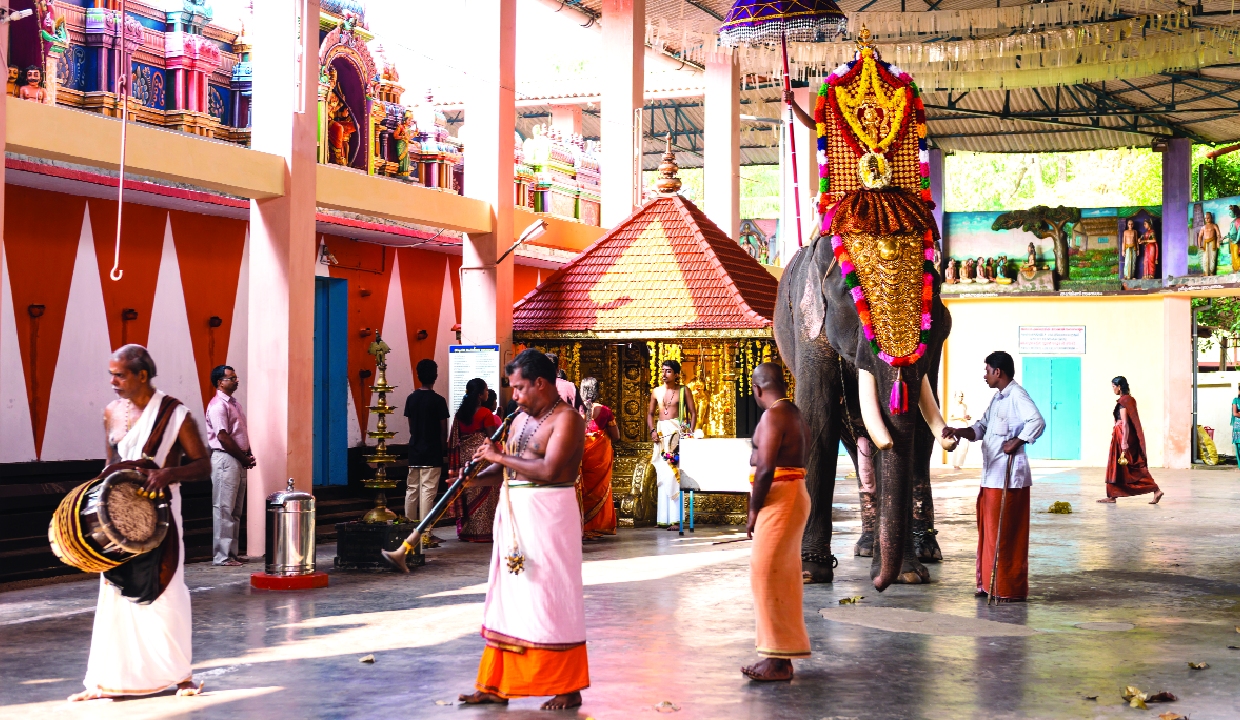
Taking a cue from Telangana, Karnataka and Kerala to protect elephants and promote public safety, the Delhi Forest Department has advised religious institutions, temple committees and event organisers to use mechanical jumbos instead of live pachyderms during ceremonies and festivals.
“It is noticed that live captive elephants are sometimes brought from different regions for religious and cultural events under the provisions of the Wild Life (Protection) Act, 1972. However, public safety concerns, animal welfare, and logistical challenges associated with the use of live elephants in crowded urban settings like Delhi cannot be overstated. It is therefore advised that religious institutions, temple committees, event organizers, and devotees consider the use of mechanical or robotic elephants during ceremonies and festivals instead of live captive elephants,” Dr P Viswakannan, Chief Wildlife Warden, said in the advisory. PETA India welcomed the advisory, calling it a step towards protecting elephants and devotees.
Mechanical elephants, made from rubber, fibre, metal, mesh, foam, and steel, are motor-operated and mimic the movements of a real elephant, including head shake, lifting the trunk, ear and eye movement, tail swishing, and even spraying water. It can be easily operated for processions and rituals, providing a humane alternative for traditional ceremonies.
Reacting to the advisory, Vikram Chandravanshi, senior policy and legal advisor at PETA India, said the Delhi Forest Department’s advisory is a compassionate and forward-thinking step that protects both elephants and devotees, and PETA India applauds it.
In June 2026, the Telangana Forest Department welcomed its own robotic elephant and recommended it for religious processions and film shoots.
Similarly, in Karnataka in September 2024, the Muzrai (endowments) Department welcomed the use of mechanical elephants in Government temples.
In 2007, following a report submitted by PETA, the Maharashtra Government announced that elephants would no longer be allowed in Mumbai over concerns regarding cruelty to them, the threat to human life and property from distressed elephants, and the possible transmission of tuberculosis and anthrax to humans.
Shree Krishna temple in Thrissur and Pournamikavu temple in Thiruvananthapuram have also starting using mechanical elephants.
Kerala Tourism has introduced a mechanical elephant safari at the Thamboormozhi Butterfly Park.
According to PETA, the use of elephants for tourist rides at Amer Fort has fallen around by 70 per cent over the past seven years. According to figures compiled by the Heritage Animal Task Force, captive elephants killed 526 people in Kerala in a 15-year period.
PETA India has also called for a nationwide ban on elephant rides, bathing experiences, selfies and other close-contact tourist activities involving captive elephants, following several incidents involving elephants and humans.
The organisation also urged the Union Ministry of Environment, Forest and Climate Change to encourage states to adopt robotic elephants in temples and for other activities, including film and photo shoots, weddings and tourist rides. PETA India noted that captive elephants used in processions, rides and other events are often subjected to harsh training methods, including beating and chaining. It claimed that many elephants kept in temples and other facilities suffer from foot problems and leg wounds, inadequate veterinary care and a lack of natural living conditions.