Iranian Americans fear for relatives in their homeland as war continues
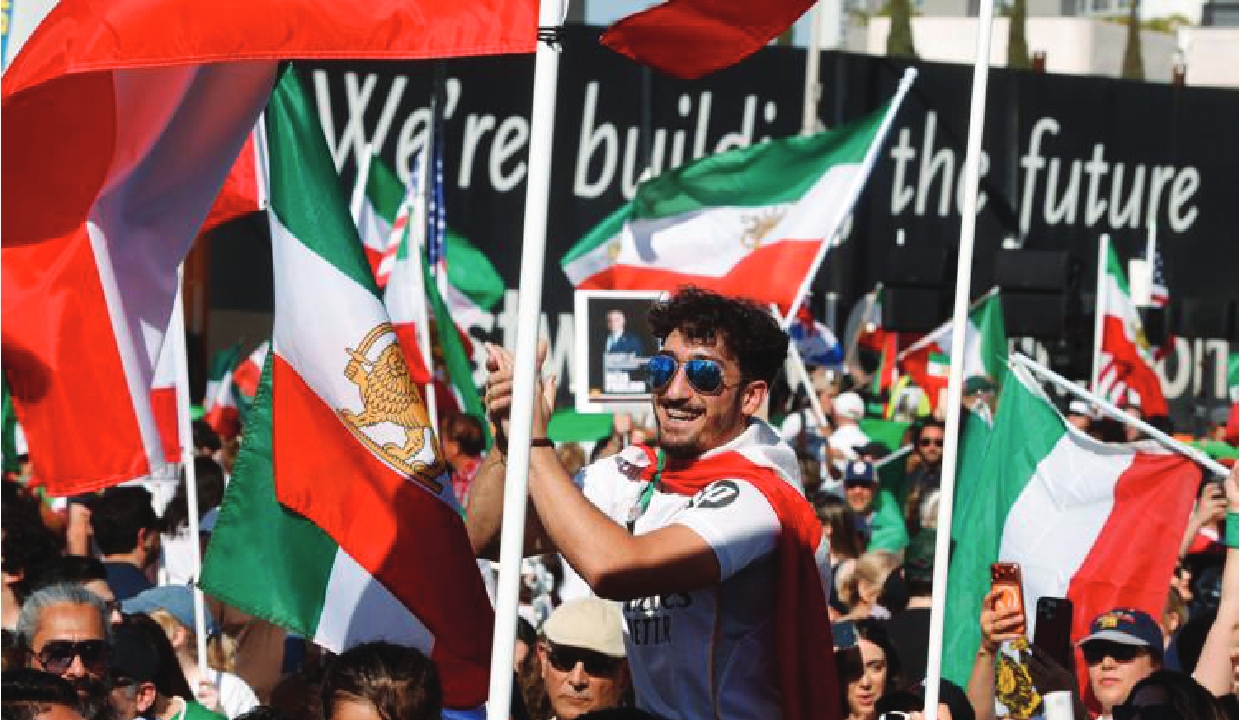
Many in the Iranian American diaspora spent several days glued to their televisions, watching the news of US and Israeli bombs falling on Iran, some clinging to hope it might bring a brighter future to their homeland but terrified their relatives will suffer in a new Middle East war with no certain end.
Ayatollah Ali Khamenei, who ruled Iran for decades while violently crushing dissent, was killed early in the attack. In the United States, many celebrated, some popped Champagne, some downed shots of tequila, some took to the streets to cheer the toppling of a ruler they considered a tyrant.
“We are happy, we are happy that he is gone and he can’t kill our innocent people anymore,” said Ava Farhadi, 33, an electrical engineer in Indiana. In January, Farhadi’s family participated in protests against their government, which were met with a brutal crackdown. While her immediate family was unhurt, Farhadi said, friends and close loved ones were among the thousands killed when security forces opened fire on peaceful protesters. Many said they are worried for their families still there and what the future holds.
Roozbeh Farahanipour, a Los Angeles restaurant owner who was jailed and tortured following the 1999 student protests in Iran, said he’s felt a swirl of emotions.
He celebrated when he heard Khamenei was killed in the initial US and Israeli strikes. “I open a bottle of Champagne and drink it up,” he said.
“That was a happy moment but we are looking at what happens next.”
Deaths have mounted as the bombardment continued into Monday, claiming US service members and Iran civilians. Farahanipour said he mourns for them.
Between 400,000 and 620,000 people of Iranian ancestry live in the US, according to the University of California, Los Angeles, the vast majority of them in California.
Nearby, Todd Khodadadi, the 47-year-old owner of Tochal Market, said he and his family lived under the regime in Iran until they fled more than two decades ago and started over in the US.
Khodadadi said he’s been glued to news apps and group chats with friends in Iran. Even as bombs rained down, the weekend’s violence still doesn’t compare to the scale and severity of what Iranians have suffered for years on end, he said, surrounded in his store by boxes of date-filled pastries and rice cookies affixed with stickers reading “Free Iran.”
“The people in Iran, they live in hell,” he said. “We want democracy, we don’t want one person sitting in one chair for decades and decades and control everything.”
It has been difficult for many to communicate with their loved ones still in their homeland. Phone and internet connections aren’t reliable.
The Iranian people were already suffering shortages of food and medicine because of strict sanctions imposed on the country and Ghoreishi worries not only that they could be killed by the bombardment, but also that they won’t be able to access life-sustaining necessities as the war drags on.
Ghoreishi, who was fired from his role at the US State Department last year after some questioned his loyalty to the administration’s policies in the Middle East, said he doesn’t see how this will end with lasting change for the Iranian people.
“I don’t see a clear strategy and I see a lot of violence, and those two things make me pessimistic for this moment,” he said.
‘My people deserve to be happy’
----------------------------------
“My people deserve to be happy, and I understand fully why they would be happy and hopeful for a tyrant to be out of commission,” she said. “We have dreamed of the day where we would be rid of them so that we can have the homeland and the peace we all deserve.”
Keshavarz still has many loved ones in Iran, and says she’s worried “day and night” for them. In war, she said, ordinary people always pay the highest price.
To her, this moment recalls the region’s long history of intractable wars that cost hundreds of thousands of lives but failed to deliver on promises of democratic stability, sometimes creating power vacuums filled by rulers just as bad or worse.
She cannot see now how this time will be any different.
Many said they hope that the Trump administration has a more solid plan for a transition than is clear right now.
Roya Boroumand’s father helped form the National Movement of the Iranian Resistance, one of the first opposition parties fighting for democracy. He was stabbed to death in the lobby of his Paris apartment by agents of the Islamic Republic in 1991. Boroumand said that those celebrating should remember the sacrifices that people of previous generations have made to advance human rights in the country - and recognize how much work is required to realize those rights now that the regime has been weakened.
‘You can’t just bomb your way out of a totalitarian regime’
-------------------------------------------------------------
“You can’t just bomb your way out of a totalitarian regime,” said Boroumand, who co-founded the Abdorrahman Boroumand Foundation in 2001 to promote human rights in Iran. She emphasized that any military operation needs to be supplemented by significant structural and economic transformation led by Iranian civilians.
Some others said they saw no other way to forge a better path forward than to cut off the regime at its head.
“In Iran we cannot accept that murderers can control the country. When they start to kill people just because of their voices, there is no choice but to start a war,” said Soheila Boojari, 47, a native of Iran and engineer in suburban Detroit, who took to the streets this weekend to celebrate the strikes. “I don’t want a war for any people. I am very worried about my family there. But who can help us?”
At Colbeh, a Persian restaurant in Great Neck, New York, staff downed shots of tequila Saturday night to celebrate the attacks. Restaurant partner Pejman Touby said he walked over the mountains at age 12 to escape Iran in 1984.
“A lot of our employees came out of Iran the same way. We left everything we had there,” Touby, 53, said. “We had shots in honour of the US Government, Israel Government for standing on their word and doing whatever they can to get rid of this evil regime.”
Many said they are hopeful that maybe, soon, they can return to Iran to see the family they left behind decades ago.
Gita Zarnegar, a 63-year-old psychoanalyst, said she and her Jewish family left Iran in 1979 when the regime took over.
“I’m elated that my country of origin is going to be free from 47 years of enslavement to a tyrannical and cruel regime that took away people’s freedom and liberty,” she said.
She will visit as soon as it is safe enough, she said.
“I will be the first person on that plane.”