India’s longest water tunnel nears opening in MP
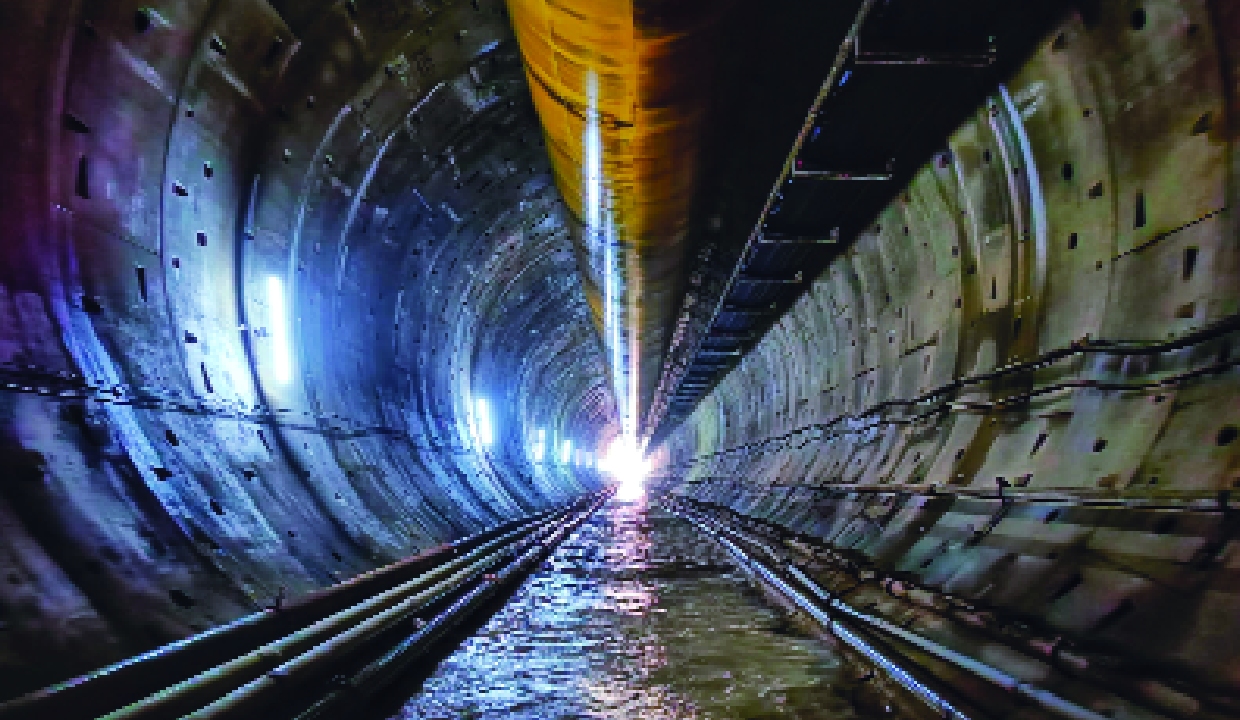
The Sleemanabad Tunnel, a flagship component of the Bargi Diversion Project, has become a significant milestone in irrigation infrastructure within central India. Following seventeen years of persistent efforts and the overcoming of substantial geological challenges, the project has entered its final phase.
Chief Minister Dr Mohan Yadav, widely recognised as the ‘Bhagirath’ of the Vindhya region for his unwavering dedication to water resource development, is anticipated to inaugurate the tunnel for public use. Located in Sleemanabad, Katni district, and constructed by the Narmada Valley Development Authority, the tunnel extends approximately 11.952 kilometres, rendering it India’s longest and most complex water tunnel. Its notable feature is the sole reliance on gravity to convey Narmada waters, obviating the need for pumping. This gravity-driven system ensures efficiency and long-term sustainability, exemplifying advanced engineering and strategic planning.
The construction process faced extraordinary difficulties. Engineers and workers contended with extensive seepage ranging from 18,000 to 25,000 litres per minute, highly resistant rock formations, large underground cavities resembling dark pits, and repeated damage to the Tunnel Boring Machine (TBM). Over 4 crore cubic metres of material were excavated amid high groundwater levels and extensive cuttings spanning several hundred metres. These obstacles were successfully surmounted by deploying state-of-the-art German Herrenknecht Tunnel Boring Machines and specialised TBM grouting technology. This achievement reflects the determination of Chief Minister Dr Mohan Yadav, combined with modern engineering and scientific innovation.
The broader Bargi Diversion Project, initiated in 2008, has achieved 96.66 per cent pper cent in physical development. Both the 11.952-kilometre main water tunnel and the 12.135-kilometre open-cut canal have been fully completed. Additionally, 0.725 kilometres of the 0.913-kilometre cut-and-cover canal have been constructed. To date, the project has incurred a total expenditure of Rs 1,610.47 crore.
The benefits of this transformative initiative are extensive. It will provide irrigation to 245,000 hectares across six districts- Jabalpur, Katni, Maihar, Satna, Rewa, and Panna, serving approximately 1,450 villages. This development is expected to significantly enhance agricultural productivity, promote water conservation, and strengthen the rural economy in the Vindhya and Mahakaushal regions. District-wise irrigation potential includes 21,823 hectares in Katni, 54,227 hectares in Maihar, 104,970 hectares in Satna, 3,532 hectares in Rewa, and 448 hectares in Panna. The project follows a phased implementation plan, with irrigation capacity projected to reach 44,160 hectares by March 2026, 87,433 hectares by December 2026, and 154,693 hectares by December 2027.
Furthermore, water will be supplied to 30,307 hectares under various Water Resources Department projects, contributing to a cumulative coverage of 185,000 hectares across five districts. By channelling the sacred waters of the Narmada River to agricultural fields in Vindhya and Mahakaushal through this gravity tunnel, the project realises Chief Minister Dr Mohan Yadav’s vision of “Har Khet Ko Jal, Har Kisan Ho Sabal,” ensuring water access for every field and empowerment for each farmer. As the final works near completion, the Sleemanabad Tunnel is poised to usher in a new era of agricultural prosperity, sustainable development, and economic upliftment for the farming communities of Madhya Pradesh.