India will shape future on its own values, says RSS on women’s participation
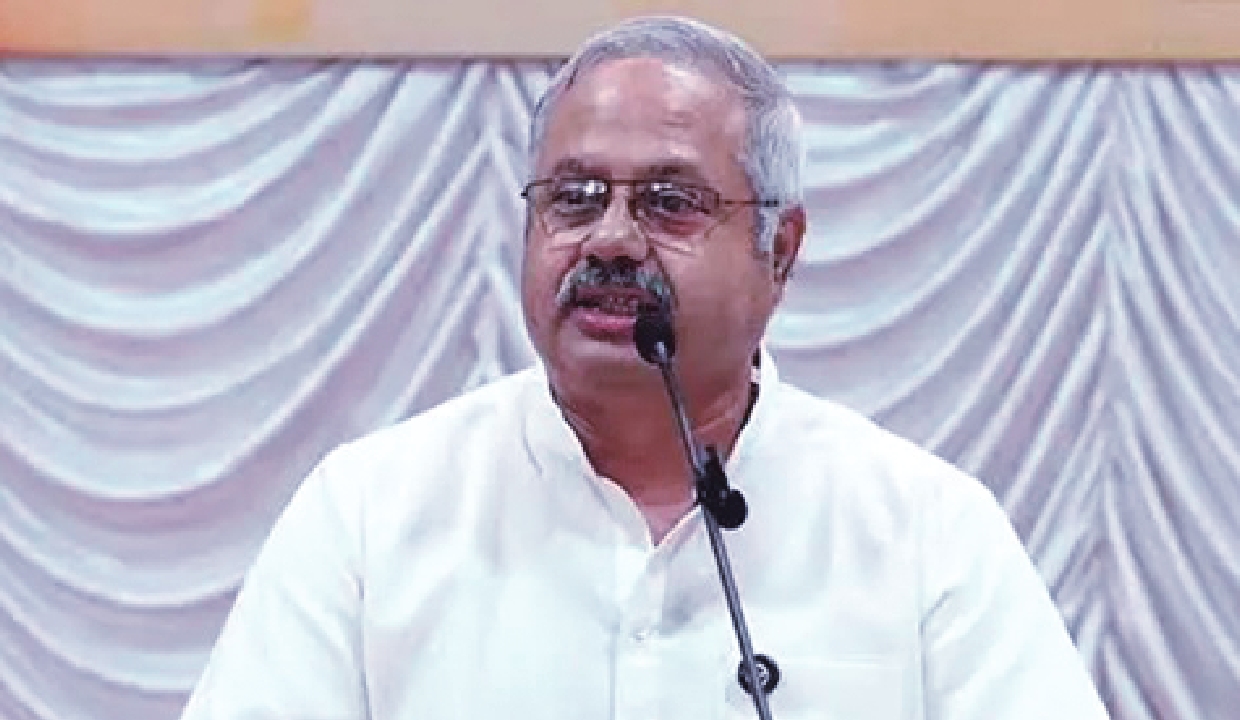
RSS functionary Sunil Ambekar on Wednesday said the issue of women’s participation should be seen from an Indian perspective, and not through Western thinking.
“This is not a question of RSS and women. This question arises because the Bharatiya perspective on women has not been properly understood,” he said at the launch of the book 'Shatayu Sangh Aur Mahila Sahabhagita' at the NDMC Convention Centre.
Expressing confidence in the younger generation, Ambekar, the RSS national media and publicity department head, said they are better placed to make balanced choices.
“I feel today’s generation, which people call Gen Z, is more aware because it has got the opportunity to see the whole world. They are seeing Bharat, they are seeing Bharat’s past, they are seeing the world, they are seeing the world’s past and present, and they are comparing all this. They clearly know who has gained what, who has lost what and what we have to achieve,” he said. He said India will shape its future on the basis of its own values.
“The new combination in Bharat will not be one in which our culture and families are shaped on the basis of the market and technology. We will decide, according to our values and culture, what technology we need,” he said. Ambekar said women are already playing an important role in society, and their participation will grow further.
“The real dream is that women across Bharat should come forward in every sphere of life and leadership with confidence, without fear and in greater numbers,” he said.
He said many Western ideas on gender are based on conflict between men and women.
“In those societies, the problem was seen as a struggle between men and women and, therefore, the effort was to find solutions through competition between the two,” he said.
Ambekar said the Indian view is different and sees men and women as equal and complementary.
“In Bharat, it was clearly understood that a woman is as pure as a man, or even more pure, and as capable as a man, and at times even more capable. But this was never seen as a competition between men and women,” he said.
He said problems in India arose because of breaks in knowledge traditions and the weakening of social systems over time.
“Our problems came when there was a break in our knowledge traditions, whether because of our own mistakes or because of foreign invasions. Therefore, our solutions cannot be external. Our solutions have to be organic,” he said.
On changes in family life, he said that roles within families will need to adjust over time and be worked out together.
“It may be that people in the family, husband and wife, parents with daughters and sons, will have to sit together and decide that times have changed and the division of work will also change,” he said.
Ambekar also cautioned against treating the issue as a contest between men and women.
“If we search for solutions by treating it as a competition between men and women, we may achieve some things, but we will have to pay a price in family peace, affection and social values,” he said.
He said economic progress should not come at the cost of family life.
“No economic or civilisational progress can come at the cost of the happiness of family life,” he said.
Ambekar said the RSS and the Rashtra Sevika Samiti began work on women’s participation from the early years of the organisation.
“The RSS has completed 100 years of its work. It was started in 1925 in Nagpur. Within a few years, in 1936, the Samiti was formed. The work was not limited to public meetings but was rooted in daily life and neighbourhood engagement,” he said.
The book, authored by social worker Dr Shobha Vijender, would inspire more people to take part in nation-building, Ambekar said.