India to help restore Prambanan temple
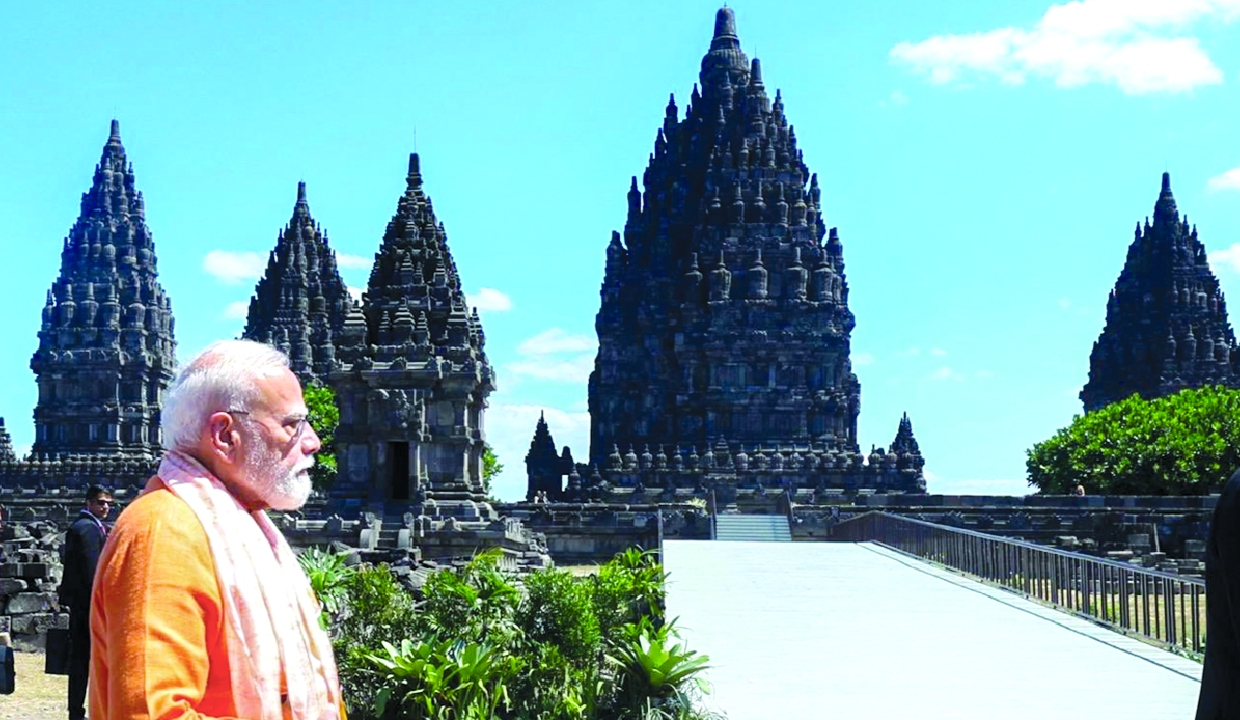
In a powerful reaffirmation of civilisational ties, Prime Minister Narendra Modi and Indonesian President Prabowo Subianto on Wednesday jointly inaugurated the restoration and conservation project of the iconic Prambanan Temple complex, a UNESCO World Heritage Site that stands as a living testament to the deep cultural and spiritual connect between India and Indonesia.
The grand ceremony at the 9th-century temple complex in Yogyakarta marked the formal launch of a collaborative initiative under which the Archaeological Survey of India (ASI) will lead technical and restoration efforts from the Indian side. Modi, who is on the first leg of his three-nation tour, described the project as a “shining example of the enduring civilisational bonds” that have linked the two nations for centuries.
“Built in the 9th century, the Prambanan Temple complex is the largest temple complex in Indonesia dedicated to the Trimurti — Lord Brahma, Lord Vishnu and Lord Shiva,” the Ministry of External Affairs noted. “It stands as an enduring symbol of the shared civilisational and cultural heritage between India and Indonesia.”
The visit came just a day after the exchange of a Letter of Intent between the two countries to initiate the ambitious conservation project, an outcome of the understanding reached during President Prabowo’s State Visit to India in 2025.
India’s involvement builds on its proven expertise in heritage restoration across Southeast Asia, including earlier documentation of the Borobudur Temple Compounds by the ASI.
Upon arrival at the Prambanan complex, located approximately 17 kilometres northeast of Yogyakarta city, Modi was accorded a traditional welcome. Accompanied by President Prabowo, he took a detailed tour of the ancient site, received a briefing on its history through a ceremonial panel titled ‘Indonesia-India Collaborative Cultural Heritage Conservation for Prambanan Temple Compound’, and unveiled a plaque commemorating the launch of the project.
“President Prabowo Subianto and I inaugurated the UNESCO World Heritage Prambanan Temple Compound Restoration and Conservation Project,” Modi posted on X. “The magnificent Prambanan Temple stands as a timeless symbol of our cultural and spiritual links. Preserving such heritage is about safeguarding the traditions that continue to inspire generations.”
Modi expressed India’s privilege in partnering with Indonesia. “As nations with deep cultural connections, India and Indonesia will continue to work together to celebrate our shared past while building an even stronger future,” he said.
In his address at the temple site, with the towering spires forming a majestic backdrop, Modi called the visit a “Chaitanyapurn chhann” — a moment filled with divinity. “In conversations I hear, the winds here carry a scent of culture. That scent which we feel every moment on the soil of India. This scent, this cultural heritage, connects us,” he remarked emotionally.
He thanked the people of Indonesia and its past rulers for preserving the heritage with “devotional faith” for over 1,200 years. Modi offered prayers at the temple for a stronger bilateral friendship, the welfare of citizens of both countries, and rapid development of the two nations. The warmth between the leaders was palpable, seen in firm handshakes, waving to the gathering, and a concluding warm hug.
The Prambanan Temple, Indonesia’s largest Hindu temple, features a sophisticated rectangular layout with outer, middle, and inner courtyards divided into higher and lower terraces. The higher terrace houses the principal shrines dedicated to Shiva, Vishnu, and Brahma, flanked by smaller temples of their animal vehicles. Intricate Ramayana reliefs adorn the inner walls of the Shiva temple, while statues of Lord Shiva, Goddess Durga, and Lord Ganesha underscore its Hindu roots.
Modi highlighted the site’s significance: “In Southeast Asia, this is the second-largest identity of our heritage. For centuries, people have offered worship at this temple, and today I, too, had the fortune to visit this temple and offer prayers.”
Experts see the high-profile visit and joint project as a strategic move by New Delhi to elevate cultural diplomacy in its Act East policy framework. With strong people-to-people and historical linkages, the conservation effort is expected to boost tourism, particularly from India, and deepen bilateral cooperation in heritage preservation.
India has reiterated that its support reflects an “enduring commitment to preserving shared civilisational heritage.” As work begins, the project promises not only physical restoration of the magnificent spires and sculptures but also the strengthening of a civilisational partnership that continues to inspire both nations in the 21st century.