India set to become $5-trillion economy by FY29 claims Sitharaman citing IMF

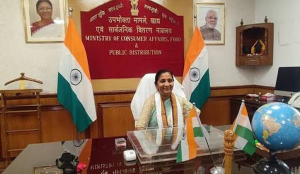
India is on track to cross the USD 5-trillion mark in FY29, Finance Minister Nirmala Sitharaman told the Rajya Sabha on Tuesday, August 4, quoting the IMF’s latest projections.
As per the World Economic Outlook database (April 2026), India’s GDP at current prices is projected to reach around USD 5.1 trillion by 2028-29, she said in a written reply.
The government is pursuing a broad-based growth strategy focused on raising agricultural productivity, promoting manufacturing, supporting MSMEs, expanding infrastructure and logistics, improving ease of doing business, streamlining the tax system through income tax and GST reforms, fostering innovation and digitalisation, strengthening human capital, and ensuring energy security.
This is backed by sustained public capital expenditure, a liberalised FDI regime, export promotion, prudent fiscal management and price stability. Trade resilience is being reinforced through an expanding network of Free Trade Agreements and Comprehensive Economic Partnership/Cooperation Agreements.
Manufacturing is being boosted through the Production Linked Incentive scheme, Make in India, National Logistics Policy, National Single Window System and PM GatiShakti. MSME support includes enhanced credit guarantees, revised classification norms, a stronger TReDS ecosystem, simplified Udyam Registration, wider access to GeM and the PM Vishwakarma Scheme.
The services sector is being strengthened via Digital Public Infrastructure, Global Capability Centres, Medical Value Travel, the Orange Economy, AI and digital initiatives, and skill development. The Union Budget 2026-27 announced measures such as a National Institute of Hospitality, Regional Medical Hubs, expansion of Allied Health Professional institutions, AVGC Content Creator Labs and support for university townships.
In agriculture, the focus remains on irrigation, technology adoption, digital agriculture, crop diversification, post-harvest infrastructure and better market access. Strategic sectors including semiconductors, electronics, biopharmaceuticals, rare earths, chemicals, capital goods, clean energy and advanced manufacturing have been prioritised, supported by the PM-SETU scheme for industry-aligned skilling.
These measures are expected to strengthen medium-term growth and support the long-term vision of Viksit Bharat by 2047.