India’s powerful educational practices push youth with momentum
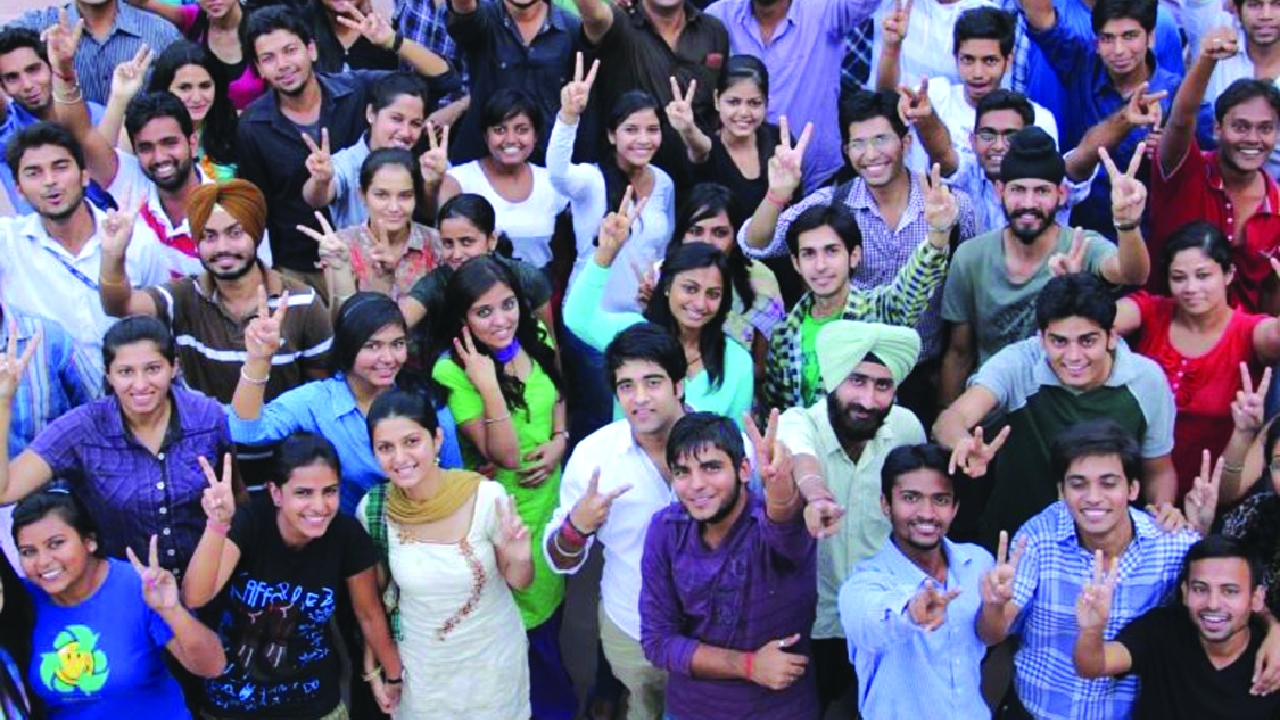
India has moved into the space of computational era in 21st century. Today there is a great demand for talented youth to perform and manage routine tasks at home which prepares them to solve complex assignments at the workplace. India needs youth to be self-driven, curious learners, problem solvers, conscious towards their duties and most importantly responsible for the society and nation. Overall, our nation needs holistic thinkers and implement them successfully with optimized resources and infrastructure. A holistic development of youth meets the objectives of Viksit Bharat@2047.
India is preparing itself against the local and global challenges through imbibing various educational framework models which is being practiced successfully across institutions starting from schools.
Comprehensive and Holistic approach: Learn by Doing (Kar Ke Seekna )
National Educational Policy 2020 being a revolutionary educational framework introduced in India five years before, bridges the gap between learning and practice. We are steadily and swiftly implementing the best practices of our National Education Policy 2020 which starts from school to higher education through national qualification framework: School (Level 1 to 4) and higher education framework (4.5 to 8).
The modern age best practices in institutions reinvents the education systems in India. Additionally, educational institutions, especially schools of today, are making the students perform daily home assignments [DHAs], everyday class tests / class Assignments [CAs]. Schools are even preparing to implement the best practices of “OPEN BOOK EXAMINATION.”
These exercises consciously prepare the students to follow disciplined and meticulous routine learning practices. Today even schools are preparing the students to make a journey from classroom to boardrooms through making them deliver seminars/talks and model making on current trends and technologies. Educational institutions across our nation are practicing workbased skills through firsthand experiential learning so called work experience laboratory learning like clay modeling, candle making, craft work, painting. Most importantly it makes young students adapt to the mantra: learn by doing (Kar Ke Seekna ).
The schools of today are enabling the students to choose Sanskrit, music, languages and drawing as open elective subjects in addition to their science subjects. This develops holistic development among the students. Schools of modern age are giving opportunities for social service, winter/summer camps, NSS and NCC, perform regular activities through student clubs.
The students are trained to tinker at various real-world problem statements and design small skillbased science projects which create a culture of skill-based learning. The best working example is the Atal Tinkering labs established under Atal Innovation Mission by Niti Aayog.
Ministry of Skill Development and Entrepreneurship, Government of India is creating ample opportunities to explore the student’s inner talents through making the students to participate in the World Skills Competition conducted annually which involves the process of making the student to take theoretical and practical tests in different traits at the industrial training institutes which are conducted across PAN India. It focuses on:
- Construction and Building Technology
- Creative Arts and Fashion
- Information and Communication Technology
- Manufacturing and Engineering Technology
- Social and Personal Services
- Transportation and Logistics.
The world skill competition follows the guidelines of OECD (Organization for Economic Cooperation and Development) which includes organising work and self-management, time management, problem solving, innovation and creativity, team building and most importantly the collaborative and cooperative efforts making.
Preparing Next Generation Youth for Viksit Bharat@2047
Ministry of Education, Government of India has successfully launched the pathbreaking First-ofits kind course curriculum on computational thinking and Artificial intelligence for classes starting from third to eighth standard. It clearly follows the guidelines of innovative teaching and learning pedagogy of National Educational Policy 2020. The revolutionary curriculum aligns it with National Curriculum Framework for School Education. The core curriculum recommends 50 hours and one hundred hours of learning for class 3-5 and 6-8, respectively.
India is preparing the youth to be the next generation leaders in technology by integrating the strong mantra ‘AI in Education’ and ‘AI for Education.’ The Central Board of Secondary Education
has played a vital role in changing the dimensions of thinking practices of students by making them to be ‘AI-Ready Learners. The computational thinking concept is a subset of subjects like The World Around Us (TWAS) and mathematics underlying the principles of learning through workbooks.
A step-by-step approach is being adapted in the learning pedagogy in schools starting from worksheets based on games, puzzles in class third leading to solving real-world problems in class eighth through computation and AI approach. The younger generation will rewire/rewrite and code/decode real-time complex problems leading to building AI enabled Community and AI integrated Society. India has made a bold step by making ‘AI for ALL.’
Author is Head Institute Industry Interface Program Hindustan College of Science and Technology, Mathura ; views are personal