India risks becoming a seller of lemons
Akerlof won a Nobel for showing why markets collapse when buyers cannot judge quality. Software is becoming one — and India is on the wrong side of it
I keep returning to an old paper about used cars.
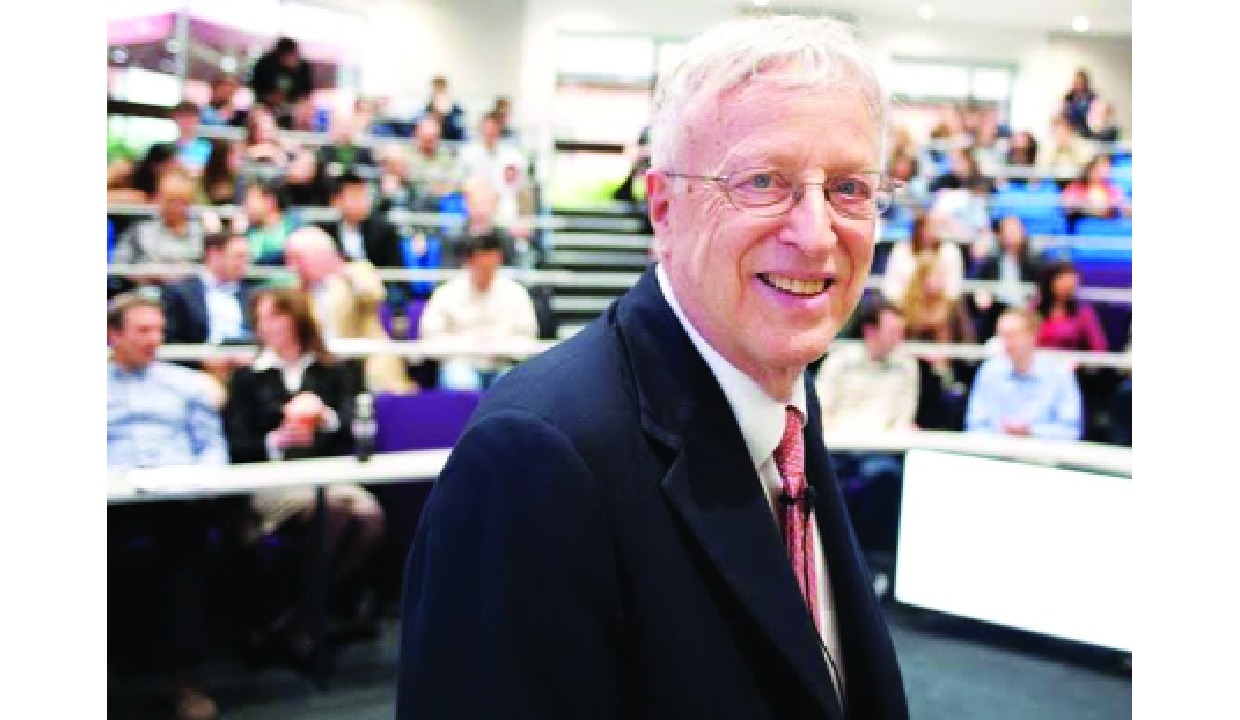
George Akerlof wrote it in 1970 and had it turned down by three journals before it found a home. The argument annoyed people because it was so plain. You are buying a second-hand car. The seller knows whether it is sound. You don’t, and finding out is expensive, so you offer an average price. But the owner of a genuinely good car will not sell at that price, so he keeps it. Only the bad cars are left, quality drops, buyers offer less, and the market spirals down until it barely functions. Akerlof called the bad cars lemons and eventually won a Nobel for noticing. I have been thinking about that paper all year, because the software industry is walking straight into it and I have not seen anyone say so.
Producing an answer and checking an answer are separate operations, and they do not scale together. In my own field it is far easier to generate a plausible model than to establish that it is right. The same holds for code. A system can now write you a working prototype in under a minute. Knowing whether it will hold up in production, at scale, against an attacker, in the fourth year, still takes what it always took.
Sekar Vembu has been on the sharp end of this for twenty-four years. He co-founded AdventNet, the company that became Zoho, with his brothers in 1996, and set up Vembu Technologies in Chennai in 2002. It sells backup and disaster recovery software into over a hundred countries.
I asked him which assumption about the software industry will prove wrong over the next ten years.
“The belief that AI will autonomously build software from detailed specifications with little human verification is mistaken. Software evolves iteratively as new use cases emerge. AI will assist, but domain expertise, judgement, and responsibility will always require humans in the loop.” That is a statement about cost. If verification cannot leave the loop, it stays expensive while production becomes nearly free. Cheap to make, dear to check. That is Akerlof’s condition, restated for an industry that thinks it is having a boom.
Ask a founder what has changed and you get the symptom before the diagnosis.
I asked what would be easier and what harder if he started Vembu today.
“Access to talent and, because of AI, acquiring domain knowledge and building software will all be easier. Harder will be meeting higher customer expectations, standing out in a crowded market, and keeping young employees committed over the long term.”
Most would read that as a founder complaining about marketing. Read it again as a description of a market. Making things gets cheaper, supply floods in, and buyers can no longer tell what is any good. That last item about long-term commitment is not a separate grievance either. I will come back to it.
What follows runs against nearly everything said about disruption. In a market where quality cannot be checked, incumbents get stronger. Buyers who cannot evaluate fall back on what they can observe — how long you have lasted and who else trusts you. Age becomes an asset. Dullness becomes an asset. A twenty-four-year-old company carries information a brilliant six-month-old product cannot manufacture at any price, because what it carries is duration, and duration is not for sale.
Then the question of where advantage goes. If AI makes software dramatically cheaper, where do SaaS companies find their edge?
“As software becomes cheaper to build, horizontal SaaS will face increasing pressure. The real advantage will come from deep vertical expertise and solving specialised industry problems. Without those domain-specific nuances, customers may simply build solutions in-house.”
Everyone in Indian technology has heard “go vertical” by now. Nobody has explained why it works, and the reason matters more than the advice. Vertical depth works because you cannot fake it cheaply. When production costs collapse, the only signal worth anything is one that resists cheap production, and the small, ugly, specific cases inside a domain are exactly that. You cannot infer them from a specification. You have to have sat inside the problem for years and been wrong a few times. Depth is not a way to win customers. It is a way to be checkable.
Which brings me to why this should worry India in particular.
Our industry was built on an arrangement. The client specified, we produced, the client verified. That was the deal, and it made us rich. Our advantage sat entirely on the production side of the ledger — the side whose price just collapsed. In a lemon market, being the cheap supplier is not neutral. It is a warning sign. When a buyer cannot tell good from bad and abundance is everywhere, low cost stops signalling efficiency and starts signalling risk. That, I suspect, is the anxiety underneath the conversations in Bengaluru, and it will not be fixed by putting the letters AI into a services pitch.
Asked what narrative investors and chief executives are getting wrong, Vembu does not hedge.
“The idea that AI can replace human judgement is fundamentally flawed. Human oversight will remain indispensable for complex work, especially in building complex and sophisticated software.”Notice what he has done. He has moved the value off the thing that is now cheap — building software — and onto the thing that is not: being trustworthy at the moment something fails.
Now the policy point, and I know it is unfashionable. India’s deep-tech effort is organised almost entirely around production — more startups, more funds, more models, more summits. But production is the input whose price is falling. The scarce thing is verified quality, and only one process manufactures it: the same people working on the same problem long enough that the record becomes the proof. We have no instrument for that.
Asked whether the startup ecosystem has over-optimised for fundraising, Vembu described the pressure precisely.
“The culture of raising large amounts of capital, scaling quickly, and chasing exits creates peer pressure, even for founders who want to build for the long term. Complex software needs patience and continuous improvement. Given today’s geopolitical and economic uncertainty, the ecosystem may naturally shift toward longer-term thinking.”
His own most irrational-looking decision points the same way.
“Remaining fully bootstrapped and independent seemed irrational when venture funding became the norm. In hindsight, it enabled long-term thinking and allowed the company to grow at its own pace rather than an investor’s timeline. External capital has its place, but only when truly necessary.”
If the only Indian companies building at the depth of this market rewards are those that opted out of the machinery designed to fund them, the machinery is aimed at the wrong thing. We fund the founding and applaud the exit. Nothing rewards a firm for being twenty years old and still fixing the same problem — peculiar in a country that talks about self-reliance and then measures itself every three months.
His advice to a twenty-five-year-old founder building globally without venture capital follows from this, and deserves repeating because it is unglamorous enough that nobody will.
“Generate enough revenue to fund product development through services, part-time work, or any practical means. Build steadily, ignore peer pressure, and don’t measure success by the pace of others.” That is not modesty. In a market that pays for duration, it is the strategy. It also explains the stray item about keeping young people committed.
I asked what question journalists should ask more often. He did not name a technology.
“They should ask about the second-line leadership — the people who quietly take responsibility, simplify complexity, and improve products every day. That culture of long-term commitment is what truly sustains a company.”
That is the operational form of the whole argument. Duration is the scarce asset, and duration is made of people who stay.
Akerlof’s paper ends with a point people forget. Lemon markets are not repaired by better products. They are repaired by institutions that make quality legible — warranties, brands, certification, reputation. All slow. None purchasable.
India spent thirty years learning to produce. The next thirty will turn on whether we can learn to be believed.
The author is a physicist at the University of North Carolina at Chapel Hill and a columnist on AI, infrastructure and global systems; Views presented are personal.