India opened the reactor, not the fuel
SHANTI hands the reactor to the market and keeps the used fuel with the State. The draft rules should say what that promise costs and when it begins
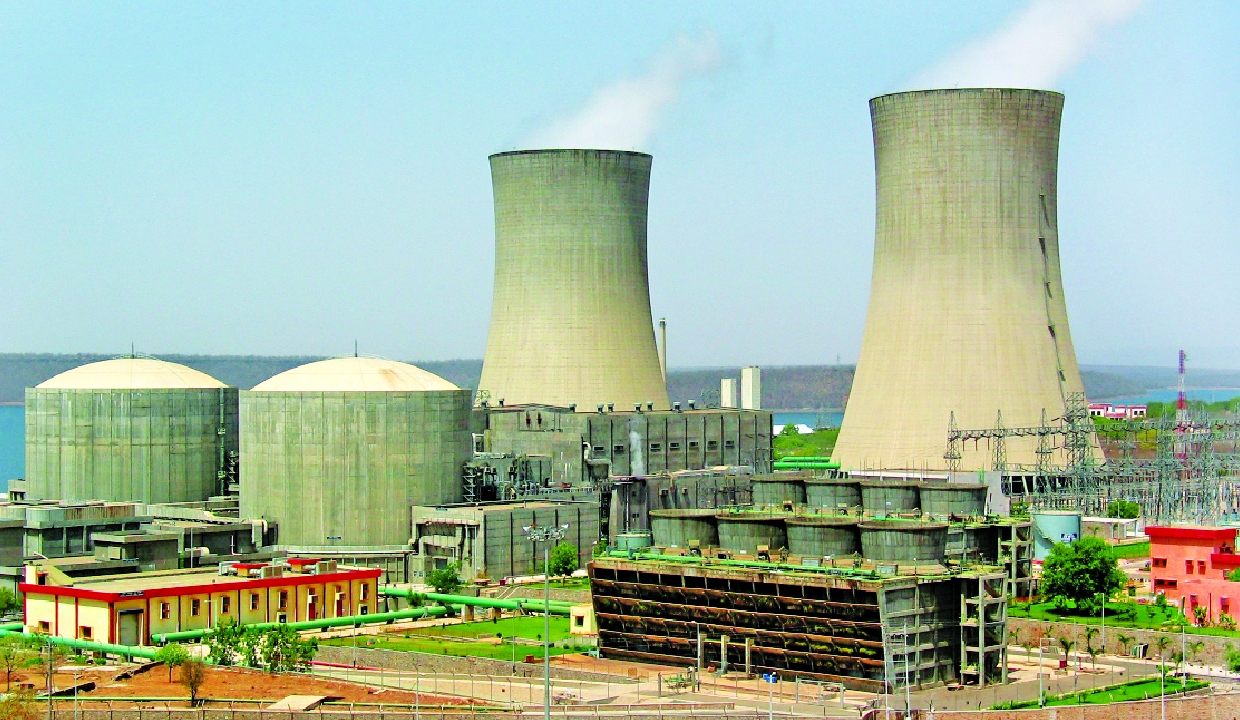
India is planning the biggest expansion of nuclear power in its history. The target is 100 gigawatts of nuclear capacity by 2047. Today, the country has about 8.8 GW. Reaching the target would mean increasing the fleet more than elevenfold in little over two decades.
To make that possible, Parliament passed the SHANTI Bill, in December 2025. It replaced the Atomic Energy Act of 1962 and the Civil Liability for Nuclear Damage Act of 2010. For the first time, private companies can participate in building, owning and operating nuclear power plants in India.
Much of the debate has focused on the beginning of a plant's life: how much insurance an operator must carry, what happens after an accident, and whether foreign reactor designs can enter the Indian market. Those are important questions. But the more revealing feature of SHANTI is what it does not open.
The part the government kept for itself
SHANTI opens the reactor to private capital. It keeps key parts of the fuel cycle with the state.
Activities including uranium and thorium mining, uranium enrichment, reprocessing of spent fuel, management of high-level radioactive waste and heavy-water production remain within the government's exclusive domain.
Put the two sides together and the architecture becomes clear. A private company can build a reactor, own it, operate it for decades and sell the electricity. But it does not control the entire nuclear fuel cycle. The state remains responsible for critical activities at the front and back ends.
That is not necessarily an issue. In fact, it is arguably the right choice.
Enrichment and reprocessing are among the most sensitive parts of the nuclear fuel cycle because of their connection to weapons proliferation. India, which is outside the Nuclear Non-Proliferation Treaty, has particularly strong reasons to keep these capabilities under sovereign control.
But keeping the back end with the state creates a responsibility that deserves far more attention than it has received.
A promise without a price tag
Once the government takes responsibility for spent fuel, the private nuclear business acquires a peculiar shape.
The operator earns revenue during the productive life of the reactor. The state inherits obligations that can extend far beyond it.
Spent nuclear fuel does not become harmless when it leaves a reactor. It must be cooled, stored, secured, transported and managed. If India eventually chooses geological disposal for high-level waste, the state will also have to develop and maintain a permanent disposal system.
That creates a long-term public liability.
The draft SHANTI Rules recognise the problem. They propose a dedicated Spent Fuel Management Fund to finance the subsequent management of spent fuel handed over to the Central Government. They also propose a Nuclear Liability Fund and separate financial security for decommissioning.
That is the right architecture. But architecture is not enough. The rules need to answer a more basic question:
How much money should a reactor contribute today for an obligation that may mature decades from now?
Four questions the rules should answer
First, how is the contribution calculated?
A spent-fuel charge could be based on electricity generated, the quantity of spent fuel produced or another formula. These approaches produce very different results.
A charge linked to electricity generation has one major advantage: collection begins when the reactor begins earning revenue. The financial obligation therefore grows alongside the activity creating the waste.
Second, who decides whether the contribution remains adequate?
The draft framework provides for periodic review of nuclear-liability limits. The spent-fuel obligation deserves the same discipline.
Waste costs are unusually exposed to inflation, interest rates, technological changes and delays. A number calculated when a reactor begins operating may look entirely different when the reactor eventually shuts down.
A fund designed for a century-long problem cannot be treated as a number fixed on the day a plant receives its licence.
Third, is the money genuinely ring-fenced?
A fund is meaningful only if the money cannot quietly become part of the government's general fiscal pool.
The rules should require clear segregation, transparent reporting and independent audit. The Comptroller and Auditor General should be able to show Parliament how much has been collected, where it is held, how it is invested and how much has been spent.
Investors demand this kind of visibility from companies. The state should demand no less from itself when it is accepting a liability that can last generations.
Fourth, and most importantly, when exactly does responsibility pass from the operator to the government?
This is where the draft rules need greater precision.
The handover problem
The draft requires financial security against nuclear damage to remain in place until all spent fuel has been removed from the spent-fuel storage pool.
That may be a workable point for one part of the liability framework. But removing fuel from a cooling pool does not make the long-term waste problem disappear.
It simply moves the fuel into the next stage of its journey.
The fuel may require dry storage, transport, further processing or eventual disposal. Each stage creates costs, risks and institutional responsibilities.
So the rules should distinguish between removing fuel from a reactor site and transferring long-term responsibility for that fuel.
India needs a legally defined handover point: a moment at which ownership, custody and long-term financial responsibility clearly pass to the government.
That moment should also be connected to a financial test. By the time the government accepts the material, the operator should have demonstrably paid its required contribution into the spent-fuel fund.
Otherwise, the most important question in the system remains open: when does the private obligation end, and when does the public obligation begin?
The queue behind the reactor
There is another problem that cannot be solved by accounting alone.
India's nuclear programme has experience with spent-fuel management and reprocessing. But a 100-GW fleet will operate at a radically different scale.
A larger reactor fleet produces more spent fuel. Processing and storage facilities, meanwhile, cannot expand instantly. If fuel is produced faster than it can be processed or moved into subsequent stages of management, temporary storage becomes the bottleneck.
That is not a failure of nuclear technology. It is a problem of physical throughput.
And then comes the hardest question: where does the waste ultimately go?
India can build reactors at sites that have already been identified. It is much harder to identify a location where future generations will accept a permanent repository for high-level radioactive waste.
The experience of other nuclear countries should be a warning. Finland spent decades developing a geological disposal system. The United States spent decades on Yucca Mountain without reaching a politically durable solution.
Four things the consultation can fix
None of this requires changing the basic bargain created by SHANTI. The government can retain control of the sensitive parts of the fuel cycle while allowing private capital into nuclear generation.
But the draft rules should do four things.
Name the handover. Establish a clear legal point at which ownership, custody and long-term responsibility for spent fuel pass to the government.
Give the spent-fuel fund a formula. Contributions should be linked to measurable activity such as electricity generation or spent-fuel quantities, adjusted for inflation and periodically reviewed.
Publish the numbers. Every year, the government should disclose how much spent fuel was generated, how much was processed, how much remains in storage and how much money has accumulated in the fund.
Start the search early. India should establish a timetable for identifying and evaluating potential sites for permanent disposal. The repository does not have to be built tomorrow. But the search cannot begin tomorrow either.
The Department of Atomic Energy has invited public comments on the draft SHANTI Rules and Regulations until September 4. This consultation is therefore an opportunity to close these gaps before the rules become the operating framework for India's nuclear expansion.
Not an argument against nuclear power
None of this is an argument against nuclear expansion. It is an argument for making the expansion credible.
A reactor is a sixty-year asset. Its financial model therefore depends on assumptions that extend far beyond the first decade of operation. If investors cannot see how spent-fuel liabilities will be calculated, funded and transferred, that uncertainty will eventually appear in financing costs, contracts and electricity prices.
India was right to recognise that spent fuel is not simply rubbish to be discarded. But valuable material still needs a custodian. And radioactive material needs something more basic still: a clearly defined responsibility, a properly funded system and, eventually, an address.
Nishant Sahdev is a physicist at the University of North Carolina at Chapel Hill and a columnist on AI, infrastructure and global systems. Debarati Das is a BSc Microbiology student at Adamas University and was a summer research intern under Sahdev; Views presented are personal.