India-China border situation will reflect on bilateral ties, says MEA
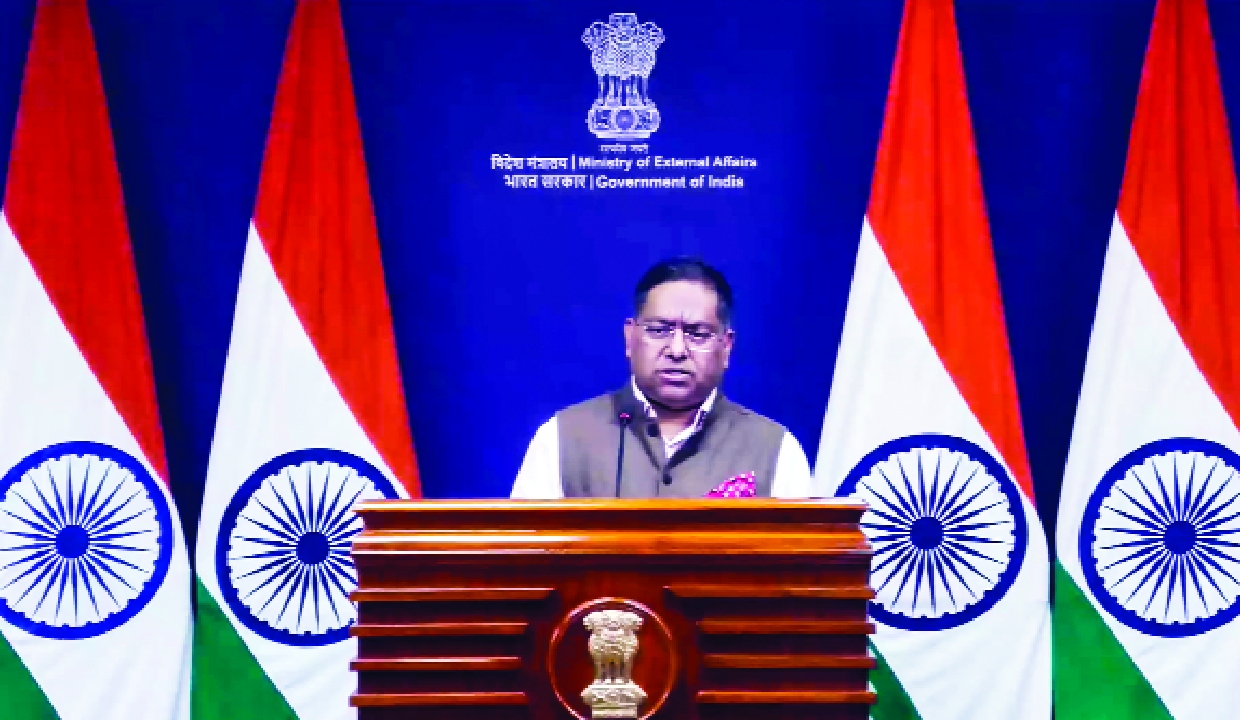
India on Tuesday said the situation along its border with China would have a direct bearing on the state of the broader bilateral relationship, stressing that maintaining peace and tranquillity along the Line of Actual Control (LAC) remains a matter of “utmost importance”.
The Ministry of External Affairs (MEA) also rejected China’s objections to India’s recent move to assign standard names to 27 places and geographical features in Arunachal Pradesh. India reiterated that Arunachal Pradesh is an “inalienable and integral” part of the country and said no action by China could alter that reality.
Addressing a regular media briefing, MEA spokesperson Randhir Jaiswal said India has consistently conveyed to Beijing that issues concerning the border areas are regarded as particularly serious. “In matters relating to the border areas between India and China, we have always emphasised in discussions with the Chinese side that we consider these issues as most serious,” Jaiswal said.
“The maintenance of peace and tranquillity in these areas is of the utmost importance. We have also stated that the state of the border affairs will reflect on the state of our larger bilateral ties,” he added. Jaiswal said the position was reiterated during a meeting of the Working Mechanism for Consultation and Coordination on India-China Border Affairs (WMCC) held last week.
According to the MEA spokesperson, the two sides held “frank discussions” and reviewed the situation along the LAC during the meeting.
“The Indian side again underlined that maintaining peace and tranquillity in the border areas is essential for the overall development of bilateral relations,” Jaiswal said. He added that both sides agreed to continue using existing diplomatic and military channels, including the WMCC, local commander-level meetings and other established mechanisms, to address outstanding issues and prevent misunderstandings and miscalculations along the LAC.
Responding to China’s criticism of India’s naming of 27 places in Arunachal Pradesh, Jaiswal firmly rejected Beijing’s position.
India has repeatedly maintained that Arunachal Pradesh is an integral and inalienable part of the country and that assigning standard names to places within Indian territory does not alter their status.
The latest exchange comes as India and China continue efforts to stabilise relations following years of tensions along the border. Relations between the two countries came under severe strain after the deadly Galwan Valley clashes in 2020, followed by a prolonged military standoff along the LAC in eastern Ladakh. Over the past two years, however, New Delhi and Beijing have taken a series of steps aimed at rebuilding bilateral ties.
In October 2024, the two sides reached an agreement on disengagement at Depsang and Demchok, the last two major friction points in eastern Ladakh. The development paved the way for a renewed diplomatic engagement between the two countries. Soon after the agreement, Prime Minister Narendra Modi and Chinese President Xi Jinping met in Kazan and discussed measures to improve bilateral relations. In August last year, Modi travelled to Tianjin, China, to attend the annual Shanghai Cooperation Organisation (SCO) summit, where he held extensive talks with Xi on the sidelines of the meeting. During those discussions, Modi said India remained committed to advancing relations with China on the basis of mutual trust, mutual respect and mutual sensitivity.
Despite the recent efforts to improve ties, India has continued to emphasise that peace and tranquillity along the border are essential for sustained progress in the broader relationship.