High-level panel on demography change visits Rohingya, Kashmiri Pandit clusters in Jammu
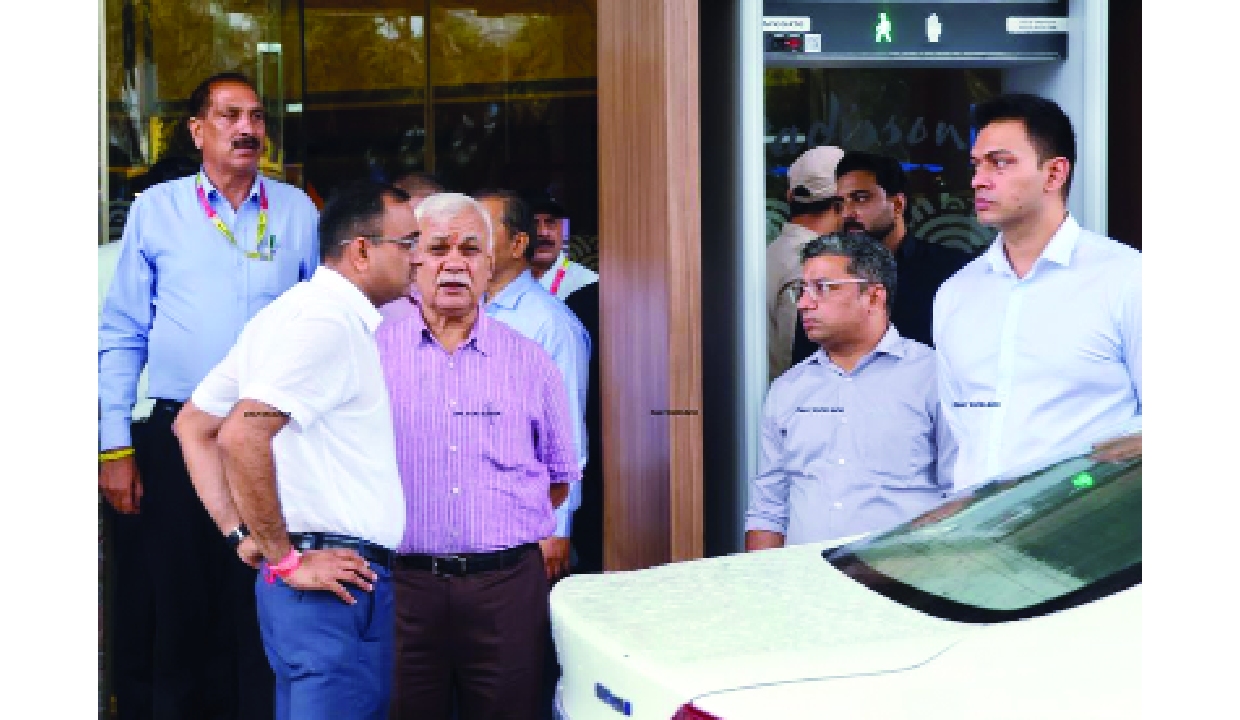
A high-level panel examining demographic changes on Tuesday visited one of the biggest clusters in the Narwal area of Jammu, housing several hundred families of Rohingya immigrants, for an on-the-spot assessment of the situation and impact of demographic changes due to the settlement of illegal immigrants from Myanmar and Bangladesh.
The four-member central panel, which arrived here in Jammu on Monday, also visited Jagti township, home to displaced Kashmiri Pandit migrant families near Nagrota, to gather views and inputs from different sections of the population.
The team comprising Census Commissioner Mritunjay Kumar along with Durga Shankar Mishra (retired IAS officer), Balaji Srivastava (retired IPS officer) and Shamika Ravi later met several delegations, including representatives of the Gorkha community and refugees from Pakistan-occupied Jammu and Kashmir (PoJK).
Earlier on Monday, the high-level committee held consultations with senior government and police officials, including Chief Secretary Atal Dulloo and Director General of Police (DGP) Nalin Prabhat. The Committee members got a detailed brief on the settlement of illegal immigrants, including Rohingyas from Myanmar and suspected Bangladeshis in different parts of the Jammu region, including the years when the process of settlement started, the present status of the immigrants and other issues concerning them.
In May, the Centre had constituted a high-level panel headed by Justice (Retd) Prabhakar Naolekar to study demographic changes in different parts of the country, arising from illegal immigration and other reasons, and to suggest measures to deal with these changes.
Prime Minister Narendra Modi had announced the “High-powered Demography Mission” on August 15 last year. The Union Cabinet gave its approval to the proposal on September 11, 2025.
According to a Home Department report tabled in the Jammu and Kashmir Assembly on February 2, 2018, “a total number of 6523 Rohingyas were found camping across 39 different locations spread across five districts of Jammu and Kashmir”. According to the Home Department report, “6461 Rohingyas were staying in the Jammu division and 62 in the Kashmir division.
However, local activists and politicians, spearheading a campaign in support of their deportation, often contest these figures, claiming a large number of these illegal immigrants are scattered and staying at different locations.
The UT administration launched a special verification drive in the first week of March 2021, and over 250 Rohingyas were found to be staying illegally in Jammu. They were later shifted to Hiranagar detention centre in Kathua district. In December 2024, the UT administration acted firmly against the landlords who had rented out and accommodated a large number of illegal immigrants from Myanmar (Rohingya refugees) on their vacant plots.
While the majority of Rohingyas are mainly confined to the outskirts of Jammu City and Samba district, a few families have also managed to reach Doda, Kishtwar, Ramban, Rajouri and Poonch districts because of the support arranged by some organisations and individuals. The four-member panel, during their visit to the Jagti township, received first-hand feedback from various members of the displaced migrant community.
Relief and Rehabilitation Commissioner (Migrants) Dr Arvind Karwani said the panel met the residents and interacted with them, listening very carefully to their sentiments and suggestions.
He said community representatives also raised the issue of their return and rehabilitation, putting forward several suggestions.
“All the speakers presented their views before the committee, which heard them patiently and took note of their concerns. I hope these issues and suggestions will be reflected in the committee’s report,” Karwani said.
A delegation of Panun Kashmir, led by its Chairman Dr. Ajay Chrungoo, placed before it a detailed Memorandum for consideration, investigation and permanent record. Panun Kashmir submitted that the destruction and forced expulsion of the indigenous Kashmiri Hindu community from the Kashmir Valley and the demographic assault upon Jammu cannot be examined as unrelated phenomena.
Panun Kashmir reiterated that the events of 1989–90 constituted genocide and not merely “migration”. The targeted killings, threats, terrorisation, religious persecution, forced expulsion and destruction of the community’s territorial and institutional presence must, in its submission, be examined as interconnected elements of an indoctrinated Jihadi campaign.
Panun Kashmir urged the Committee to examine whether the genocide of Kashmiri Hindus, demographic transformation in the Kashmir Valley, abnormal settlement and encroachment in Jammu, and the alteration of the demographic character of Jammu City constitute interconnected dimensions of a larger Jihadi demographic and territorial project. The Committee is scheduled to visit States and UTs affected by demographic changes, including West Bengal, Assam, North East, etc for a detailed study of the situation. It has a term of one year, which is further extendable by six months. It will submit its report to the Union Ministry of Home Affairs (MHA). The Committee has been mandated to conduct a comprehensive assessment of the demographic changes occurring across India due to illegal immigration and other abnormal reasons. It will analyse the patterns of abnormal population changes at the level of religious and social communities and will present a well-planned and time-bound solution to address the issue. It will scientifically assess the demographic changes, analyse their causes, and recommend appropriate policy, legislative, and administrative measures.