Illuminating tradition through the food of Maharashtra
On the darkest night of Ashadha, when the moon withdraws from the sky and the monsoon clouds deepen the silence of the evening, Deep Amavasya brings the quiet radiance of the lamp into the centre of worship. Observed on Ashadha Amavasya, just before the sacred month of Shravan begins, this Maharashtrian observance, also known as Divyachi Amavasya or Divyanchi Avas, is a festival of cleansing, light, renewal and preparation. Lamps made of brass, copper, silver or clay are taken out, washed, polished, worshipped and lit with devotion. Their flames are seen as symbols of knowledge, auspiciousness, protection and the removal of darkness. Around this sacred act, a distinctive food tradition has grown, where the kitchen also participates in the language of light. The most meaningful example is not an actual lamp that is eaten, but an edible lamp-shaped naivedya made from dough, offered during the puja and later shared as prasad.
Deep Amavasya, in its present Maharashtrian form, is best understood as a living regional tradition rather than a festival traceable to one single ancient textual command. Its exact name and household form are preserved more strongly in Maharashtrian folk practice, but its foundations rest on much older Hindu ideas: reverence for Agni, the sacred fire; Surya, the cosmic source of light; Lakshmi, the giver of prosperity and auspiciousness; Shiva, the deity especially worshipped in Shravan; and the spiritual importance of Amavasya as a time of inwardness, cleansing and renewal. The Vedic world gave deep significance to fire and light, while later Puranic and domestic traditions expanded the symbolism of lamps in worship. Deep Amavasya therefore stands at the meeting point of scriptural imagination, folk memory and household practice. It may not be a grand public festival, but its age lies in the continuity of habits passed from one household altar to the next.
The cultural background of Deep Amavasya lies in the intimate world of the home rather than in public spectacle. Unlike festivals marked by processions or large community gatherings, this observance is rooted in the prayer space, the kitchen, the courtyard and the family. The lamps that have illuminated daily worship through the year are cleaned with care and arranged before the deity. They are decorated with haldi, kumkum, flowers, akshata and sandalwood paste, filled with oil or ghee, and lit as a prayer for clarity and well-being. Elders often explain to children that the lamp is not merely a household object. It represents wisdom over ignorance, hope over fear and divine presence within the home. On Amavasya, when the sky itself is without moonlight, the lighting of lamps becomes especially meaningful because human effort answers cosmic darkness with sacred illumination.
Its association with Ashadha Amavasya gives the festival an even deeper meaning. Ashadha is a threshold month in the agrarian and devotional calendar. The rains have arrived, the fields are being renewed, the air is damp, the earth is fertile and households prepare to enter Shravan, a month associated with vrat, Shiva worship, restraint, prayer and seasonal discipline. In older agrarian communities, this was also a time to clean and reorder the home. Lamps, kitchens, storage vessels, grain spaces and prayer areas needed attention after the first force of the monsoon. The cleaning and worship of lamps can therefore be seen as a monsoon purification ritual, both practical and sacred. It removed dust, dampness and neglect from the objects of worship, while symbolically removing tamas, stagnation and inner darkness from the home. Maharashtra preserved this observance strongly because its domestic ritual culture has long given importance to household vrats, seasonal food, women-led puja traditions, local grains and the continuity of family worship. Deep Amavasya survived not because it required grandeur, but because it could be practiced with devotion inside the home.
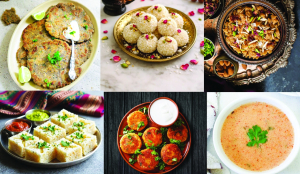
This is why the cuisine of Deep Amavasya must be approached carefully. It is not a pan-Indian Amavasya meal, nor should it be reduced to common festive dishes that could belong to any occasion. Its strongest culinary identity comes from Maharashtra, where the food reflects the symbolism of lamps, the seasonal rhythm of Ashadha and the devotional mood before Shravan. The most distinctive preparation is Kankeche God Dive, literally wheat flour lamps, but in culinary practice these are small edible diyas shaped from dough. They are not lit like ordinary lamps. Instead, wheat flour is mixed with jaggery water, ghee, cardamom and sometimes nutmeg, then kneaded into a firm dough. Small portions are shaped like tiny lamps, with a hollow centre pressed gently by the thumb. They are steamed until cooked, brushed with ghee, offered as naivedya during the worship of actual lamps and then eaten as prasad. Their importance lies in symbolism. The shape recalls the diya, while the ingredients turn that symbol into something sweet, nourishing and shareable.
In some homes, the same idea appears through millet or rice flour variations, but these should be understood as versions of the edible lamp-shaped offering rather than separate ritual lamps. Bajrichya God Dive use bajra flour, jaggery and ghee, giving the prasad an earthy monsoon warmth, while Jwariche Dive reflect Maharashtra’s older millet traditions. Tandalachya Ukadiche Dive are made from cooked rice flour dough and offer a softer, more delicate version. Some families also prepare Puranache Dive, where a little sweet chana dal and jaggery filling is enclosed within the dough before steaming. In each case, the preparation is edible because it is made as a dough offering shaped like a lamp, while the actual ritual lamps that are cleaned and lit remain separate sacred objects of worship.
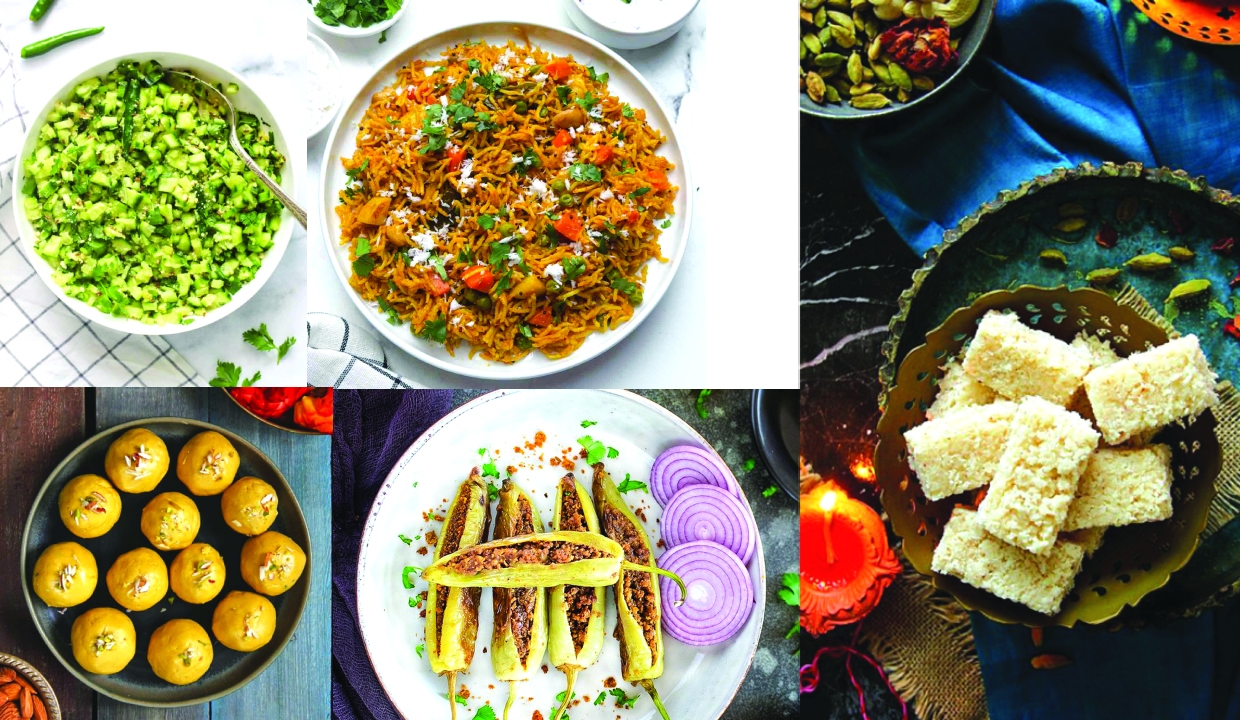
The sweet naivedya of Deep Amavasya extends from this lamp-shaped prasad into the wider Maharashtrian festive kitchen, but it should remain close to the spirit of the observance rather than become a general festival spread. Coconut-based sweets such as Naralachi Vadi add fragrance and softness to the naivedya thali, while Besan Ladoo and Rava Ladoo offer familiar festive sweetness made with patience, ghee and grain. Gharge, sweet pumpkin puris made with red pumpkin, jaggery, wheat flour and cardamom, add a golden warmth that quietly echoes the glow of the lamp flame. These sweets are not merely indulgences. They carry the softness, warmth and auspiciousness expected from food offered before the sacred lamps.
The savoury side of Deep Amavasya should be understood as Maharashtrian festive and seasonal food rather than as one compulsory ritual menu. Since the day comes just before Shravan, many families prepare satisfying vegetarian dishes that can be offered and enjoyed before the more restrained food practices of the coming month begin. Pithale, made from gram flour cooked with turmeric, green chilli, mustard, cumin and asafoetida, reflects the resourcefulness of the monsoon kitchen. Varan, a gentle toor dal preparation served with rice and ghee, brings a sattvic softness to the meal. Seasonal vegetables also matter deeply. Bhople Bhaji, made from pumpkin with mustard, curry leaves, chilli, jaggery and sometimes coconut, balances sweetness and spice, while Shevgyachya Shenganchi Bhaji uses drumstick pods in a simple, nourishing preparation. Steamed Seasonal Vegetables, served with coconut, sesame, peanut chutney or a light tempering, keep the meal rooted in freshness and restraint.
More elaborate savoury dishes bring festive depth to the table. Bharli Mirchi, green chillies stuffed with peanut, sesame, coconut, gram flour and spices, adds sharpness and richness. Patwadichi Rassa, made with gram flour rolls simmered in a spiced curry, shows how besan can become a complete dish with texture and body. Alu Vadi, prepared from colocasia leaves layered with spiced besan paste, steamed, sliced and shallow-fried, brings the sweet-sour-spicy balance of Maharashtrian cooking. Kothimbir Vadi turns fresh coriander, besan, sesame and spices into a fragrant steamed and fried snack, while Bhajani Thalipeeth, made from roasted multigrain flour, honours the grain diversity of Maharashtra. Matki Usal, cooked from sprouted moth beans with goda masala and coconut, adds protein, warmth and the symbolic suggestion of renewal on a dark lunar night. Rice and curry preparations may also appear when they remain regionally rooted. Masale Bhaat, made with rice, goda masala, coconut, sesame and vegetables such as brinjal or peas, gives the meal a festive centre without becoming ordinary. Bharli Vangi, small brinjals stuffed with peanut, sesame, coconut, goda masala, jaggery and tamarind, adds richness and depth. Ambat Goda Amti, a sweet-sour dal flavoured with tamarind or kokum, jaggery, goda masala and a traditional tempering, balances the thali and prevents the meal from becoming too heavy.
The accompaniments complete the Deep Amavasya meal and show how sacred food is built through attention to detail. Kakdichi Koshimbir, made with cucumber, curd or peanut powder, coconut, coriander and green chilli, cools the palate and suits the monsoon table. Tilachi Chutney and Shengdanyachi Chutney bring the nutty warmth of sesame and peanuts, while Dodkyachi Chutney, made from ridge gourd peels, reflects the no-waste wisdom of traditional kitchens. These dishes may not be the central ritual offering, but they belong to the food world in which the festival is lived.
Beverages for Deep Amavasya are seasonal, digestive and soothing rather than elaborate ritual drinks. Taak, or spiced buttermilk, cools the body and balances sweets, ghee and fried dishes. Kokum Saar brings a tart, refreshing note, while Solkadhi, made with kokum and coconut milk, gives the meal a coastal Maharashtrian presence. Some families may prefer Warm Haldi Doodh with nutmeg at night, especially when the monsoon air is damp and the body seeks comfort.
What makes the cuisine of Deep Amavasya beautiful is the way it allows devotion to pass through domestic labour. The family cleans and lights actual lamps as sacred objects, while the kitchen prepares edible lamp-shaped offerings as prasad. The two are connected by symbolism, but they are not the same thing. This distinction matters because it helps us understand the intelligence of tradition. The lamp that is lit represents divine light. The dough lamp that is steamed represents the same idea translated into food. When children watch elders prepare Kankeche God Dive, they learn that a festival is not only something to be seen, but something to be shaped by hand. Grain becomes offering, jaggery becomes sweetness of intention, ghee becomes sacred warmth and food becomes memory.
Preserving Deep Amavasya is not merely about saving an old custom. It is about protecting a complete way of thinking that younger generations urgently need. This one observance alone holds many lessons. Lessons of sustainability, zero waste, seasonal eating, family bonding, mindfulness, respect for local grains, culinary heritage and slow food. A cleaned lamp teaches care. A reused brass diya teaches continuity. A chutney made from vegetable peels teaches that nothing given by nature should be wasted. A meal built from millets, pulses, pumpkin, cucumber, drumstick and coconut teaches that food must follow the season, not fashion. A family gathered around the puja teaches that culture survives through participation, not performance.
Deep Amavasya offers a powerful reminder that tradition is not backward. It is ecological, emotional and deeply intelligent. In an age of instant food and fading household rituals, this festival asks us to slow down, cook together, listen to elders, understand ingredients, honour local produce and recognise the sacredness of everyday objects. The younger generation will inherit its meaning not by seeing lamps in photographs or reading about them in calendars, but by helping clean them, light them, shape the sweet edible diyas, taste the naivedya and feel the glow of tradition passing from one hand to another. To carry forward Deep Amavasya through its cuisine is to ensure that the flame of memory does not fade. It is to teach our children that even on the darkest night, a home that remembers its food, its faith and its values can remain full of light.
The writer is Secretary, Cuisine India Society; Views presented are personal.