IGIA becomes first in India to achieve water-positive status
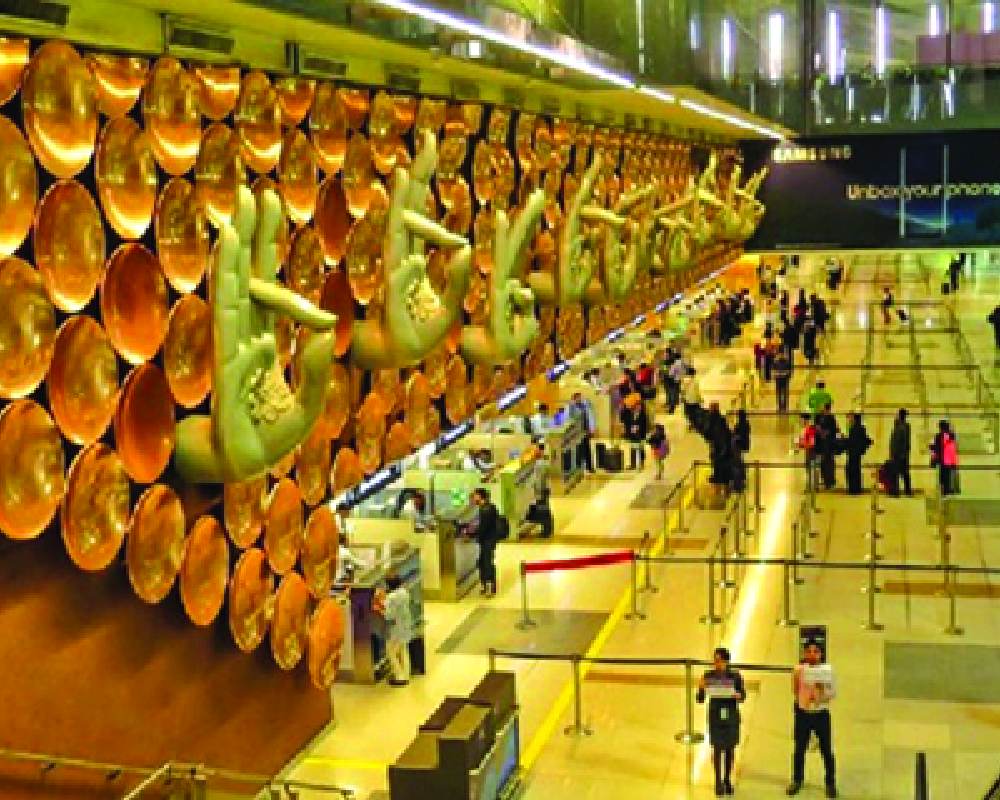
Delhi’s Indira Gandhi International Airport (IGIA) has become the country’s first airport handling more than 40 million passengers a year to achieve “water-positive” status. The milestone, confirmed at the Water Innovation Summit 2025 in New Delhi, marks a turnaround for a facility once classified as groundwater-stressed.
GMR Aero-led Delhi International Airport Limited (DIAL) said the airport now replenishes more water than it consumes. The achievement has been certified under the NITI Aayog-CII Scope I Water Neutrality Framework, positioning IGIA as a global example of large-scale sustainable water management.
“At DIAL, sustainability is not an obligation; it’s our driving force,” said CEO Videh Kumar Jaipuriar. He said the shift to water positivity strengthens the airport’s long-term goal of becoming a net-zero facility. “This reduces our dependence on natural resources and enhances our climate readiness,” he added.
The airport’s water-positive status comes at a time when Delhi continues to face recurring water scarcity. Officials said that by harvesting rainwater, recycling wastewater, and reducing consumption, IGIA has cut its pressure on local water sources.
DIAL said the transformation was built on a series of measures taken over the past few years. Over 625 rainwater-harvesting structures have been installed across the airport. Two recently added underground reservoirs can store up to nine million litres of rainwater.
A 16.6 million litres per day zero-liquid discharge sewage treatment plant recycles all wastewater generated at the airport. The treated water is then reused for cooling systems, landscape irrigation, toilet flushing, and other non-potable applications. Officials said this has reduced the reliance on external water by a significant margin.
To limit wastage, the airport uses sprinkler and drip irrigation systems across landscaped areas. A dedicated water treatment plant provides potable water to passengers while ensuring minimal loss in the process.
DIAL also completed the Scope I Water Neutrality Assessment, which reviews measurement, monitoring, conservation, and restoration practices. Officials said the assessment confirms that the airport’s systems are sustainable at the watershed level, not just within the airport boundaries.
The recognition adds to IGIA’s existing environmental credentials. It is the first airport in Asia in its category to achieve Level 5 Carbon Accreditation under the Airports Council International programme. DIAL said the twin achievements underline the airport’s role as a leader in climate-resilient infrastructure.
Officials said the airport’s water strategy can be replicated by other high-capacity transport hubs and large industrial campuses. The model relies on a mix of rainwater capture, reuse of treated wastewater, and real-time monitoring. “This shows that a large airport can grow without increasing pressure on the city’s water,” a senior official said.
The airport operator said the water-positive achievement fits into its broader decarbonisation plan. Other initiatives include renewable energy use, waste reduction, and social-impact programmes aimed at communities around the airport.
DIAL’s parent company, GMR Airports Limited, operates several airports in India and Southeast Asia. Officials said the systems used at IGIA may be adopted at other GMR-run facilities as part of the group’s sustainability roadmap.
Industry observers said the certification could push more airports to adopt similar frameworks, especially in water-stressed regions. With passenger traffic rising, officials said sustainable water management will become central to long-term airport planning.