How can a non-believer in North claim right of entry to Sabarimala, SC asks
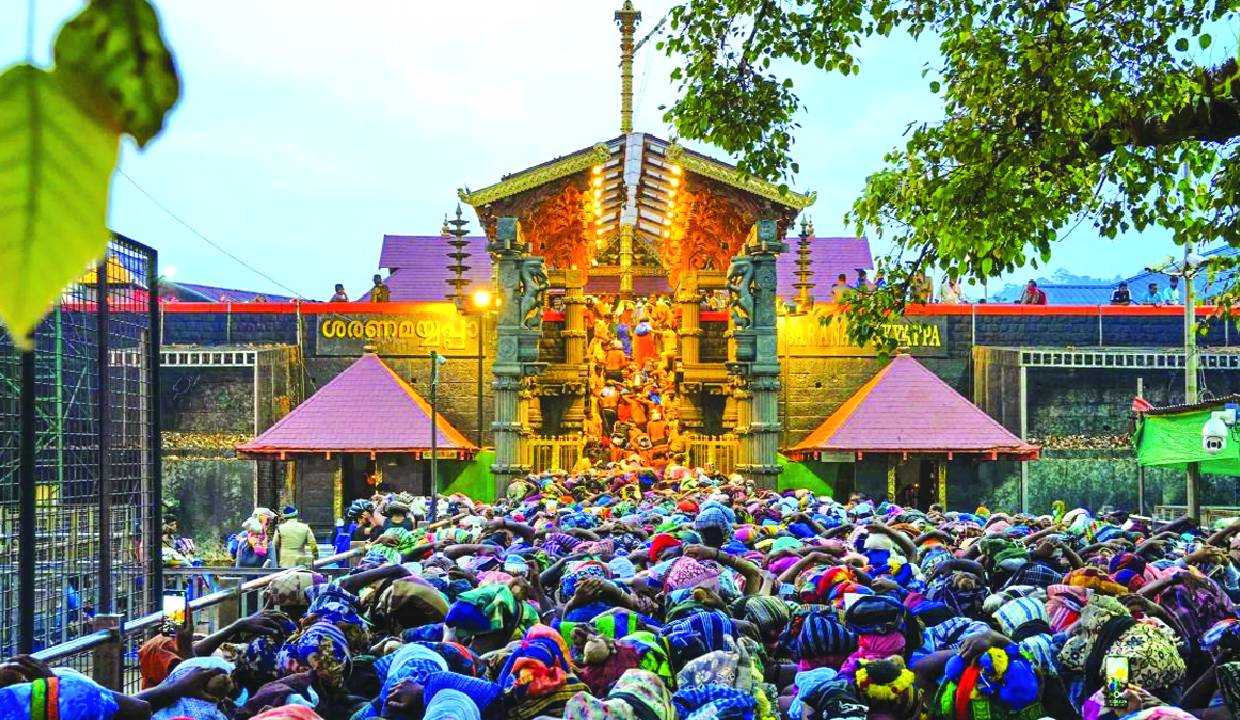
How can a non-believer in North India claim the right of entry to the temple in Sabarimala? The Supreme Court questioned on Wednesday and said that while deciding the issue regarding the right to enter temples, it has to examine whether a devotee or a non-devotee is claiming that right.
The observation of a nine-judge Constitution bench came while hearing petitions related to discrimination against women at religious places, including the Sabarimala temple in Kerala, and on the ambit and scope of the religious freedom practised by multiple faiths.
The bench comprised Chief Justice of India (CJI) Surya Kant and Justices BV Nagarathna, MM Sundresh, Ahsanuddin Amanullah, Aravind Kumar, Augustine George Masih, Prasanna B Varale, R Mahadevan and Joymalya Bagchi.
Senior advocate Indira Jaising, appearing for two women named Bindu Ammini and Kanakadurga, who are supporting the 2018 judgement, submitted that one of the petitioners is a scheduled caste woman and stopping her from visiting the temple would be a violation of Article 17 (Abolition of Untouchability) of the Constitution.
A five-judge Constitution bench, by a 4:1 majority verdict in September 2018, lifted a ban that prevented women between the ages of 10 and 50 years from entering the Sabarimala Ayyappa temple and held that the centuries-old Hindu religious practice was illegal and unconstitutional.
“Today we are told that non-caste Hindus can enter Sabarimala, but not women,” she said. But, because of Article 17, all men can enter, with no restriction of caste, she added.
The bench responded to the submission that the woman was not prevented because she belongs to the scheduled caste, but she was stopped as the female belonged to the 10 to 50 age group.
During the hearing, Jaising submitted that exclusion of women in the Sabarimala temple operates during the most productive and creative period of her life, that is, between 10 and 50.