Heart of India’s Growth Story
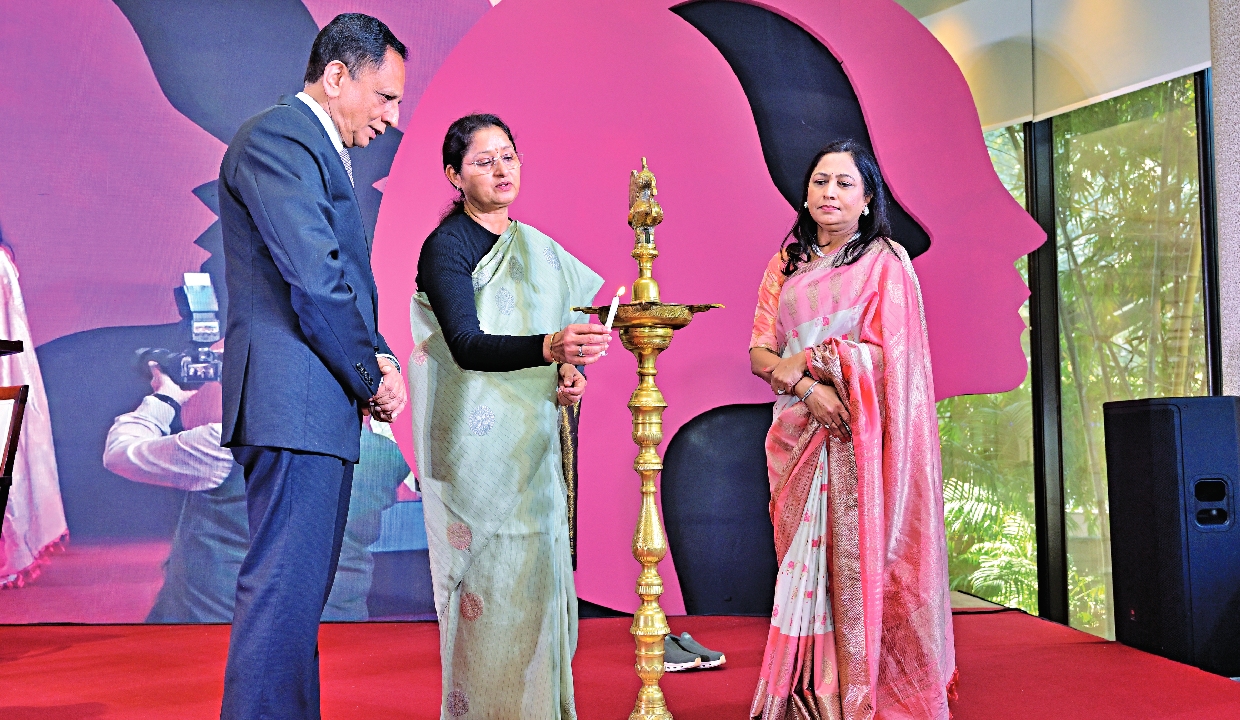
“There is no limit to what women can accomplish, except the limits that they place upon themselves.” With this powerful reminder, the inaugural session of the Sashakt Nari, Viksit Bharat Conference 2026, organised by the Chintan Research Foundation (CRF), set the tone for a wide-ranging discussion on the central role of women in India’s development journey recently. Held in the spirit of International Women’s Dayand its theme “Give to Gain”, the conference underscored a simple but powerful idea: when societies invest in women’s empowerment, the gains are collective, economic and intergenerational. Opening the session, Shishir Priyadarshi, President of CRF, emphasised that the vision of Viksit Bharat must go beyond conventional economic indicators. “Viksit Bharat is not merely about GDP growth, infrastructure or global rankings,” he said. “It is about who participates in growth, who benefits from it, and who shapes its direction.”
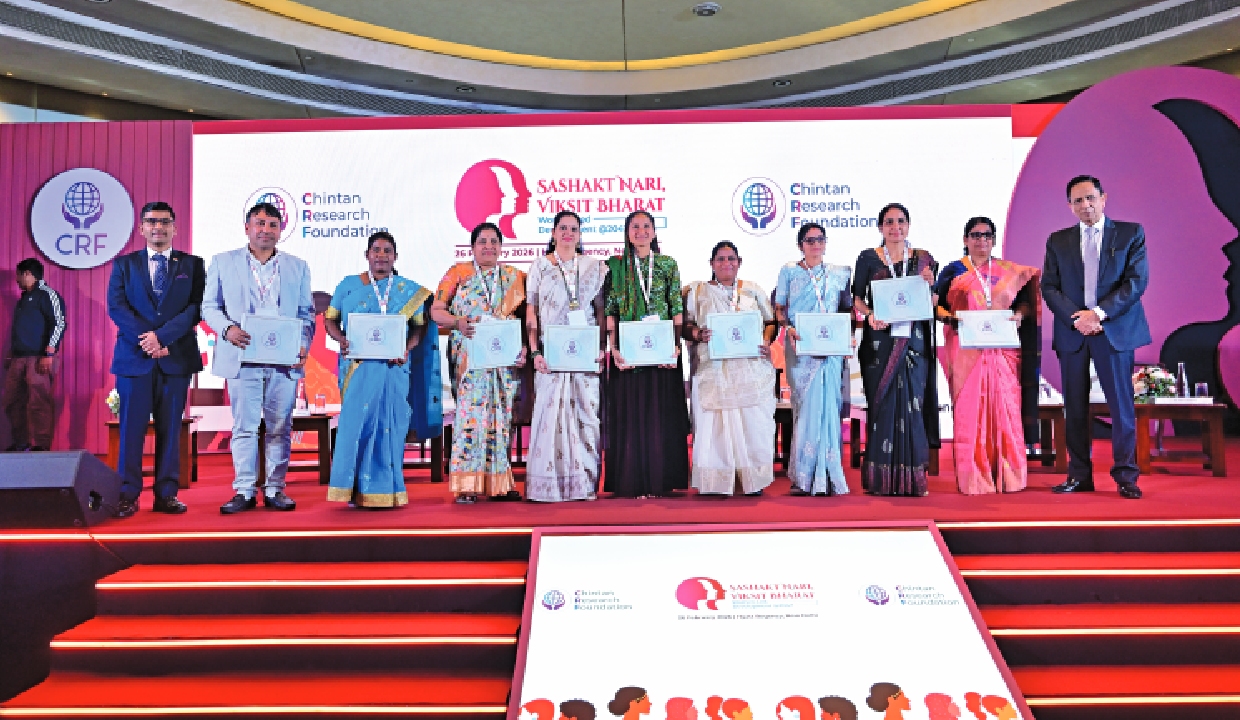
Despite rising education levels, women’s participation continues to be constrained by unpaid work, social norms, safety concerns and limited access to finance. He stressed that women-led development must be seen as an economic growth strategy, and called for institutional reforms, greater access to capital, shared care responsibilities and stronger partnerships. Thus, the conference was designed not merely to highlight challenges but to identify pragmatic solutions.
Dr Priti Adani, Chairperson of the Adani Foundation, delivered the keynote address, situating women's empowerment within India’s broader developmental trajectory. Reflecting on the nation’s aspirations, she posed a fundamental question: “Viksit Bharat for whom, and by whom?” She emphasised that no nation has achieved sustainable development while leaving half its population on the margins of economic activity.
While India’s history offers numerous examples of women’s leadership, Dr. Adani stressed that the transformation India seeks must extend far beyond celebrated figures. “The India of tomorrow will be shaped by millions of women in villages, small towns and emerging urban centres-women who may never appear in textbooks but whose economic participation will determine the strength of our nation,” she said.
The event was attended by Smt. Annapurna Devi, Union Minister for Women and Child Development, who joined as the Chief Guest. In her remarks, the Minister underscored the centrality of Naari Shakti in India’s development vision.
Like the speakers before her, the Minister too emphasised that empowerment must begin at the grassroots and extend across the life cycle; from education and health to economic opportunity and leadership.
Fostering Women’s Entrepreneurship at the National Conference
The ‘Sashakt Naari, Viksit Bharat’ national conference, organised by Chintan Research Foundation convened leading voices across policy, industry, and philanthropy to address the evolving landscape of women-led development in India.
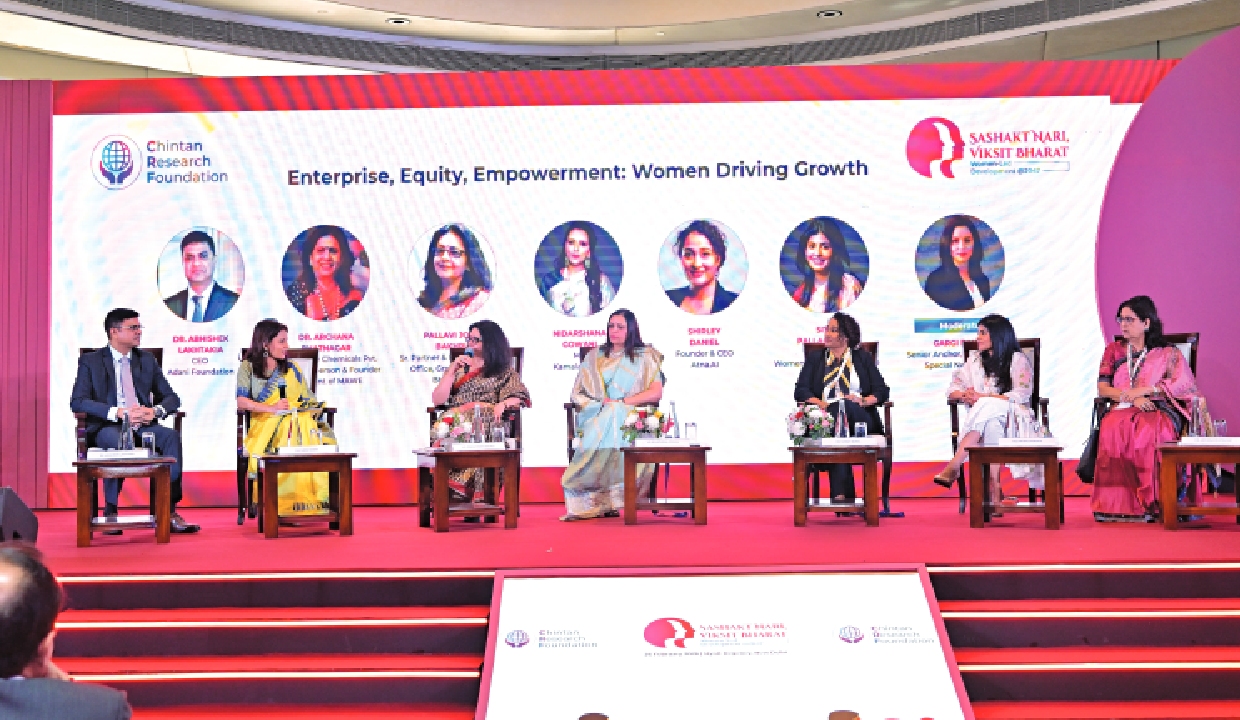
Segregated amongst multiple panels featuring distinguished dignitaries, one of the highlights of the conference was a panel which focussed entirely on Enterprise, Equity and Empowerment. Moderated by Gargi Rawat, Senior Anchor at NDTV, the session moved beyond conventional discourse to tackle the structural, financial, and societal mechanics required to scale women-led enterprises. The panel underscored the collective consensus that unlocking the entrepreneurial potential of women is not merely a social imperative, but a foundational pillar for a resilient and developed economy.
A recurring theme throughout the discussion was the urgent need to transition from short-term charitable initiatives to robust, scalable ecosystems. Sita Pallacholla, CEO of WE Hub, Government of Telangana (India's first state government-backed organisation supporting women entrepreneurs), highlighted the effectiveness of institutional frameworks that guide women from idea validation to sustainable income. Striking a chord with the audience, she noted, “Women are often over-mentored and underfunded,” emphasising the necessity of practical, hands-on financial support and bootcamps. She also shared compelling success stories born from this structured approach, including that of Dr Hima Bindu, a paralysed doctor who scaled the production of 14 wheelchair variants, and also of a grassroots millet cookie entrepreneur who transitioned from the informal sector to supplying the Telangana Secretariat and modern supermarkets through formalisation and branding support.
Complementing this state-level perspective, Dr Abhishek Lakhtakia, CEO of the Adani Foundation, detailed the corporate sector’s role in driving structural shifts at the grassroot level. He articulated a clear departure from short-term charity towards impactful interventions.
“We believe in long term sustainable impacts,” Dr Lakhtakia stated, illustrating how traditional Self-Help Groups (SHGs) can be transformed into robust, entrepreneurship-based organisations. By enabling women to establish their own market presence, through ventures like cloud kitchens, catering, and Swateja Mart, these initiatives have demonstrated remarkable market integration. Highlighting the scale of this success, he noted that these women-led projects are now achieving an impressive Rs 86 crore in annual turnover.
Despite these structural wins, significant barriers remain at the policy and perception levels. Dr. Archana Bhatnagar, MD of Haylide Chemicals and President of MAWE, shed light on the pervasive doubts women face regarding their capacities, particularly from financial institutions and government bodies. She advocated strongly for focused capacity-building programmes, especially targeting tier 2 and tier 3 cities. Dr. Bhatnagar pointed out that while government schemes exist, there is a critical need for higher awareness and adequate staffing within agencies to implement them effectively. Her advocacy for equitable public procurement, which contributed to a 5% reservation for women entrepreneurs in government tenders, stood out as a vital policy victory. "Persistence and perseverance are essential for women entrepreneurs," she reminded the audience, adding that "women have a power that has to be unleashed from them."
The panel also tackled the harsh realities of breaking into historically male dominated industries. Nidarshana Gowani, MD of the Kamala Group, spoke candidly about the unique hurdles in the real estate sector. She noted that bias and scepticism are daily realities at construction sites and negotiation tables. "Real estate is a unique sector for women; it's not an easy task," she acknowledged. Yet, she emphasised that "every woman has a story to tell about her success," built through resilience and the critical backing of holistic support systems where male domination turns into "male allies" and support, working alongside women-to-women networks. Looking towards the future economy, the long-run, Shirley Daniel, Founder and CEO of Atna.AI, brought a crucial perspective on systemic change in the technology sector. Having left a corporate career to establish an AI fraud detection company, Daniel argued that policy alone is insufficient if women are excluded from foundational developmental stages. "The challenge begins at the design stage. Are women having a say in architecting the systems?" she provoked. Daniel stressed that while incremental change is visible, true economic parity requires "women to move beyond being just founders to becoming the architects, funders, and policy influencers of the future."
Tying these diverse developmental threads together, Pallavi Joshi Bakhru, Senior Partner and Leader of the Family Office at GT, synthesised the core human element required for this economic transformation; unyielding determination and community infrastructure. "Be determined about what you want to do," she advised, cementing the sentiment with a powerful reminder that "behind a successful woman, there is a whole army of support." Ultimately, the panel mapped a comprehensive blueprint for the future of women-led entrepreneurship. From the targeted deployment of capital and state-backed incubation, to policy reform and systemic inclusion in emerging sectors, the discussion made one thing clear - a truly Viksit Bharat requires dismantling structural barriers and replacing them with sustainable, well-funded ecosystems that treat women as key drivers of market growth.
Breaking Lines of Control and Patriarchy: Law, Security and Defence
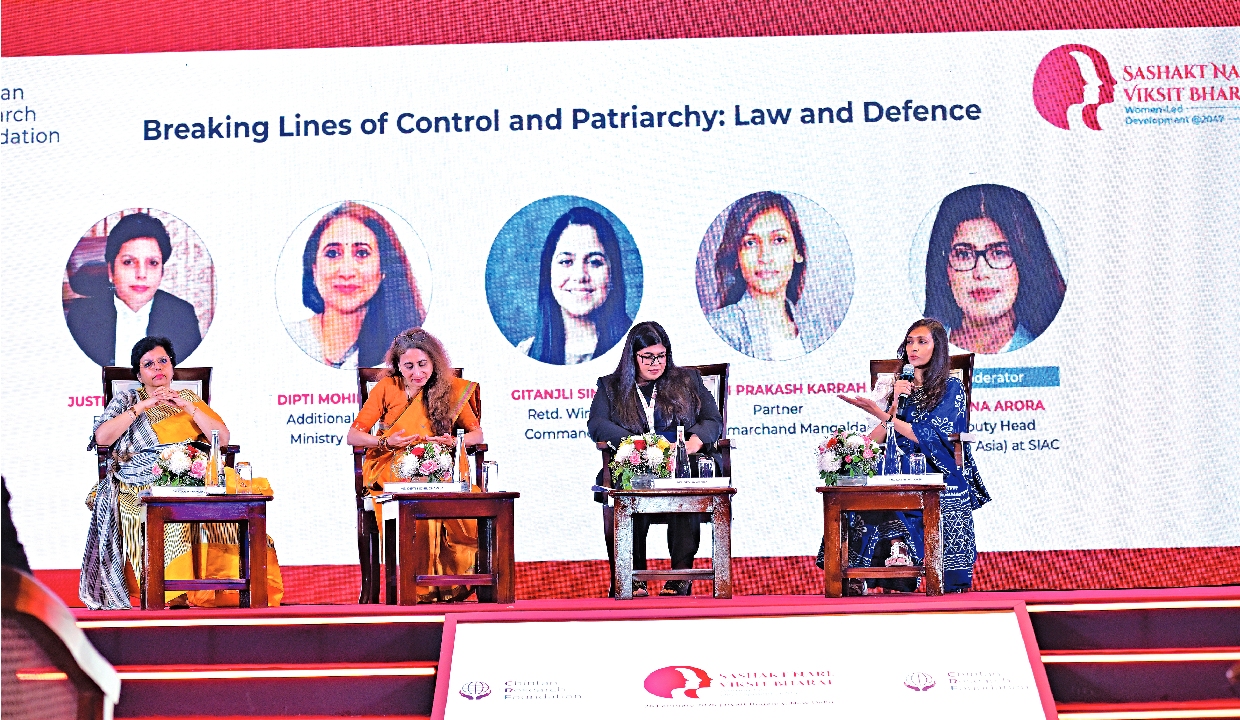
The persistence of gender hierarchies across institutions of power continues to shape women’s participation in law, governance, and national security. While constitutional guarantees of equality have expanded opportunities for women in public life, structural barriers and deeply embedded social attitudes often limit their advancement to positions of leadership. These tensions formed the focus of the panel discussion titled “Breaking Lines of Control and Patriarchy: Law, Security and Representation”, held as part of the Sashakt Nari, Viksit Bharat: Women-Led Development @2047 Conference organised by the Chintan Research Foundation in New Delhi.
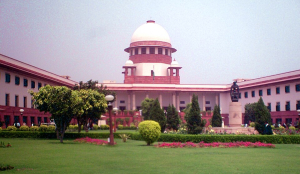
The panel featured Justice Hima Kohli of the Supreme Court of India, Deepti Mohal Chawla, Additional Secretary in the Ministry of Defence, and Gathi Prakash, Partner at Cyril Amarchand Mangaldas. Through their professional experiences, the panellists reflected on how women navigate institutions historically dominated by men and what reforms are necessary to transform representation into meaningful participation.
Opening the discussion, Justice Hima Kohli offered a compelling reinterpretation of the phrase “lines of control”. While the term typically evokes images of contested borders and geopolitical tension, she suggested that women encounter their own invisible lines of control in everyday life. These boundaries are not enforced by military posts or physical barriers but by inherited customs, social expectations, and deeply entrenched beliefs about gender roles.
Reflecting on the role of the judiciary, she observed that the law itself has historically been shaped within male-dominated public spaces. Women entered the legal framework initially as subjects rather than authors of legal norms.
Over time, however, the judiciary has played a crucial role in recalibrating the law in accordance with constitutional morality.
Offering a perspective from the defence establishment, Deepti Mohal Chawla framed women’s empowerment as integral to national development and security. She argued that no country can aspire to sustained economic growth or strategic strength while limiting the potential of half its population.
Chawla also highlighted the continuing importance of safety and institutional support for women. Ensuring physical security and equitable working environments is not merely a social concern but a national imperative tied directly to governance and development.
Approaching the issue from the perspective of legal practice, Gathi Prakash highlighted the paradox between scientific equality, constitutional guarantees, and lived experience.
From a biological standpoint, she noted, human beings share 46 chromosomes, with only one pair determining sex. Yet society frequently evaluates intelligence, competence, and leadership through the lens of that single biological difference. Despite constitutional assurances of equality, representation within the legal profession reveals stark disparities. In seventy-five years, women have comprised only around four percent of judges in the Supreme Court. Women account for just over four percent of designated senior advocates, and positions such as Solicitor General or Attorney General have never been held by women. Bar Council representation similarly remains limited. Prakash contrasted these trends with the relatively stronger representation within law firms, where institutional structures-such as workplace safety mechanisms and flexible work arrangements-have supported women's professional advancement. These differences, she suggested, highlight the importance of structural reforms that enable retention and leadership progression.
As moderator, Devna Arora offered reflections from the field of international arbitration, observing that the profession has historically been shaped by its own invisible lines of control. Arbitrator appointments have often emerged from tightly knit professional networks, producing limited diversity in decision-making spaces.
However, she noted that these patterns are gradually changing. Institutional arbitration frameworks, including those at SIAC, are encouraging broader participation and greater transparency in appointments. Women now account for approximately one-third of arbitrator appointments at SIAC-a development that signals meaningful progress compared to earlier decades.
Arora concluded by noting that as arbitration becomes more institutionalised in South Asia, reliance on informal networks will diminish, creating opportunities for a more inclusive professional ecosystem.
The session ultimately brought together perspectives from the judiciary, defence governance, legal practice, and international dispute resolution. While legal frameworks and institutional access have improved significantly, the discussion highlighted the continuing challenges of representation, leadership advancement, and workplace safety.
The panel concluded with a shared message: breaking lines of control is not about disruption but about expanding opportunity, strengthening institutions, and ensuring that constitutional commitments to equality are fully realised in everyday practice.
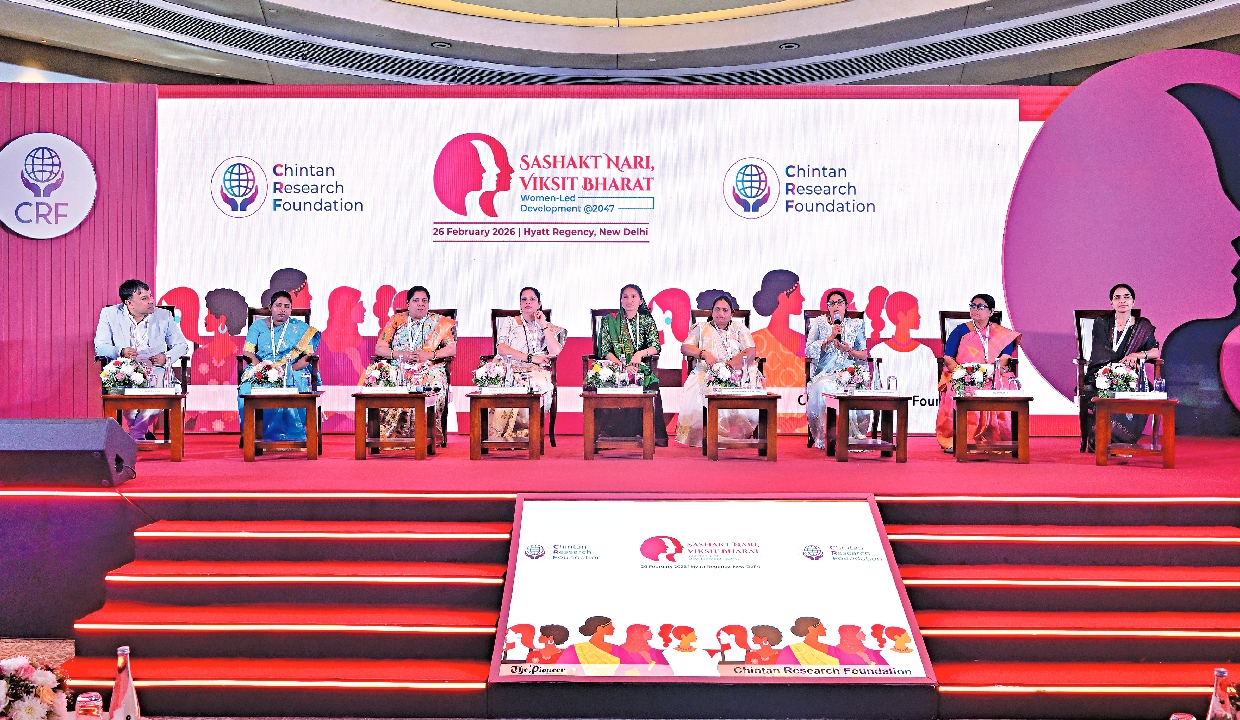
Daughters of the Soil: Voices from Rural India
At the Sashakt Nari Viksit Bharat Conference 2026, one of the most compelling conversations unfolded in the panel titled “Daughters of the Soil: Voices from Rural India.” The session brought together grassroots women leaders and entrepreneurs from across India who shared their journeys of transformation from limited economic opportunities to becoming drivers of livelihood generation in their communities. The discussion highlighted how targeted training, financial linkages, and community engagement by both public institutions and private philanthropic organisations can help rural women overcome entrenched social barriers and build sustainable local economies. Rural women's economic empowerment is not merely about income generation but also about dignity, agency, and leadership within communities. The stories shared during the session illustrated this case very beautifully.
One such story was that of Sonalben Naran Goyal, Founder of Sri Gopal Gir Gaushala, whose entrepreneurial journey began with a single cow received at the time of her marriage to establish a farm with 50 Gir cows. However, she soon realised that milk sales alone were insufficient to sustain the business and later expanded to value-added dairy products such as ghee and buttermilk, significantly enhancing their earnings. Today, Sonalben leads a team of ten women who contribute financially to their families' livelihoods. Her journey demonstrates how diversification and skill development can transform subsistence activities into sustainable enterprises.
The panel further highlighted the role of collective women-led enterprises, particularly Self-Help Groups (SHGs), in creating new livelihood opportunities.
Dakshaben Keshavbhai Chaudhary, representing tribal and marginalised communities, described how professional guidance and financial support helped tribal women overcome deeply rooted social barriers. Today, she leads a network employing more than 500 tribal women engaged in activities ranging from dairy enterprises to services such as mandap decoration, earning up to Rs 30,000 per month. Access to credit through bank linkages has been a critical enabler of this growth.
Suraja TK from Kerala described how women supported by livelihood federations and CSR programmes are engaged in diverse activities ranging from agriculture and catering to boutique services and high-tech cleaning, increasing women’s monthly incomes to between Rs 8,000 and Rs 23,500 and enhancing their social standing within their communities.
Collectively, the stories shared in the session underscored a powerful message: when rural women gain access to skills, credit, markets, and institutional support, they not only transform their own lives but also become drivers of inclusive rural development.
The panel served as a testament to the resilience, leadership, and entrepreneurial spirit of India's rural women, true "Daughters of the Soil", shaping the future of their communities.
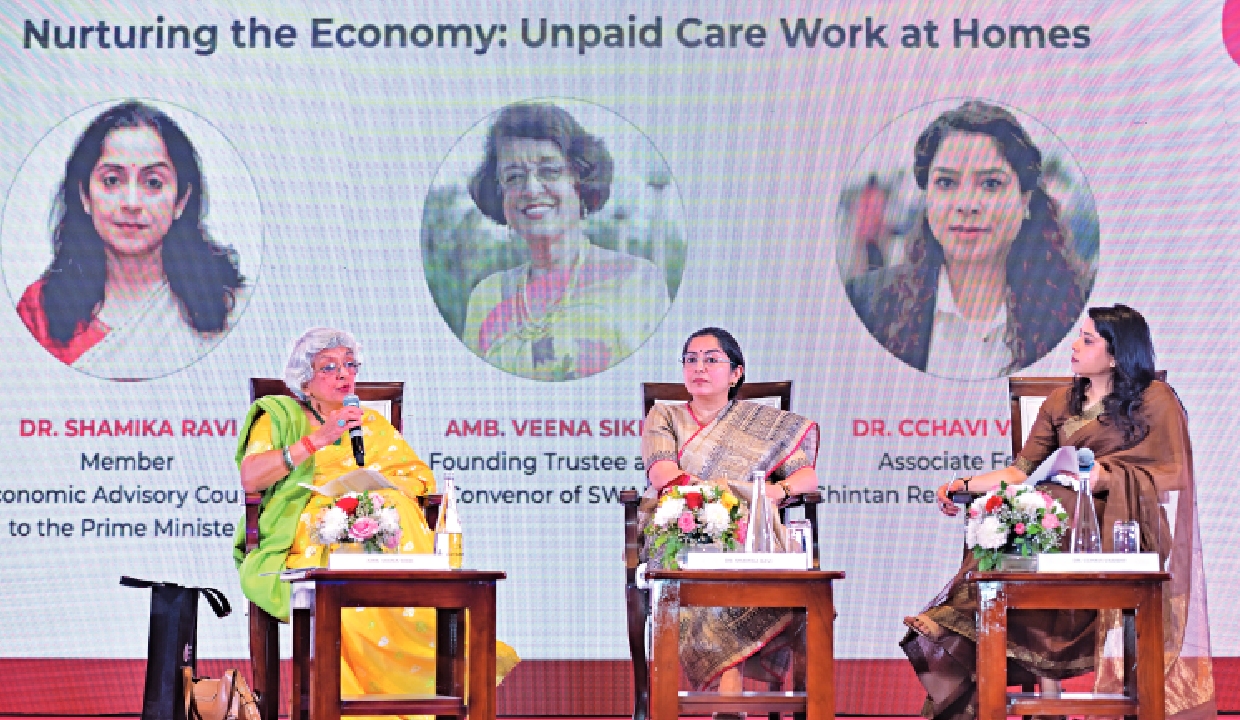
Fire side Chat
India’s ‘Purple Economy’ in the Spotlight: Fireside Chat Ties Unpaid Care Work to Women’s Day ‘Give to Gain’ Call
Unpaid care work, often called the ‘purple economy’, quietly powers India’s households, families, enabling labour market participation of others, supporting public services and even national growth, yet it remains largely invisible in the economic calculations. This hidden labour in the form of cooking, cleaning, childcare, and eldercare, falls overwhelmingly on women's shoulders, which ultimately restricts female labour force participation, mobility, and entrepreneurial capacity. A compelling fireside chat titled Nurturing the Care Economy — Recognising Unpaid Care Work, held during the Chintan Research Foundation (CRF) national conference brought this issue to life.
The ‘Give to Gain’ theme for International Women’s Day 2026 too recognises women’s unpaid work at home and offers practical ways to ease women’s overwhelming burdens. By giving respect, visibility, knowledge, funding and resources, equal pay and budget along with opportunities and voice, at the home, work and community, the goal is to reduce this “time poverty”.
Women across the globe toil longer hours than men once unpaid domestic and care work enters the picture, as the World Inequality Report 2026 starkly reveals. And in India, this injustice cuts even deeper. Dr Cchavi Vasisht, Associate Fellow at CRF, opened the session by stating the striking data from India’s Time Use Survey, that women spend 305 minutes daily on unpaid care activities, compared to men’s 88 minutes, shouldering nearly 84 percent of the total load. This work generates value equivalent to 15-17 percent of GDP, and must be viewed not merely as a private household responsibility but as a critical macroeconomic challenge which demands urgent policy attention to unleash women's economic contributions.
Dr. Shamika Ravi, member of the Prime Minister's Economic Advisory Council, emphasised that unpaid care work should not be treated as a women’s issue alone but as a central economic concern. She highlighted structural peculiarities of India's labour market, particularly the relatively low labour force participation rate (LFPR) compared with other major economies. While China and Vietnam have LFPRs of around 70-75 percent, India's LFPR remained close to 50 percent a decade ago and has only recently increased to around 55-56 percent.
Ambassador Veena Sikri deepened the narrative with the social and cultural dimensions of unpaid work, breaking down unpaid labour into two major components, i.e. care responsibilities for children, the elderly, and the sick and the household chores such as cooking, cleaning, and maintenance. Even after entering the labour market, women face the double burden as they remain responsible for household duties. This persistent imbalance restricts women's economic participation and reinforces gender inequality. South Asia exhibits some of the highest levels of gender imbalance in unpaid work globally, with limited progress in redistributing household responsibilities. She also noted that rural women's agricultural work remains undercounted, despite women performing the majority of agricultural tasks.
Held amid CRF's forward-thinking conference, the conversation suggested actions along three dimensions, i.e., Recognition, Reduction and Redistribution of care and household responsibilities. To start with, there is a need for gender-disaggregated data and gender audits to complement gender budgeting efforts. Next, the policy responses should focus on expanding genuine choices for women, rather than simply raising labour force participation mechanically. Women should have the freedom either to participate in the labour market or to devote time to caregiving without economic or social penalties. In addition, there is a need for the development of care infrastructure through markets and public services via providing affordable childcare and eldercare services to ensure women's participation in the labour force.
Furthermore, the central solution to recognise and redistribute is to change social norms and patriarchal mindsets. Despite strong laws and policy programmes, there has been limited progress in addressing underlying attitudes toward gender roles. Mindset formation begins early and therefore, schools and families play a critical role in shaping attitudes toward gender equality. The textbooks must challenge stereotypes and engage boys for achieving meaningful change.
As India advances, these conversations are crucial to celebrate women's untapped potential. On the occasion of Women's Day, let us live Give to Gain by easing care burdens through advocacy and support. As when society recognises and invests time and infrastructure, women gain freedom, and entire communities rise together.