Haryana to begin SIR of electoral rolls from June 15, says CEO
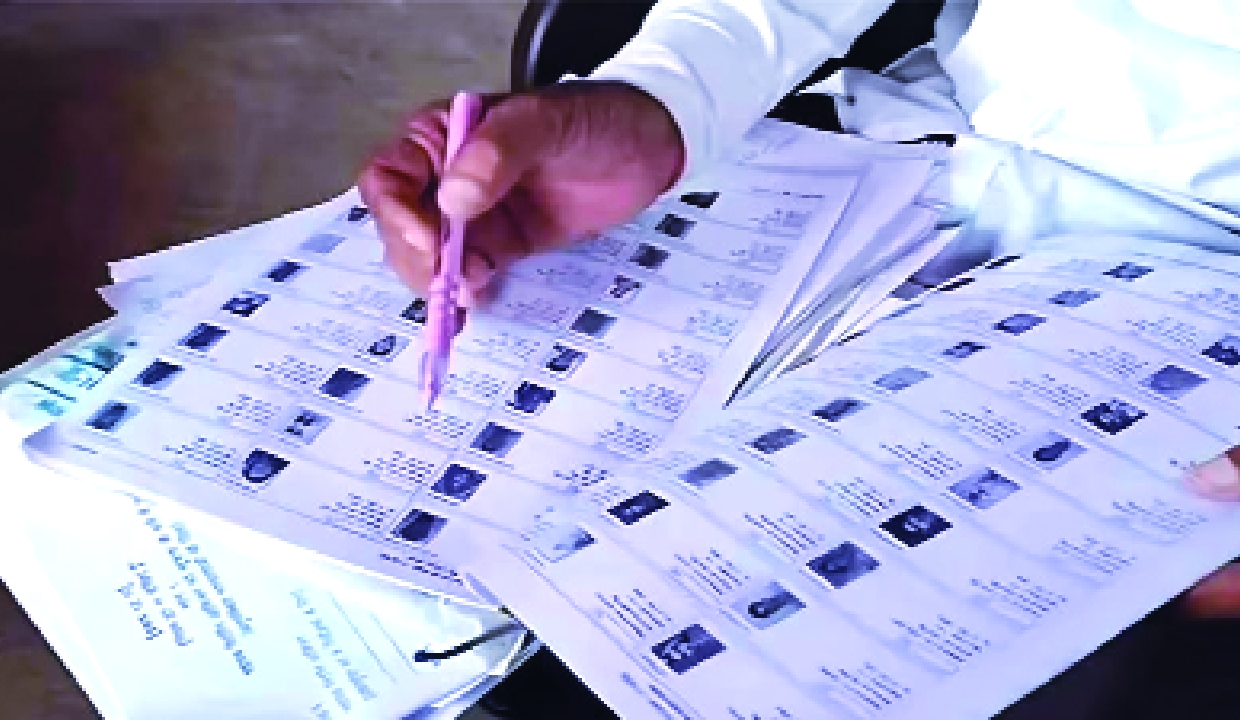
Haryana Chief Electoral Officer (CEO) A Sreenivas on Sunday said the Special Intensive Revision (SIR) of electoral rolls will begin across the state on June 15 in accordance with the directions of the Election Commission of India.
Under the exercise, booth-level officers (BLOs) will conduct door-to-door verification of voters and collect enumeration forms between June 15 and July 14, he said.
Haryana currently has 2,06,55,929 registered voters and 20,629 polling stations. BLOs have been deployed at all polling stations and will visit every household to verify voter details. Enumeration forms provided to voters must be filled, signed, and returned to the BLOs, he said.
According to ECI directions, voters whose completed forms are not received will not be included in the draft electoral roll.
Sreenivas said BLOs will make at least three attempts to contact each household.
“If family members are unavailable, the BLO will place the enumeration form under the door and leave a notice containing their name and mobile number, enabling the concerned voter to contact them,” he said.
The ECI has specified 11 categories of documents for voter verification, including identity cards or pension payment orders issued to regular employees and pensioners of the Central Government, State Government, or public sector undertakings.
Identity cards, certificates, or other documents issued before July 1, 1987, by the Central Government, local authorities, banks, post offices, LIC, or public sector undertakings; birth certificates issued by a competent authority; passports; matriculation or other educational certificates issued by recognised boards or universities are also included.
Domicile certificates issued by competent State authorities; forest rights certificates; OBC, SC, ST, or other caste certificates issued by competent authorities; entries in the National Register of Citizens; family registers maintained by State or local authorities; and Government-issued land or house allotment certificates are the remaining categories.
He said in cases where automatic verification is not possible through available records, voters may establish their eligibility and verify their details through these documents.
He further informed that citizens who attain the age of 18 years on July 1, 2026, will also be eligible to apply for inclusion in the electoral roll.
Sreenivas stated that the draft electoral roll will be published on July 21.
Thereafter, claims and objections will be accepted from July 21 to August 20, and all such cases will be disposed of by September 18. The final electoral roll will be published on September 22, he informed.
He noted that the last large-scale house-to-house voter verification exercise in the State was conducted in 2002, making this the first statewide SIR campaign in more than two decades. So far, an average of 64.7 per cent of the mapping work has been completed, he said.
According to Sreenivas, the objective of the campaign is to ensure that every eligible citizen is included in the electoral roll, to update records relating to deceased or shifted voters, and to make the voter list more accurate, transparent, and error-free.
He appealed to all citizens to actively cooperate in the process so that this vital democratic exercise can be strengthened further.
He further stated that a large number of booth-level agents (BLA-2) have been appointed by political parties to assist in the revision process.
So far, 15,808 BLAs have been appointed by the Bharatiya Janata Party, 12,855 by the Indian National Congress, 270 by the Communist Party of India (Marxist), 217 by the Indian National Lok Dal (INLD), and 214 by other political parties.
A BLA can submit up to 50 enumeration forms to a BLO each day.
Appealing to all recognised political parties to appoint BLAs at every polling station, he said that this would further strengthen transparency and fairness in the revision process.