Govt says 7.8% growth is solid, not a statistical trick
The Union Government on Wednesday dismissed claims that the first-quarter economic growth was closer to 2.6 per cent, asserting the 7.8 per cent expansion is backed by solid output data.
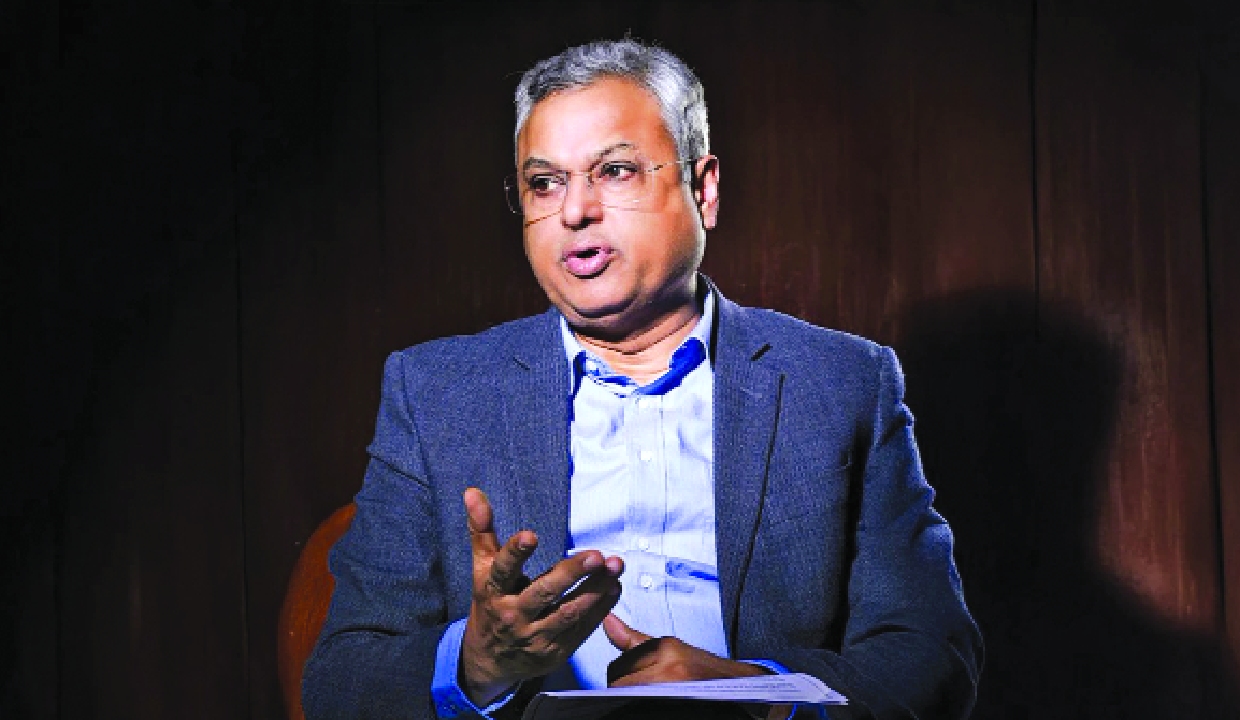
“It is unfortunate that comparison is being made of apples and oranges,” said Saurabh Garg, Secretary in the Ministry of Statistics and Programme Implementation (MoSPI). He made the statement following remarks by a former finance secretary, Subhash Chandra Garg, that GDP growth would have been about 2.6 per cent in current prices if last year’s GDP had not been revised down from roughly Rs 86 lakh crore to Rs 80 lakh crore.
The statistics secretary said the argument was flawed because it compared current-price figures rather than constant-price estimates, and — more importantly — used the Rs 86.05 lakh crore estimate from the old 2011-12 base-year series against the latest numbers calculated under the new 2022-23 base year.
He said the Rs 86.05 lakh crore Q1 FY2025-26 GDP estimate cited by critics belonged to the old 2011-12 base-year series and was superseded when the new 2022-23 series was introduced in February 2026.
Under the new series, Q1 FY2025-26 current-price GDP was initially estimated at Rs 80.32 lakh crore. It was subsequently revised to Rs 80.44 lakh crore and then to Rs 80.00 lakh crore as updated data, including the new Index of Industrial Production and Producer Price Index, were incorporated.
The successive changes, he said, reflected the normal revision cycle and incorporation of additional information, rather than an attempt to reduce the previous year’s GDP to mechanically lift the latest growth rate.
“The claim that the numbers have been compressed now relates to a number which has been released in February 2026, but which has not been quoted,” he said.
He went on to stress that growth comparisons are made using estimates from the same comparable series and at constant prices, which remove the effect of price changes.
In a statement, MoSPI said revisions to last year’s GDP and the divergence between different price measures reflect updated data and estimation techniques rather than an attempt to artificially boost headline growth.
The clarification came two days after the government released an updated series of annual and quarterly GDP estimates with 2022-23 as the base year, incorporating a new Producer Price Index (PPI), Banking Services Price Index and additional administrative data.
The ministry’s detailed questions-and-answers addressed concerns ranging from negative implicit price deflators in manufacturing to the sharp difference between nominal and real growth in mining, as well as the sizeable statistical discrepancy between production- and expenditure-side estimates. India’s economy grew 7.8 per cent in real terms in the first quarter of fiscal 2026-27, according to the revised GDP series.
The ministry said a negative implicit GVA deflator for manufacturing should not be interpreted as evidence that factory-gate prices declined.
Manufacturing GVA in the June quarter was compiled using a double-deflation method, under which output and intermediate consumption are separately adjusted for price changes before real GVA is derived. When input prices rise faster than output prices, nominal GVA can grow more slowly than real GVA, producing a negative implicit deflator even when both output and input prices are increasing.
Manufacturing real GVA grew 9.2 per cent in the quarter compared to nominal growth of 7.7 per cent, resulting in an implicit GVA deflator of minus 1.5 per cent, the ministry said.
It cited textiles and cotton ginning, basic metals, and rubber and plastic products among activities where input-price growth exceeded output-price growth.
The ministry also pointed to international experience, saying negative or volatile manufacturing deflators can emerge in economies using double deflation during periods of energy and raw-material price shocks.
Agriculture presents a different case because quarterly agricultural GVA is first estimated at constant prices using production data, with current-price estimates subsequently derived using the relevant producer-price index.
The agriculture, forestry and fishing output PPI rose about 5 per cent in the quarter, resulting in a positive implied inflation rate of 3.9 per cent, the ministry said.
It also rejected claims that the Q1 2025-26 current-price GDP estimate was reduced from Rs 86.05 lakh crore to Rs 80 lakh crore to make the latest growth rate appear stronger.
The Rs 86.05 lakh crore figure was calculated under the superseded 2011-12 base-year series and was initially published in August 2025. When the government introduced the 2022-23 base-year series in February 2026, the corresponding Q1 estimate was revised to Rs 80.32 lakh crore.
That figure was subsequently updated to Rs 80.44 lakh crore when provisional FY2025-26 GDP estimates were released in June, before being revised to Rs 80 lakh crore following the incorporation of the new IIP and PPI series.
The ministry said these revisions reflect the normal process of incorporating a new base year, improved data sources, updated methodologies and additional indicators.
The government also sought to explain why the implied GDP inflation rate of about 2.5 per cent can differ substantially from consumer and wholesale inflation.
The GDP deflator is an economy-wide measure derived from the ratio of nominal to real GDP. Unlike the Consumer Price Index, which tracks a defined basket of household consumption, or the Wholesale Price Index, which focuses largely on goods and excludes services, the GDP deflator captures the price effects across the economy, including investment, government spending, exports and a broad range of services.