Funds worth Rs 500 crore released for Punjab in FY 2025-26: Nadda in RS
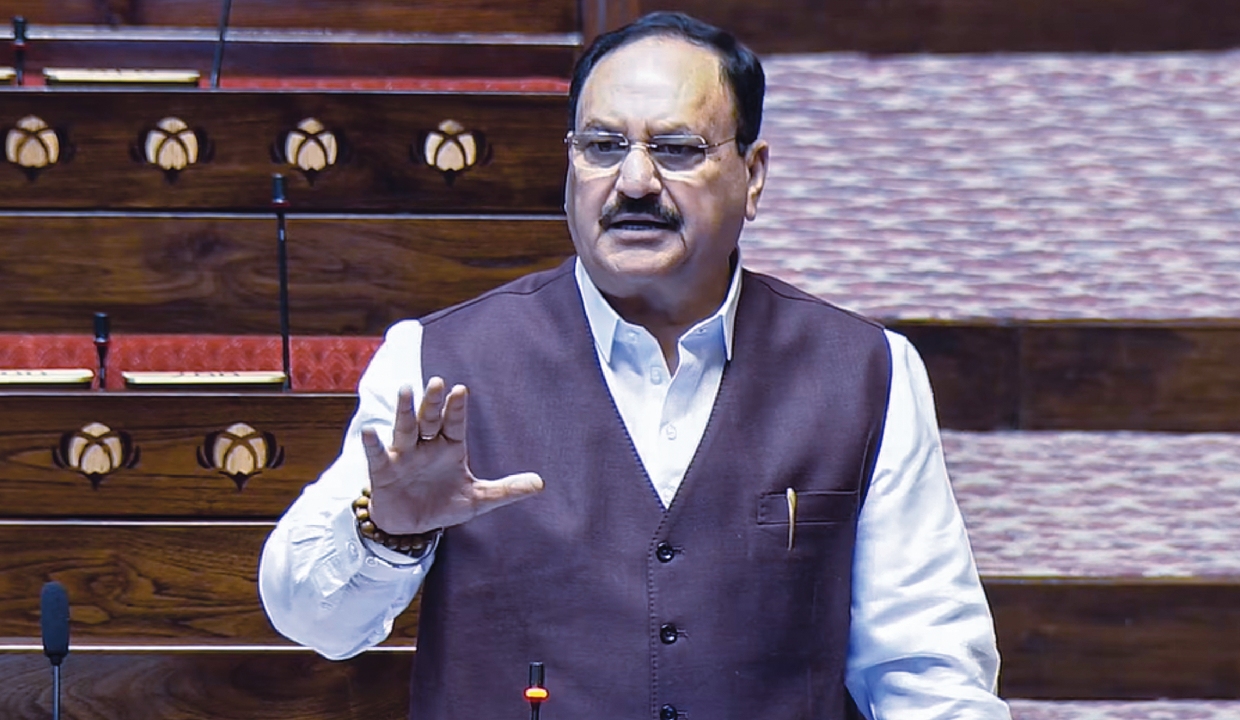
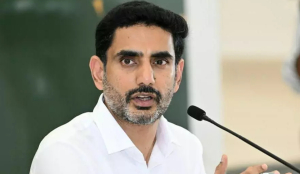
During the 2025-26 fiscal, funds to the tune of Rs 572.66 crore have been released to Punjab, Union Health Minister JP Nadda told the Rajya Sabha on Tuesday.
Nadda said public health is a state subject, hence, the primary responsibility of providing basic healthcare services to all the citizens lies with the respective state and UT Governments.
He was responding to a question on the details of supplementary funds approved by the Union Government for Punjab under the National Health Mission (NHM) for the financial year 2025-26.
With the objective of attaining universal access to equitable, affordable and quality health care services, the Union Health Ministry is implementing NHM.
“During the FY 2025-26, funds to the tune of Rs 572.66 crore have been released to Punjab,” Nadda said.
The funds released under this scheme are used for upgrading existing sub-health centres and primary health centres in rural and urban areas to deliver 12 packages of basic healthcare services. These primary healthcare services include reproductive and child health services, communicable diseases, Non-Communicable Diseases (NCDs) (screening and management for NCDs such as hypertension, diabetes and 3 common cancers of oral, breast and cervix).
It also includes an expanded package of services for mental health, ENT, ophthalmology, oral health, geriatric and palliative health care and trauma care, etc.
Further, the major initiatives taken by the Government to improve maternal and child health services include Janani Suraksha Yojana, Pradhan Mantri Surakshit Matritva Abhiyan, STOP Diarrhoea campaign, Anemia Mukt Bharat, Rashtriya Bal Swasthya Karyakram, Universal Immunization Programme, Universal Immunization WIN (U-WIN), Mission Indradhanush, the Union Minister said.
The monitoring and evaluation of the progress of all states, including Punjab, is assessed through review meetings, video conferences and field visits of senior officials, Nadda said.
He said that to prevent and control various communicable diseases, various schemes are operated, like the National Vector Borne Diseases Control Programme, the National Tuberculosis Mukt Bharat Abhiyaan, the National Leprosy Eradication Programme, and the National Viral Hepatitis Control Programme.
Further, to prevent and control various non-communicable diseases, National Programme for Prevention and Control of Non-Communicable Diseases (NP-NCD) for prevention and control of cancer, diabetes, cardiovascular diseases and stroke, National Tobacco Control Programme (NTCP), and National Mental Health Programme (NMHP), Tele MANAS, etc., are in operation, he added.
Under NHM, various mechanisms exist to assess the implementation and progress. Key deliverables are identified and contained in the record of proceedings, which are reviewed every year during the National Programme Coordination Committee meetings, Nadda said.
Common review missions are also conducted regularly in the states and Union Territories to look at financial systems and the physical implementation of the program.
There is an implementation of the Public Financial Management System for monitoring and management of funds. Subsequent installments are released based on compliance of Department of Expenditure guidelines.
Nadda further informed the Upper House that financial monitoring reports (FMRs) are submitted by the states on a monthly basis.
Single Nodal Agency - System for Payments and Reporting Across Sectors Holistically (SNA-SPARSH) mechanism is implemented in 31 states and Union Territories under the NHM, he said.
All states submit their proposals through the annual Programme Implementation Plan (PIP), and based on the available resource envelope, the Centre grants approvals in the Record of Proceedings (ROP), including indicators and targets for the states, he added.
The monitoring and evaluation of the progress of all states, including Punjab, is assessed through review meetings, video conferences and field visits of senior officials, Nadda said.