From Girmit to Glory: How PM Modi reimagined India’s relationship with its global civilisational family
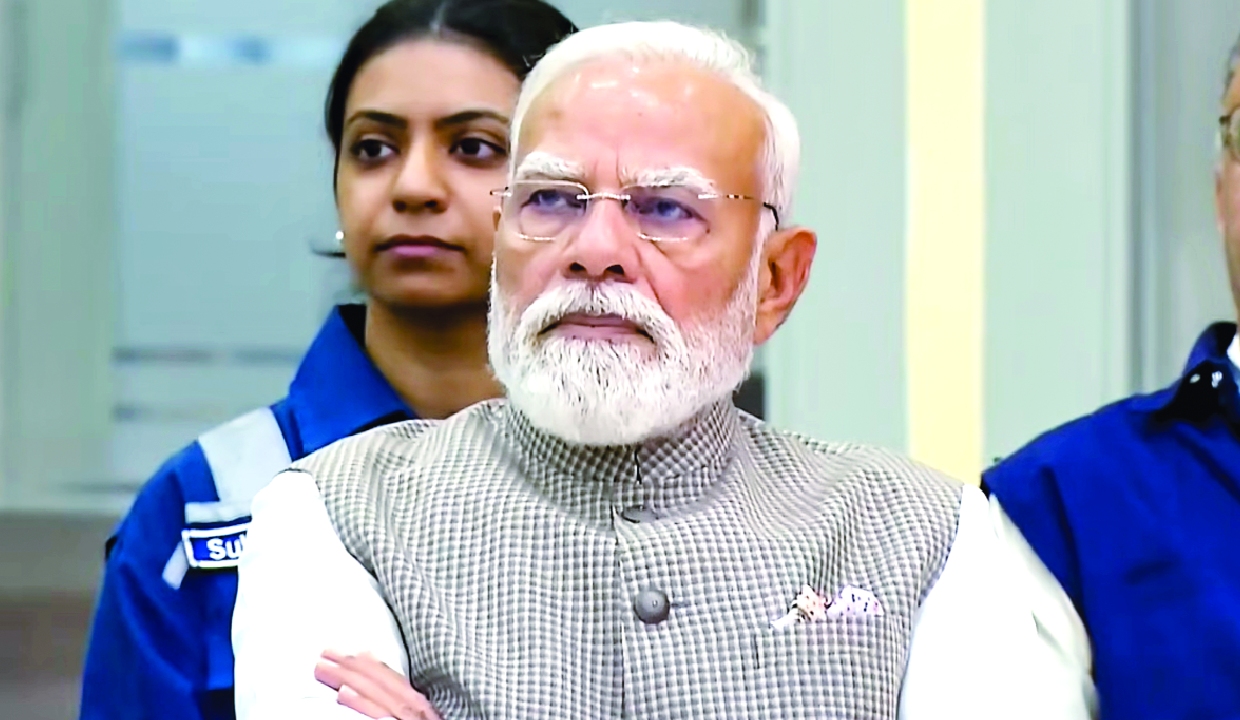
Prime Minister Narendra Modi’s address to the National Assembly of Seychelles on 28 June 2026 contained a historical reference whose significance extended far beyond diplomacy. Recalling the arrival of five Indians on Sainte-Anne Island in August 1770, he reminded the world that India’s engagement with countries such as the Seychelles predates modern diplomacy by centuries. More importantly, it reflected a larger transformation in India’s foreign policy: overseas Indians are no longer viewed merely as expatriates but as an enduring part of India’s civilisational family.
This shift is best understood through the history of the Girmitiyas. After the abolition of slavery in the British Empire, over a million Indians were transported as indentured labourers to Mauritius, Fiji, Guyana, Trinidad and Tobago, Suriname, South Africa, Réunion, Jamaica and other colonies. The word ‘agreement’ became ‘girmit’, and those who signed these exploitative contracts became known as Girmitiyas. Yet the story of Girmit is far more than a collection of statistics. These men and women endured deception, dangerous voyages, disease, discrimination and forced labour. They were insulted as ‘coolies’, ‘jahajis’ and ‘contractees’, yet they preserved India’s civilisation. With little more than copies of the Ramcharitmanas, the Bhagavad Gita, Tulsi beads and memories of home, they ensured that Diwali, Holi, Chhath, Bhojpuri traditions, Tamil culture and the Hindi language flourished across distant lands. Despite hardship, discrimination, and separation from their homeland, they preserved India’s languages, faiths, and cultural traditions with extraordinary resilience.
The world knows this history because courageous reformers such as Pandit Totaram Sanadhya, Barrister Manilal Maganlal Shah, AD Patel, Lokmanya Tilak, Gopal Krishna Gokhale and Mahatma Gandhi exposed the realities of the indenture system and campaigned for its abolition. Their descendants today occupy the highest constitutional offices across many countries, as presidents, prime ministers, judges, parliamentarians, entrepreneurs, and scholars. Few communities in world history have travelled such a remarkable journey from bondage to leadership.
After Independence, overseas Indians, including the Girmitiya community, did not become a central pillar of foreign policy. The government at the time, and Jawaharlal Nehru, emphasised that overseas Indians owed complete allegiance to their adopted countries. This policy continued for decades. However, while the Girmitiya community remained emotionally connected to India, it remained institutionally distant. Fiji’s political crises in 1987 and 2006 heightened insecurity among Indo-Fijians and prompted an important question: Was India only a memory of their ancestors, or would it also stand beside them in the present?
Over the past decade, India has answered that question in a fundamentally different way. Under Prime Minister Narendra Modi, overseas Indians, particularly the Girmitiya community, have become natural partners in India’s global journey. Earlier, the message was: ‘Your country of residence is your nation; your loyalty belongs there.’ Today, India adds an equally important dimension: ‘Be exemplary citizens where you live. India does not seek your political allegiance. It remains the civilisational home of your heritage and will always stand by your culture, identity and dignity.’ India reassures them that it will always stand as the custodian of their civilisational heritage, culture and dignity. This subtle yet profound shift has transformed the emotional relationship between India and its global diaspora.
This transformation is evident not only in symbolism but also in policy. Pravasi Bharatiya Divas has gained renewed prominence. The Overseas Citizen of India framework has been strengthened. High-level visits to Girmit countries have become more frequent, while the Forum for India-Pacific Islands Cooperation has given small island nations an unprecedented place in India’s strategic thinking. Together, these initiatives reflect the understanding that cultural bonds can strengthen diplomatic partnerships.
The COVID-19 pandemic offered perhaps the clearest demonstration of this philosophy. Through Vaccine Maitri, India supplied vaccines, medicines and humanitarian assistance to Mauritius, Fiji, Guyana, Suriname, Seychelles and several other partner countries. Mission SAGAR further expanded cooperation in maritime security, disaster relief, healthcare, digital public infrastructure, renewable energy and capacity building. These initiatives reinforced India’s reputation as a dependable development partner while deepening people-to-people trust.
This outreach also advances India’s long-term strategic interests. The Girmit countries occupy an increasingly important place in the Indo-Pacific, the Blue Economy and Global South cooperation. Stronger engagement with them strengthens India’s maritime partnerships, expands its diplomatic footprint and creates new opportunities for trade, technology and multilateral collaboration. Civilisational diplomacy and strategic diplomacy therefore complement rather than contradict each other.
Perhaps the most striking feature of this transformation is that India has never asked the Girmit diaspora to choose between citizenship and civilisation. Instead, it has become the moral guarantor of their identity without interfering in the sovereignty of their adopted nations. This balance has enabled India to build trust across continents while remaining faithful to its democratic values and international commitments.
Across Mauritius, Fiji, Guyana, Trinidad and Tobago, Suriname, Saint Lucia and Saint Vincent and the Grenadines, Indian Arrival Day and Girmit commemorations are now celebrated with national honour. Communities once dismissed as indentured labourers are recognised as nation-builders.
Prime Minister Modi’s Seychelles speech was therefore not merely an act of historical remembrance. It reflected a broader vision of India’s place in the world. The story of the Girmitiyas is no longer confined to museums or archives; it has become part of India’s contemporary diplomatic narrative. The journey from Girmit to glory mirrors India’s own transformation, from a nation preoccupied with survival to one confident enough to draw strength from its civilisation while engaging the world with purpose. In that sense, India’s evolving diaspora policy represents more than an adjustment in foreign policy. It is the rediscovery of a civilisational responsibility. History carried the Girmitiyas across the oceans. Contemporary India has brought them back to the centre of its national consciousness. By blending strategic realism with cultural confidence, the Modi government has redefined India’s relationship with its global family. It may well prove to be one of the most enduring legacies of India’s twenty-first-century diplomacy.
Writer is a PT Member, Economic Advisory Council to the Prime Minister (EAC-PM); Views presented are personal.