Finding beauty in Imperfection
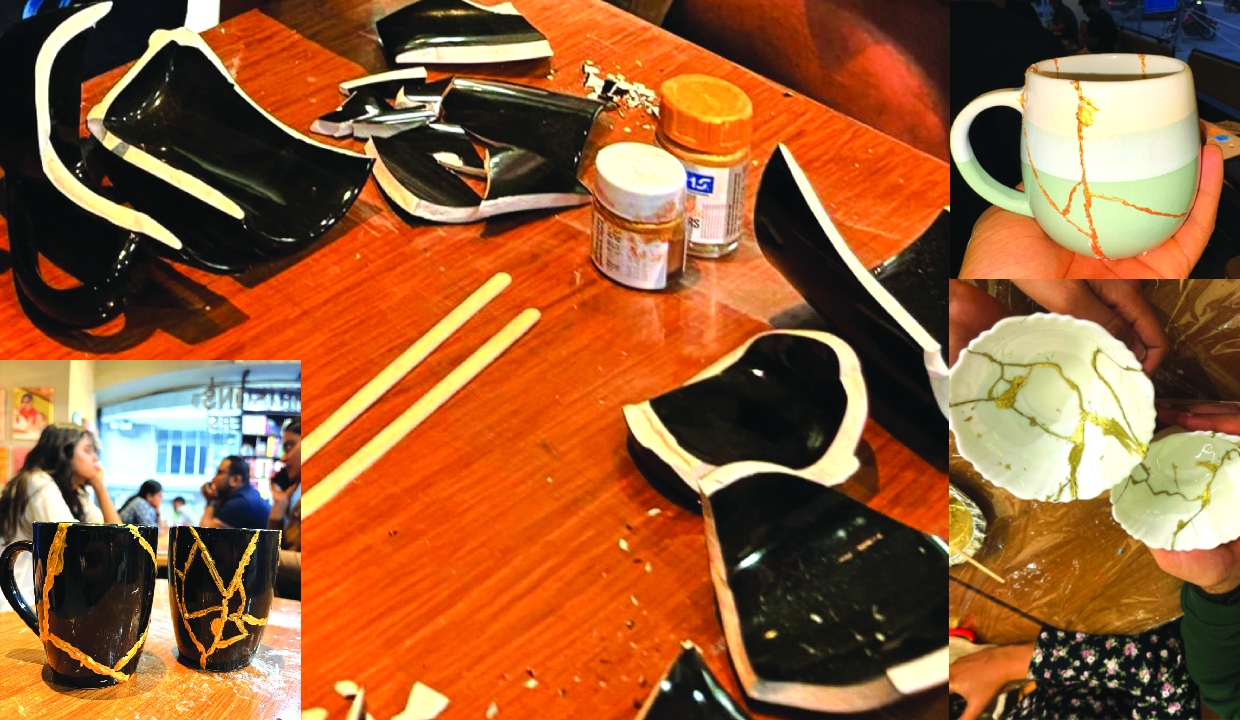
The cracks are not hidden away, but rather highlighted, celebrated, and woven into the object’s identity
What if a break is not the ending but a beginning? 600 years ago, Japanese artisans asked this same question. They practised the art of kintsugi, where broken pottery was repaired carefully with gold lacquer - to honour those cracks, instead of hiding them. Today, this ancient art is quietly resonating again, carrying a philosophy that feels increasingly relevant in a world that is obsessed with chasing perfection.
While at first, Kintsugi appears to be deceptively simple, it is far more than a method of mending pottery. It’s a way of seeing. The cracks are not hidden away but rather highlighted, celebrated, and woven into the object’s identity.
Perhaps that’s why Kintsugi resonates so deeply today. In a world that demands perfection, it offers a powerful refuge from the pressures of appearing flawless in society. It provides comfort to embrace our scars rather than hide them away. This philosophy has also inspired a growing number of kintsugi workshops that are emerging across urban India, where people gather in community spaces to break and repair ceramics, finding healing and meaning beyond the finished piece. For Raj Jha, who has been conducting kintsugi and other creative workshops for several months, the appeal of kintsugi is easy to understand. It isn’t simply about its aesthetic beauty but also about embracing imperfections with resilience, healing, and the idea that our experiences, including our setbacks, become part of our story and can add value rather than diminish it.
His workshops bring people together to step away from the relentless pace of everyday life. As participants carefully glue the fragments they have broken, the process often becomes personal. The broken ceramic reflects their own imperfections, shattered by their frustrations, and repairing it becomes therapeutic. They heal what was once broken, not by replacing it but by highlighting the cracks as strengths instead.
What makes Kintsugi special isn’t its aesthetic. It’s the invitation to see our imperfections differently and embrace them. Therefore, while the ceramics leave the workshops repaired, the participants often leave with something more.