Face-to-face, US-Iran talk truce
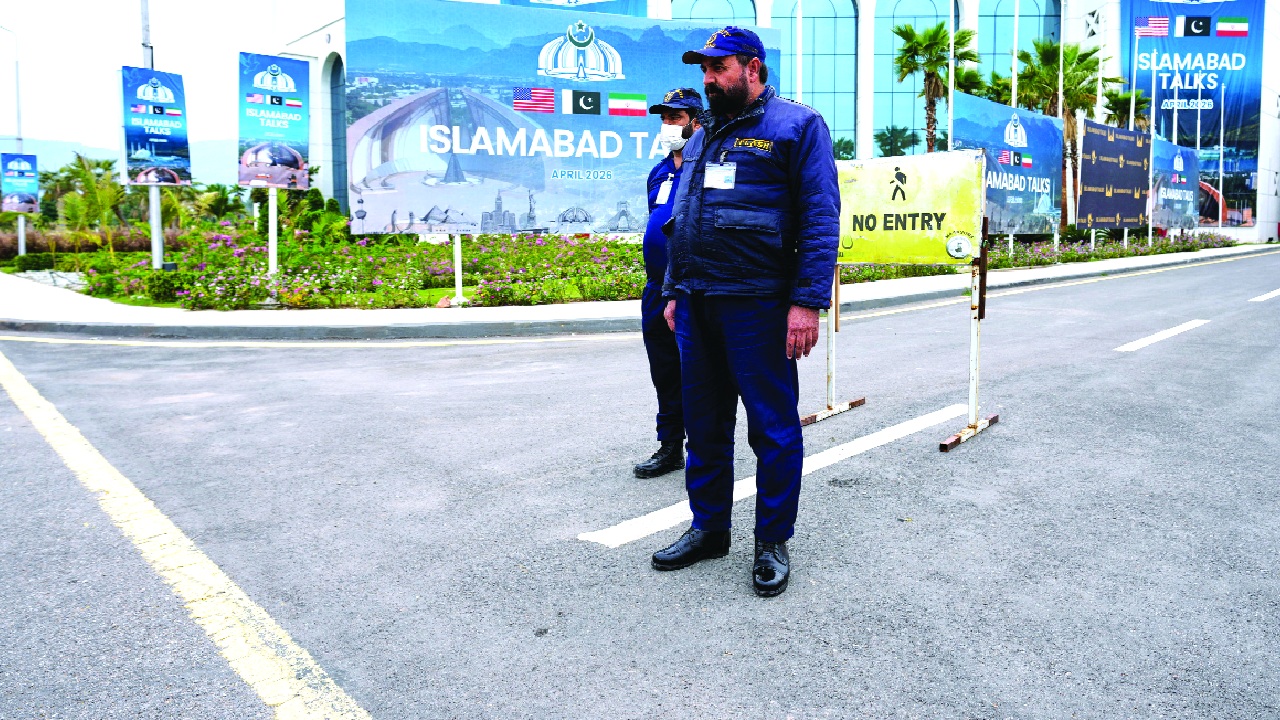
High-stakes ceasefire negotiations between the United States and Iran were underway in Islamabad till late Saturday night with Pakistan mediating, marking the first face-to-face talks between the two adversaries since the Islamic Revolution of 1979.
A senior White House official confirmed that direct trilateral engagement involving US and Iranian delegations, with Pakistani facilitation, was underway in Islamabad.
The discussions, ongoing for over four hours, reportedly went into a scheduled break for internal consultations before resuming, underscoring the complexity and sensitivity of the issues under negotiation. The talks are being held under tight security arrangements and closely monitored by regional and international stakeholders, given their potential implications for broader stability in the West Asia.
A senior White House official provided detailed insight into the composition of the US delegation, confirming that Vice-President JD Vance was leading the American team. He is joined by special envoy Steve Witkoff and US President Donald Trump’s son-in-law Jared Kushner, forming the core negotiating group.
“The core delegation is on the ground and fully engaged,” the official said, adding that the broader US team also includes national security adviser Andrew Baker and Asian affairs adviser Michael Vance. “We also have subject-matter experts present in Islamabad, with additional analytical and policy support being coordinated from Washington, DC to assist real-time decision-making,” the official said. The inclusion of technical experts underscores what officials describe as a highly structured, multi-layered negotiation process that covers security, maritime stability, sanctions-related concerns, and regional de-escalation frameworks. According to Iranian media reports, the initial round of discussions lasted approximately two hours before both delegations paused for internal coordination and review of positions. Following the break, negotiations resumed with both sides attempting to narrow differences and explore possible pathways toward a ceasefire framework. While no breakthrough has been announced, the direct engagement itself is being viewed as a rare and significant diplomatic opening after decades of indirect contact.
Diplomatic sources said both sides entered the talks with deeply entrenched positions, and significant gaps remained on core issues. However, the fact that face-to-face engagement is taking place is being seen as a notable shift in diplomatic practice. Iran's news agency reported that the US and Iranian delegations exchanged written texts outlining the issues under discussion as the first phase of talks concluded, signalling a structured effort to define the parameters of the negotiations even amid ongoing disagreements.
Islamabad-based sources indicated that the first phase of meetings “went well”. They suggested that another round of discussions has been tentatively scheduled for the coming days, although official confirmation is still awaited.
On the Iranian side, a delegation of more than 70 officials is participating, led by Parliament Speaker Mohammad Bagher Ghalibaf and Foreign Minister Abbas Araghchi, along with representatives from key national security and foreign policy institutions. Iranian officials also held preparatory meetings with Prime Minister Shehbaz Sharif before the talks.
Tensions remain high over maritime security, with reports from the Financial Times indicating that negotiators have reached a stalemate over the Strait of Hormuz, a critical global shipping chokepoint.
Adding to the regional sensitivities, the US Central Command confirmed that two US Navy guided-missile destroyers — the USS Frank E. Petersen and USS Michael Murphy — had transited the Strait of Hormuz. CENTCOM said the move was intended to ensure the waterway remains clear of sea mines allegedly laid by Iran. CENTCOM commander Admiral Brad Cooper stated, “Today, we began the process of establishing a new passage, and we will share this safe pathway with the maritime industry soon to encourage the free flow of commerce.”
International reactions have continued to emerge as the talks unfold. French President Emmanuel Macron said he had spoken with Iranian President Pezeshkian, urging Tehran to “seize the opportunity” to de-escalate tensions and restore freedom of navigation in key maritime routes, including the Strait of Hormuz.
Despite deep mistrust and unresolved disputes, the ongoing negotiations are being viewed as one of the most significant diplomatic engagements between Washington and Tehran in decades, with cautious hopes that sustained dialogue could help reduce regional tensions.
India has previously welcomed the ceasefire talks between the United States and Iran and is closely monitoring developments in the West Asia conflict. Officials are said to be tracking the situation in real time, given the potential implications for regional stability, energy security, and maritime trade routes. New Delhi is expected to continue observing the outcome of the negotiations closely as the dialogue progresses in Islamabad.