Eye in the sky is up: India puts first geo-imaging satellite in orbit
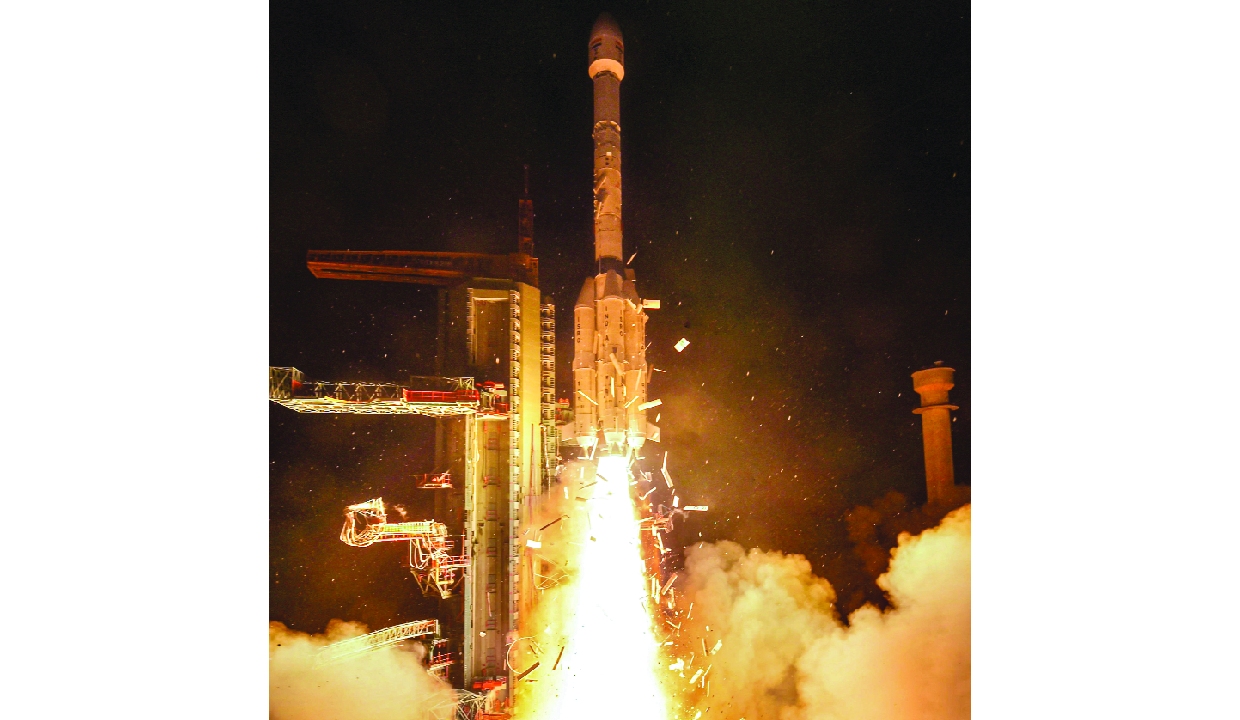
ISRO on Friday made its way into history books yet again with the successful launch of the country’s first-ever imaging satellite in geo-orbit, placing the over 2,300 kg payload into a precise orbit using a GSLV rocket. The launch marked the agency’s maiden success for the year 2026. This is the heaviest satellite ever to be carried by a GSLV and the satellite was perfectly ahead in its trajectory.
“The eye in the sky,” as one of the senior scientists involved in the mission described the satellite, is set to provide real-time imagery and help the nation in areas including agriculture and disaster management. The space agency dismissed speculations that EOS-05 was a “spy satellite”.
Prime Minister Narendra Modi, Union Home Minister Amit Shah, chief ministers of various states, Congress president Mallikarjun Kharge, among others, hailed the successful launch of the EOS-05 earth observation satellite. The mission success, following some earlier failures, was a morale booster.
The satellite was successfully placed in the intended sub-geosynchronous transfer orbit, about 18 minutes after it lifted off from the spaceport, ISRO announced. While several Earth observation satellites operate from Low Earth Orbit (LEO), the EOS-5 satellite is set to hover at an altitude of roughly 36,000 km above Earth, which is the geosynchronous orbit and at that level, the satellite will match Earth’s rotational speed.
A beaming ISRO chief, V Narayanan, said: “I am very happy to announce that the GSLV F-17 vehicle has successfully and precisely injected the advanced EOS-05 geo imaging satellite in the intended and required orbit.”
“This is the 107th launch from Sriharikota and the 19th mission of GSLV,” the Secretary, Department of Space, flanked by key scientists involved in the mission, said soon after the launch.
He recalled that the first launch of GSLV (D1) was done with a payload of 1,536 kg and since then, gradually, ISRO improved the performance of GSLV by optimising the structural mass and improving the propulsion systems. “Today, we have injected the heaviest satellite, 2,367 kg, using this launch vehicle.”
Once the EOS-05 is operationalised in the orbit, it will become India’s first dedicated imaging satellite from the geo-orbit, providing “strategic data” for the country, he said.
In the days to come, the orbit-raising maneuvering will be done and the satellite will be elevated to required orbit and will be placed in the geo platform, he said, adding the success is the culmination of teamwork of ISRO and its industrial partners.
Meanwhile, PM Modi said the success was a proud moment for the country. “Yet another outstanding achievement by ISRO and a proud moment for our nation. The successful launch of GSLV-F17 carrying EOS-05, India’s first-ever imaging satellite from Geosynchronous orbit is a reflection of the excellence, innovation and growing capabilities that define India’s space sector,” the PM posted on X.
HM Shah congratulated ISRO scientists on successfully placing the country’s first-ever imaging satellite into geosynchronous orbit.
Taking to X, he posted, “Congratulations to @ISRO scientists as GSLV-F17 successfully carried EOS-05 into orbit. India now has its first-ever imaging satellite operating from geosynchronous orbit.”
In a post on X, AICC chief Kharge said, “Congratulations to the entire @isro team on the successful GSLV-F17/EOS-05 mission! EOS-05, India’s first imaging satellite from Geosynchronous orbit, will further strengthen our Earth Observation capabilities that we have been developing for years.”
“We are immensely proud of our scientists, space engineers and researchers whose dedication and ingenuity continue to take India’s space programme to greater heights,” the Congress chief said.
The Congress party has always remained deeply committed to scientific temper and space research, he said.