Ex-SC judge to lead panel probing police action on CJP Parliament march; CJP seeks FIR quashing
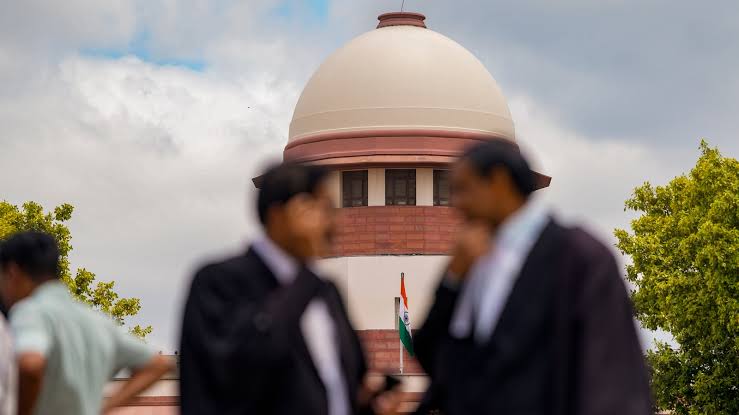
The Supreme Court will constitute a high-powered committee led by a retired Supreme Court judge and comprising a former high court chief justice and a senior police officer to inquire into allegations and counter-allegations on police action against student protesters at the Cockroach Janta Party (CJP)-led march on Parliament on July 20.
A bench of Chief Justice Surya Kant and Justices Joymalya Bagchi and V Mohana said on Tuesday it had obtained the consent of a former Supreme Court judge and a retired high court chief justice. The bench did not give their names, saying it might lead to people passing opinion in favour or against them.
The bench said it had also obtained the consent of a former CBI director and a former DGP of a state. It asked counsel for the petitioners whether it would be better to have the former CBI director or the ex-DGP in the committee.
The court said it would consider using its plenary powers under Article 142 of the Constitution to quash FIRs in which there is no controversy or doubt and that clearly involve students. It said everyone must be mindful of the rights of students under Article 19, and that the right to protest or express dissent peacefully must be protected.
Solicitor general Tushar Mehta and counsel for the petitioners, senior advocates N Hariharan, Vrinda Grover, Shadan Farasat and Gopal Sankaranarayanan, have been asked to give suggestions by Tuesday evening on the terms of reference. The bench said it would consider the suggestions and pass an order on Wednesday.
The committee will be entrusted with fact-finding and provided all necessary facilities. "We are quite sure that the committee will give an immediate voice and audience to any victim who approaches it," the court said.
The court said the committee will also look into allegations of sexual assault and online harassment of female protesters and victimisation of other vulnerable persons through social media. "Whosoever is responsible, there can be no excuse and no justification. It must be taken seriously and taken to its logical conclusion," Justice Kant said.
Grover raised the alleged illegal use of pellet guns against student protesters, which left two persons injured. She said one of them, an artist who suffered an eye injury, can no longer earn a living. The Delhi Police affidavit is completely silent on the use of pellet guns, possibly because other central forces could have used them, the court noted.
The court said it will direct authorities to hand over the entire evidence, consisting of videos, CCTV camera footage and other digital and documentary records, to the committee immediately.
CJP demands FIR quashing
Outside the court, CJP chief spokesperson Saurav Das accused the Centre of delaying the promised withdrawal of FIRs against students and protesters. He said the apex court had asked the government three times to provide a list of FIRs registered against protesters.
Das said the petitioners, through lawyer Vrinda Grover, urged the court to invoke Article 142 to quash FIRs against protesters across the country. He said the Centre should have no objection, since its representatives, including Union ministers J P Nadda and Jitendra Singh, had agreed to the protesters' demands when the agitation was called off on July 25.
"The government has not given a commitment to the Supreme Court today that they are going to give it (the list of FIRs). The Supreme Court said three times to the government today that you should give us this list, only then will we quash it," Das said.
Das claimed the government had also not honoured its assurances on compensation and had failed to hold subsequent meetings with CJP representatives. "You are not honouring all the commitments you have made about compensation, about FIRs. So, you have betrayed the entire country," he said.
He said the government had identified around 2,800 "hardened criminals" and argued that those facing serious criminal charges should be dealt with separately from peaceful protesters.
CJP legal affairs head Ratna Singh said the last meeting between the organisation and the government delegation was on August 2, and a draft vetted by lawyers had been shared. She alleged there had been no response from the government to requests for another meeting.
On the proposed committee, Singh said the CJP would want its representatives included and insisted the panel should comprise independent members.
Das also questioned the use of facial recognition technology during the Jantar Mantar protest, saying protesters were photographed, videographed and monitored through CCTV cameras. He urged the court to examine whether such surveillance was constitutional.
Police defends action
In its affidavit, the Delhi Police defended the force used on July 20, saying it acted "bona fide, lawfully and strictly in discharge of its statutory obligations". It said 248 officers and personnel, including women police officers, were injured, and that big groups of protesters targeted police officials who were isolated from their colleagues.
The affidavit said the use of force "was done in a graded manner, strictly in accordance with law". It alleged the petitioners used selective photographs, incomplete video clips and unverified media reports to paint a one-sided picture.
(With Inputs From PTI)