Dua aur Dastarkhwan
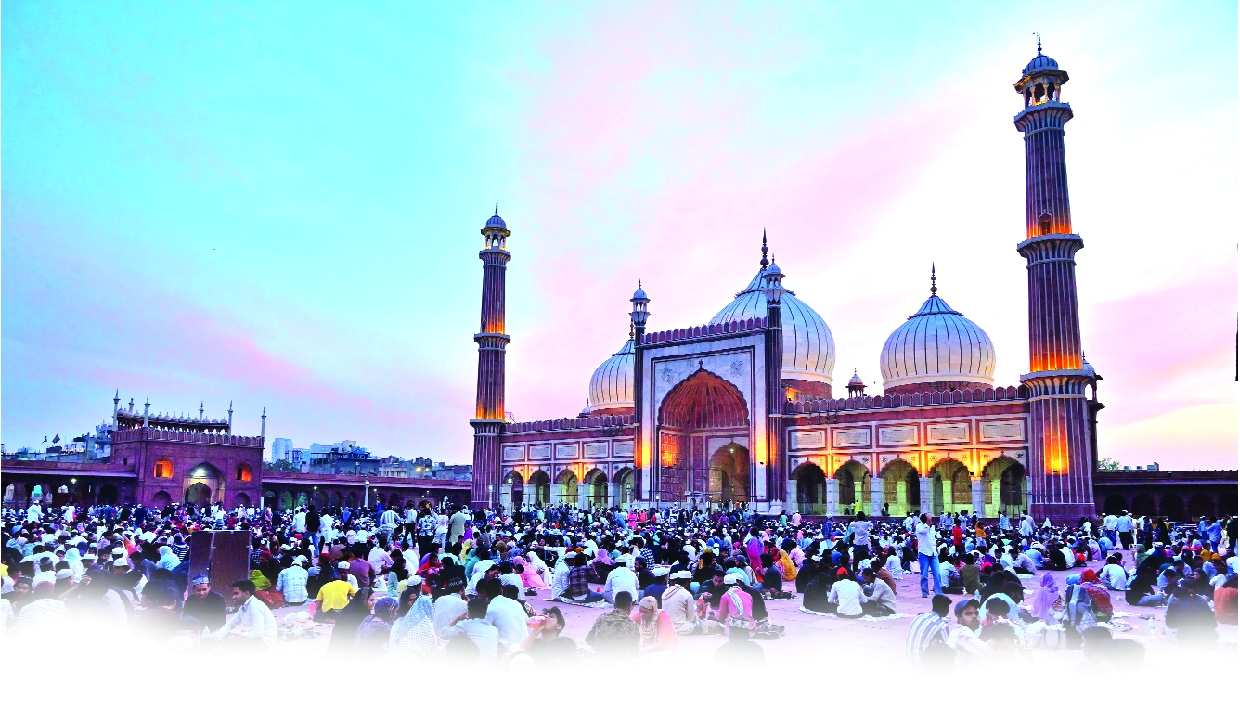
Shadows stretch across the courtyard as a lone dua marks the night, with strangers sharing dates before the market’s raunaq brings everyone together, says SAKSHI PRIYA
Can a lone dua bridge that hollow gap between a day of hunger and the loud joy of the evening spread? These red sandstone slabs at the Jama Masjid have seen this shift every single year since 1656. There is an old saying that fasting is a mirror for the soul, a thought that carries heavy weight during these long Ramzaan days. When the sun starts to drop, thousands of people pack into the vast courtyard while men gather around the central water pool for wazu. They splash cold water over their tired skin, a simple act that cleans both body and mind before the evening prayer starts.
Looking around the courtyard reveals how this festival deeply connects the community, ensuring nobody ever sits alone. When the loud siren finally wails and the evening azaan starts, they end the long fast together with a single date and a sip of water to complete the sacred ritual of iftaari. This exact moment acts as the bridge between Dua aur Dastarkhwan and captures the real heart of the night. Once the prayers finish, the deep quiet goes away as thousands of people walk out to join the massive rush. Everyone pushes straight into the bright, tight lanes of Matia Mahal to start the big feast.
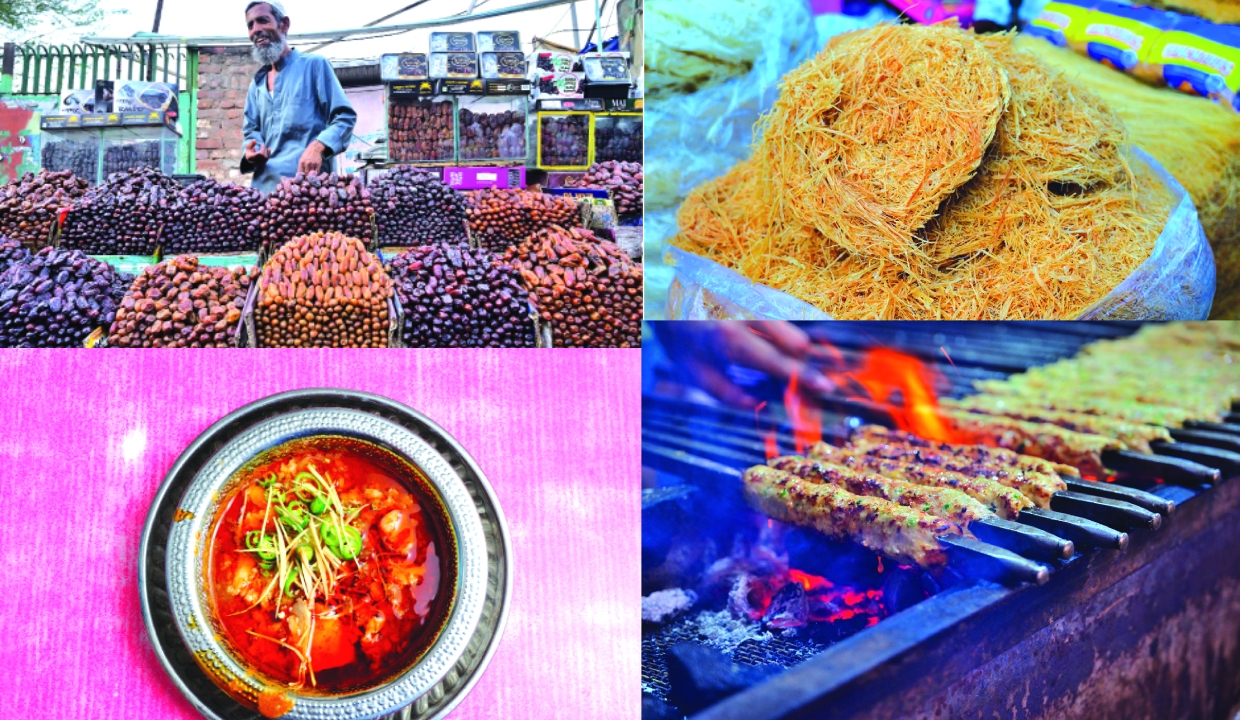
The food roots in these narrow lanes go deep, stretching back to the Mughal age. Royal cooks once ran massive kitchens on this very pavement to feed people after a day of fasting. That old habit never died. Legendary names like Karim’s and Al Jawahar still guard those original imperial recipes. They cook the same meals the old kings used to eat. It offers iconic street food dishes like charred kebabs, golden sahi tudka, and slow-cooked nihari that become especially popular during Ramzaan. The feast begins right on the pavement where cooks flip heavy iron skewers of those kebabs over open flames, creating a loud sizzle of fat dropping onto hot coals. Moving down the lane brings you to the heavy cooking where one vendor uses a huge spoon to mix a giant metal pot of Chicken Biryani before handing out steaming portions to everyone waiting. Right next to his stall, thick haleem bubbles in a large iron pot while cooks use heavy wooden poles to mash the meat and lentils together until it gets sticky and rich. Diners tear off big pieces of fluffy, fire-baked khamiri roti to scoop up every single bite of that heavy haleem. And not to miss, mutton korma inside giant copper vats. Diners pack onto small wooden benches for nihari that boiled for twelve hours until the meat fell away from the bone. They use pieces of bread to scoop out the marrow or reach for a sweet sheermal to kill the spice. Young boys stand behind plastic tubs to sell cold cups of mohabbat-e-sharbat. It is a bright pink mix of cold milk and rose syrup with watermelon chunks tossed in to cool the burn. This is the true soul of the dastarkhwan.
The month of waiting finally ends when the Eid moon appears in the dark sky. The noise of the feast slowly gives way to the morning light of celebration. Inside the house, families crowd around deep bowls of sweet seviyan. This one dish has a special way of pulling every cousin and uncle back to the same family table. When those final prayers wrap up at the masjid, thousands of men turn to their side for a beautiful hug. An “Eid Mubarak” goes to anyone standing near them, fixing the gaps of the past year in a single moment. This greeting brings families together as firm embraces close the distance of the past year. The heart of the city lives in these shared smiles and the promise to return to this same spot when the next year comes around.
A Meal Shared with Strangers
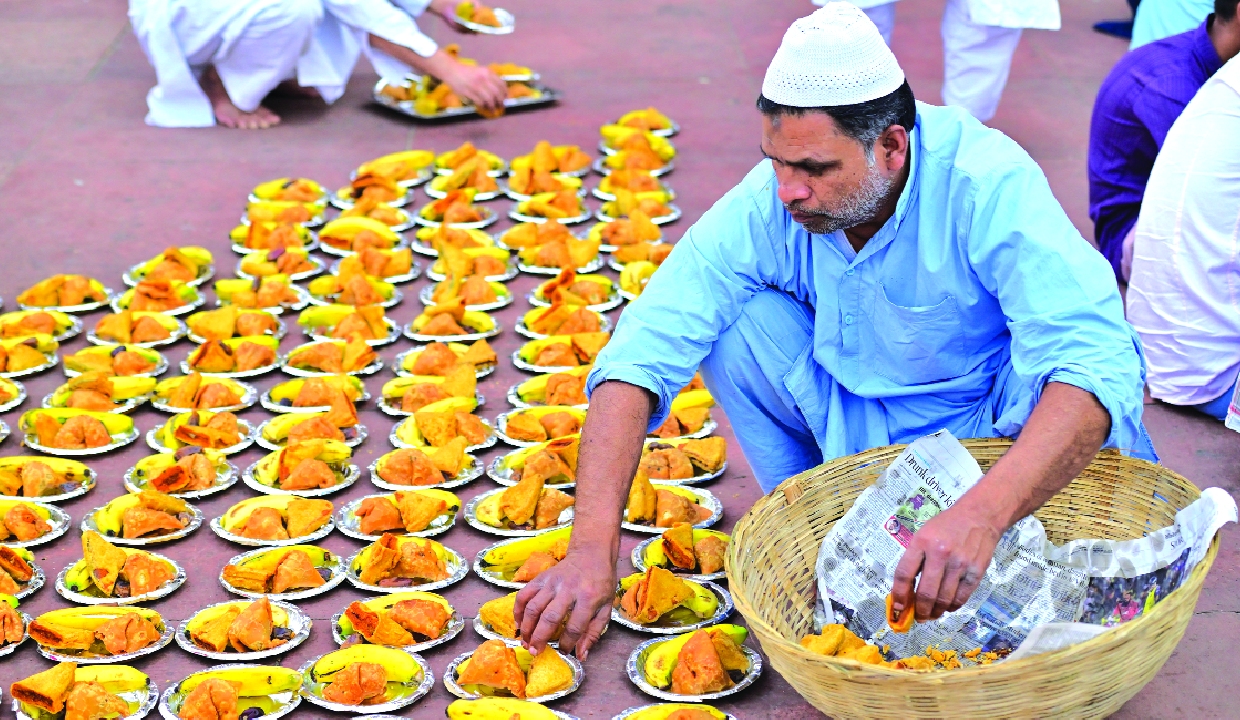
Strangers reach into their bags to share whatever they brought. One person hands out slices of fruit while the man sitting right beside him passes around a few dates. People naturally offer a piece of their own meal to whoever is sitting right there beside them on the floor. Seeing thousands of people share food like this shows exactly how the holy month brings everyone closer together.
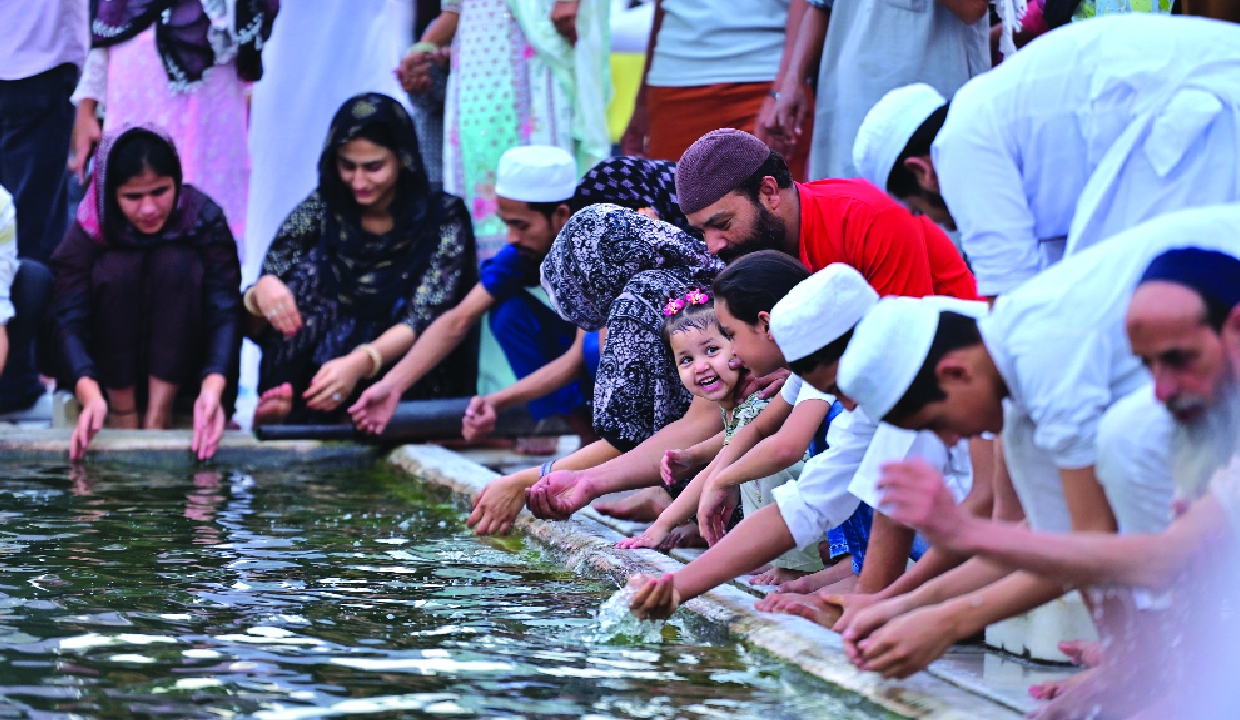
When the sun starts to drop, thousands of people pack into the vast courtyard while men gather around the central water POOL for wazu
Stacks of History
The food roots in these narrow lanes go deep, stretching back to the Mughal age. Royal cooks once ran massive kitchens on this very pavement to feed people after a day of fasting. Tradition says the Prophet always broke his fast with a date, making this a sacred habit for millions today. It is the perfect food because the natural sugars hit the bloodstream to wake up a tired body. You can find the soft Kimia dates from Iran or the dark Ajwa that people bring back from their travels.