Delhi reports most polluted July in 7 years
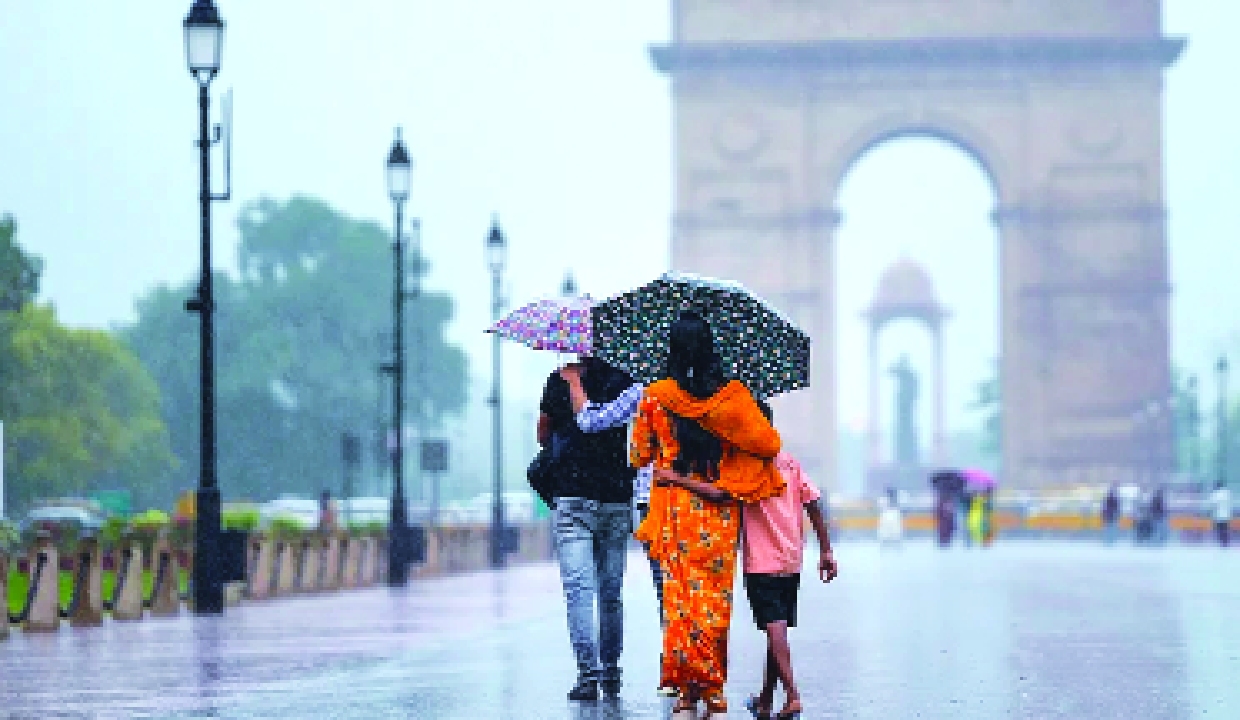
Delhi rounded off July with a month of weather contrasts, recording its most polluted July in seven years despite witnessing the month’s first “good” air quality day in nearly a decade, above-normal monsoon rainfall fuelled by a few intense spells after a prolonged dry phase, and the warmest average day and night temperatures in two years.
The city’s average Air Quality Index (AQI) stood at 119 during the first 30 days of July, making it the highest monthly average for the month since 2019, when it was 134, according to an analysis by the Centre for Research on Energy and Clean Air (CREA). The average was significantly higher than last July’s monthly average of 78.
Even as the monthly average deteriorated, Delhi recorded its first “good” air quality day in July in nine years, with the AQI dropping to 48. It was the lowest daily minimum AQI recorded in July since 2017, when the index had fallen to 43.
At the other end of the spectrum, the AQI climbed to 261 during the month, making it the highest daily maximum AQI recorded in July in five years, since 2021 when it was at 266. Rainfall during the month remained above normal at most weather stations despite a prolonged break in monsoon activity.
At the Safdarjung observatory, the city’s base station, 254.7 mm of rainfall was recorded during July against the normal of 201.9 mm, an excess of 52.8 mm or 26 per cent. Since the onset of the southwest monsoon, Safdarjung has recorded 296.5 mm of rainfall against the seasonal normal of 276 mm, a surplus of 20.5 mm or 7 per cent.
The Ridge observatory recorded the highest rainfall surplus among the major stations in July. The station received 285.5 mm of rainfall against the normal of 188.5 mm, an excess of 97 mm or 51 per cent. Since the onset of the monsoon, it has recorded 338.1 mm against the seasonal normal of 249.2 mm, a surplus of 88.9 mm or 36 per cent. Lodhi Road received 274.4 mm of rainfall during July against the normal of 201.9 mm, recording an excess of 72.5 mm or 36 per cent. Since June 1, the station has recorded 315.1 mm against the seasonal normal of 276 mm, a surplus of 39.1 mm or 14 per cent.
Ayanagar recorded 210.1 mm of rainfall during July against the normal of 178.5 mm, an excess of 31.6 mm or 18 per cent. Since the beginning of the southwest monsoon, the station has received 303.1 mm against the seasonal normal of 248.4 mm, a surplus of 54.7 mm or 22 per cent.
In contrast, Palam remained below normal. The station recorded 179.1 mm of rainfall during July against the normal of 198.2 mm, a deficit of 19.1 mm or 10 per cent. Since the onset of the southwest monsoon, it has received 229.4 mm against the seasonal normal of 267 mm, leaving it 37.6 mm below normal or 14 per cent in deficit.
Mahesh Palawat at Skymet Weather said the above-normal rainfall despite fewer rainy days was due to an unusually long break in the monsoon.
“The monsoon witnessed a typical break this season, but instead of lasting five to six days as it usually does, it extended to around 10 to 11 days. As a result, the number of rainy days was lower, though the overall rainfall remained high because a few spells were particularly intense. The first few days of July saw very good monsoon activity, and the last week of the month remained active. In between, there was a prolonged break caused by multiple weather systems, which later triggered episodes of intense rainfall,” he said.
The city also recorded its warmest July in terms of average day and night temperatures in two years. The average maximum temperature stood at 35.4 degrees Celsius and the average minimum at 27.7 degrees Celsius. The last time both averages were higher was in 2024, when the average maximum was 35.9 degrees Celsius, and the average minimum was 27.8 degrees Celsius.