Delhi notifies EV Policy 2026; subsidies within 60 days
Buyers of electric vehicles (EVs) in Delhi will receive subsidies within 60 days of applying for an incentive on their purchase, including two-wheelers priced up to Rs 2.25 lakh, as outlined in the new EV Policy, notified on Wednesday. All purchase incentives for electric two-wheelers, three-wheelers (autos), and four-wheeled goods vehicles that are purchased and registered in Delhi will be disbursed through direct benefit transfers to individual buyers, proprietary firms, agencies, and companies that are residents of Delhi only.
“... In exercise of the powers conferred by the enabling provisions of the Motor Vehicles Act, 1988, and the rules made thereunder, the Lieutenant Governor of the National Capital Territory of Delhi hereby notifies the Delhi Electric Vehicles Policy, 2026, with effect from July 1, 2026,” the notification states.
As per the notification, a Model Approval Committee constituted under the Transport Department of the Delhi Government will be responsible for the empanelment of EV models across eligible vehicle segments for availing incentives and subsidies under the policy notified on Tuesday.
The committee will examine and approve vehicle models based on the eligibility criteria, technical specifications, and other conditions prescribed under the operational guidelines, as stated in the notification of the Delhi EV Policy, 2026.
Only models approved and empanelled by the committee will be eligible for purchase incentives under the policy.
Applications for the purchase incentive must be submitted within 30 days from the date of issuance of the Registration Certificate (RC). The applicable subsidy amount will be disbursed within 60 days from the date of application submission through a portal being developed by the Transport Department, after verification and fulfilment of eligibility requirements.
Any vehicle availing a purchase incentive under the Delhi EV Policy, 2026, will not be eligible for issuance of a No Objection Certificate (NOC) for transfer or re-registration outside Delhi for a period of three years from the date of notification of the policy.
Electric cars will not receive any purchase incentive, but they will be exempted from road tax and registration fees during the policy period, which is from July 1 to March 31, 2030.
The Delhi Government will provide an incentive of Rs 10,000 per kWh, up to a maximum of Rs 30,000, on the purchase of electric two-wheelers in the first year of the policy notification.
The incentives will be Rs 6,600 per kWh (maximum Rs 20,000) and Rs 3,300 per kWh (maximum Rs 10,000) in the second and third years of policy notification, respectively.
The incentive will be provided to buyers of both plug-in and battery-swapping e-two-wheeler models, said the notification.
The incentive on purchase of electric three-wheelers (e-autos) will be Rs 50,000, Rs 40,000 and Rs 30,000 in the first, second and third years of policy notification.
No incentive will be given to e-autos with a battery capacity less than 4kWh. Both plug-in and battery-swapping e-three-wheeler models will be covered under the incentive scheme.
Under the electric four-wheeler goods carriers category, an incentive will be provided to N1 category e-trucks having a Gross Vehicle Weight (GVW) not exceeding 3.5 tons.
The incentives will be Rs one lakh and 50,000 in the first year of policy notification, for e-trucks with GVW above 1.75 tons and up to 1.75 tons, respectively. The amounts will be Rs 75,000 and 37,500, and 50,000 and 25,00, in the second and third years of policy notification.
The eligibility of EV models for purchase incentives will be aligned to FAME 2, PM E-DRIVE scheme, and other schemes and guidelines of Government of India or Delhi Government, if any, stated the policy notification.
Single-window clearance for charging facilities
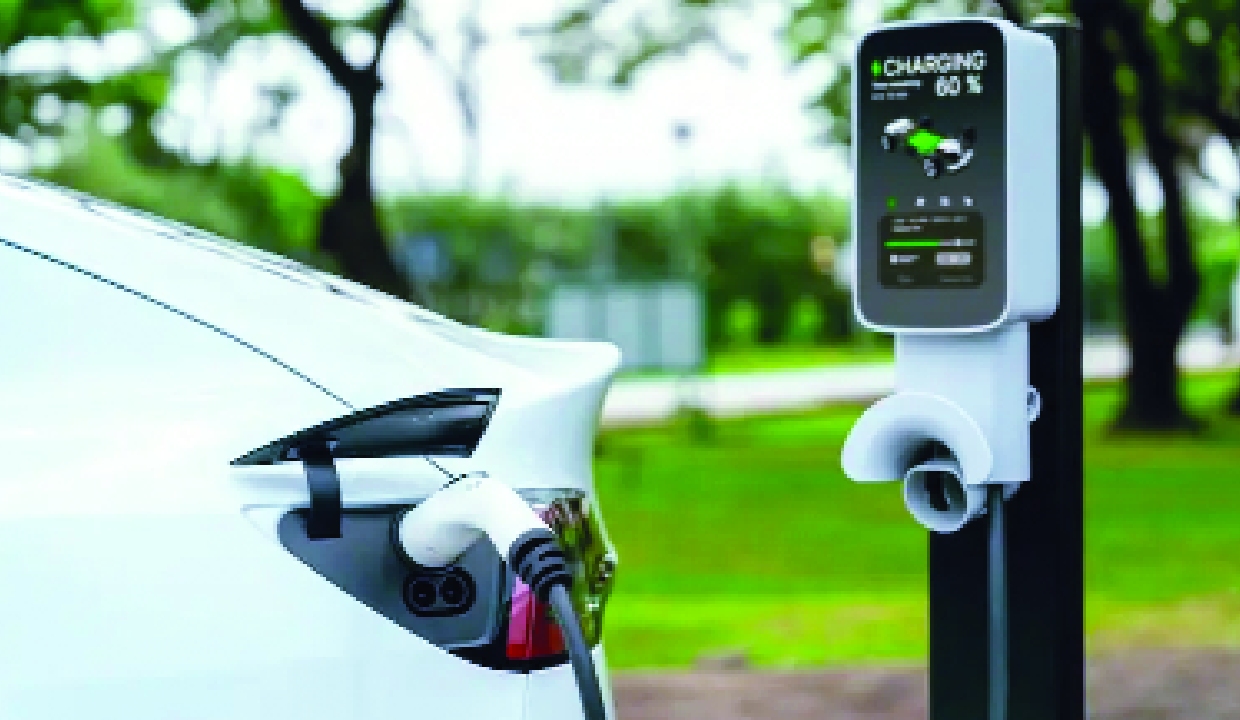
New Delhi: Buyers of electric vehicles in Delhi could get quicker access to charging and battery-swapping facilities through a single-window clearance system for faster approvals, while RWAs and housing societies are encouraged to install chargers under the new EV policy.
According to the EV policy notified by the Government on Wednesday, EV buyers will also be able to access charging facilities at dealerships, as every Original Equipment Manufacturer (OEM) operating in Delhi has to deploy at least one public charging station at each dealer with a minimum of three charging points for two- and three-wheelers and two charging points for four-wheelers.
The Delhi Government will seek financial support under the Centre’s PM E-Drive scheme and other Government of India schemes to expand public and community EV charging and battery-swapping infrastructure, while also allocating funds to the power department, according to the Delhi Electric Vehicle Policy 2026.
To improve charging efficiency, DISCOMs will explore Energy Storage Systems (ESS) at electric bus depots for load management and grid reliability.
“They will also examine time-of-day tariffs and differential electricity pricing through the Delhi Electricity Regulatory Commission to reduce charging costs,” the policy said.
Delhi Transco Limited (DTL) has been designated as the nodal agency for planning, coordination and implementation of public EV charging and battery-swapping infrastructure across the city. It will aggregate demand, identify suitable locations, assess electricity load requirements and undertake system-level planning for phased deployment, it said.
Charging infrastructure developers will also receive a dedicated digital platform for site onboarding, approvals, monitoring and reporting, while DTL will notify standard operating procedures covering technical standards, approval timelines, service benchmarks and monitoring mechanisms.
Under the policy, a single-window clearance facility will be created to help charge point and battery-swapping operators secure approvals and electricity connections faster for setting up public and semi-public charging stations, it stated.
Besides DTL, DISCOMs, private entities, real estate developers and other eligible stakeholders are encouraged to establish public EV charging stations across Delhi, helping expand charging access for EV users, the policy said.
A high-powered committee, headed by the Chief Secretary and comprising representatives of the transport, power, planning, environment and finance departments, DTL, DISCOMs and other agencies, will oversee the development of charging infrastructure, it said, adding that its composition and terms of reference will be notified separately.
Resident Welfare Associations (RWAs), group housing societies, residential communities and private entities are encouraged to facilitate community and private EV charging infrastructure within residential premises and other private spaces, making charging more accessible for residents, according to the policy.
Charging infrastructure at suitable Government-owned locations will also be developed to support the growing use of electric buses and trucks and provide reliable charging access for private fleet operators, it added.
Regarding battery management, the Environment Department will ensure compliance with the Battery Waste Management Rules, 2022, including provisions related to Extended Producer Responsibility, reporting and environmentally sound management of waste batteries, the notification stated.
The Delhi Pollution Control Committee (DPCC) will facilitate the battery collection centres across the city under a public-private partnership model with authorised recyclers and notify standard operating procedures for the safe collection, storage, transportation and transfer of waste batteries.
OEMs will submit periodic reports on battery traceability and compliance with Extended Producer Responsibility targets, it said.
The Government will also promote a battery traceability-enabled ecosystem based on unique battery identifiers to support battery refurbishment, second-life use and environmentally sound recycling, it added.
The policy also places responsibilities on OEMs to ensure adequate and timely supply of electric vehicles across all eligible segments during the policy period, the notification stated.
These stations should, as far as feasible, follow the siting categories prescribed under the PM E-Drive scheme, according to policy.
OEMs are also expected to work towards stabilising EV prices to make electric vehicles more affordable for Delhi residents, it added.