DDA opens online application process for developers under revised TOD policy
The Delhi Development Authority (DDA) on Wednesday opened the application process for developers seeking to undertake projects under the revised Transit-Oriented Development (TOD) Policy through its Online Building Permit System (OBPS), marking the operational rollout of the Capital’s revamped planning framework aimed at promoting affordable housing and mixed-use development along public transport corridors.
Developer Entities (DEs) intending to develop land under the policy can now submit applications online for approval by the TOD Committee before seeking sanction of building plans through the same portal, the DDA said in a statement.
The revised policy, notified on April 6 this year, covers 207 sq km along metro, Regional Rapid Transit System (RRTS) and railway corridors. It also brings nearly 80 sq km of land under Land Pooling areas, Low Density Residential Areas and unauthorised colonies within its ambit for the first time.
According to DDA, the policy introduces a single-window clearance mechanism under the TOD Committee, chaired by the vice chairman of DDA and comprising representatives of all key service agencies, to provide transparent and time-bound approvals.
Developers will no longer have to seek separate permissions from agencies such as the Municipal Corporation of Delhi (MCD), Delhi Jal Board (DJB) and Delhi Fire Services (DFS), with all approvals and charges consolidated into a single online process.
The authority has also simplified TOD-related charges by introducing a unified levy covering approvals, land-use change, additional floor area ratio (FAR), water and sewerage charges, and leasehold-to-freehold conversion, among others.
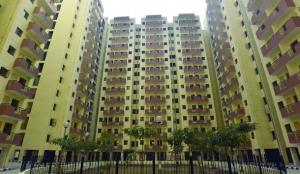
The policy seeks to encourage compact, high-density and mixed-use development around transit hubs to improve public transport usage while addressing Delhi’s affordable housing requirements. It allows TOD projects on plots as small as 2,000 square metres and permits a maximum FAR of 500 on eligible plots with an 18-metre-wide road.
DDA said at least 65 per cent of the permissible FAR has been reserved for residential use, with dwelling units of up to 99 sq m to promote affordable housing.
Of the remaining FAR, 10 per cent has been earmarked for commercial and amenity spaces, while the balance can be utilised for larger housing units, office spaces, guest houses or studio apartments.
The policy also provides for underground or elevated pedestrian walkways connecting TOD developments with metro stations to improve walkability and accessibility, while allowing enhanced FAR for public and semi-public facilities located within TOD zones.
DDA has also launched a dedicated microsite on its website containing details related to the implementation of the revised TOD policy.
Leave a Comment
Comments (2)
Rinki
Can we purchase plot around 75 sq meter