CM Rekha promises 100% electric buses, bigger metro
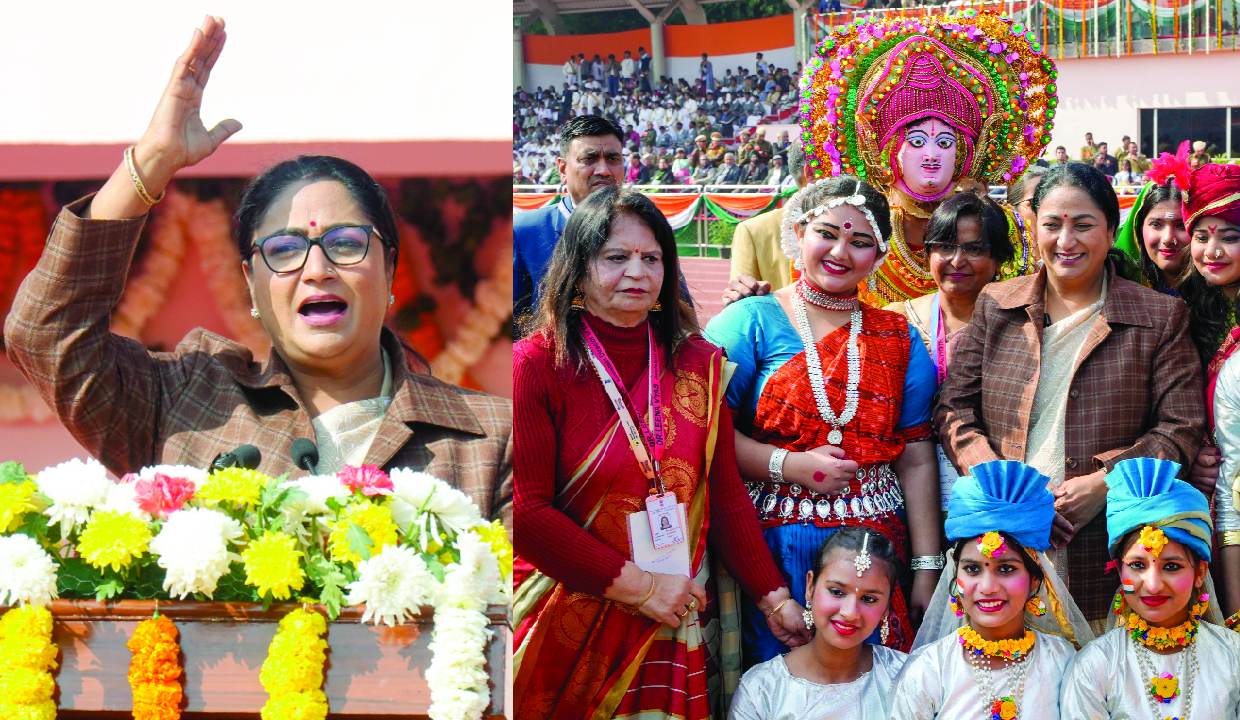
Delhi Chief Minister Rekha Gupta on Sunday unfurled the national flag and received her maiden Republic Day salute at the Delhi government’s state-level celebrations held at Chhatrasal Stadium. The event marked her first Republic Day as the leader of the national Capital.
The event, observed by the Delhi government on January 25 every year, witnessed a large turnout, vibrant patriotic fervour and a cultural programme. On the occasion, the chief minister also outlined her government’s achievements and future roadmap for Delhi. She asserted that the city needs to become India’s strongest economic hub.
The ceremony began with the chief minister reviewing the Republic Day parade and taking the salute as contingents marched past at the packed stadium. The tricolour was unfurled amid the singing of the national anthem, setting a solemn and patriotic tone for the celebrations.
Chief of Defence Staff General Anil Chauhan, Chief of the Air Staff Air Chief Marshal Amar Preet Singh, and representatives of foreign missions also attended the programme. The state’s Republic Day event is held annually on January 25.
Addressing the gathering, the chief minister said this Republic Day was special as it marked her first year leading Delhi as chief minister. She asserted that Delhi must emerge as the country’s strongest economic hub and play a leading role in India’s growth story.
Referring to the proposed India-European Union trade deal, she said Delhi’s MSME sector could benefit significantly by gaining access to millions of consumers in EU countries. She called upon entrepreneurs and businesses to take advantage of emerging global opportunities. Highlighting the Government’s work over the past 11 months, the chief minister said healthcare remained one of the top priorities. She said Delhi’s health system was being fully digitised, with government hospitals now offering online appointments.
After the implementation of the Ayushman Bharat health scheme in Delhi, 6.5 lakh people have been registered so far, and over 30,000 beneficiaries have already availed treatment. More than 300 Ayushman Arogya Mandirs have been opened across the city to strengthen primary healthcare services, she added.
Education has received 21 per cent of the Delhi budget, the chief minister said, with a focus on improving infrastructure and learning outcomes. She said the government was working to ensure that every school has smart classrooms, digital libraries and computer labs.
The Delhi School Education Act, 2025, has been implemented to curb arbitrary fee hikes by private schools, benefiting lakhs of parents and students. An allocation of Rs 1,300 crore has been made to develop Narela as an education hub, she said.
In the welfare sector, the chief minister said the government has opened 50 Atal Canteens across the city to provide nutritious and dignified meals to the poor at affordable rates.
More than 50,000 people are eating at these canteens every day, and the government aims to expand the reach to one lakh people daily. She also said Rs 700 crore has been allocated for development works in slum clusters, while rural areas of Delhi are receiving focused attention with an allocation of Rs 1,700 crore for infrastructure development.
On public safety, the Chief Minister said the Government will install 10,000 advanced CCTV cameras across the city under the Safe City Project. She said the government is also working in a planned manner to address long-pending issues such as cleaning the Yamuna, clearing garbage dumps and tackling air pollution.
A major announcement during the address was related to public transport. The chief minister said the Delhi Government aims to induct 11,000 electric buses over the next three years and convert the entire public bus fleet to 100 per cent electric.
She said this would help reduce pollution and make Delhi cleaner and healthier. The government also plans to expand the Delhi Metro network to 500 km from the current 396 km, she added.
The chief minister said the government has signed a memorandum of understanding with the Reserve Bank of India to ensure that there is no funding crunch for development works. She urged citizens to actively participate in the government’s initiatives and appealed to private establishments to adopt solar power, rainwater harvesting and decentralised sewage treatment plants.
The Republic Day programme concluded with cultural performances by schoolchildren, with the stadium resonating with patriotic slogans and songs. The celebrations reflected a blend of tradition, public participation and the government’s emphasis on development, sustainability and inclusive growth as Delhi marked the chief minister’s maiden Republic Day at the helm.