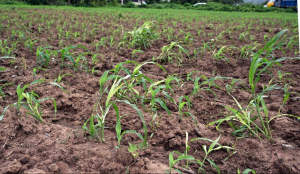
Cauvery Calling pushes agro-forestry for soil revival
The Save Soil-Cauvery Calling movement has facilitated the plantation of 13.4 crore trees and supported 2.6 lakh farmers in shifting to tree-based agriculture. Project leaders said on Friday that the initiative is now targeting the plantation of 1.2 crore saplings during 2026-27.
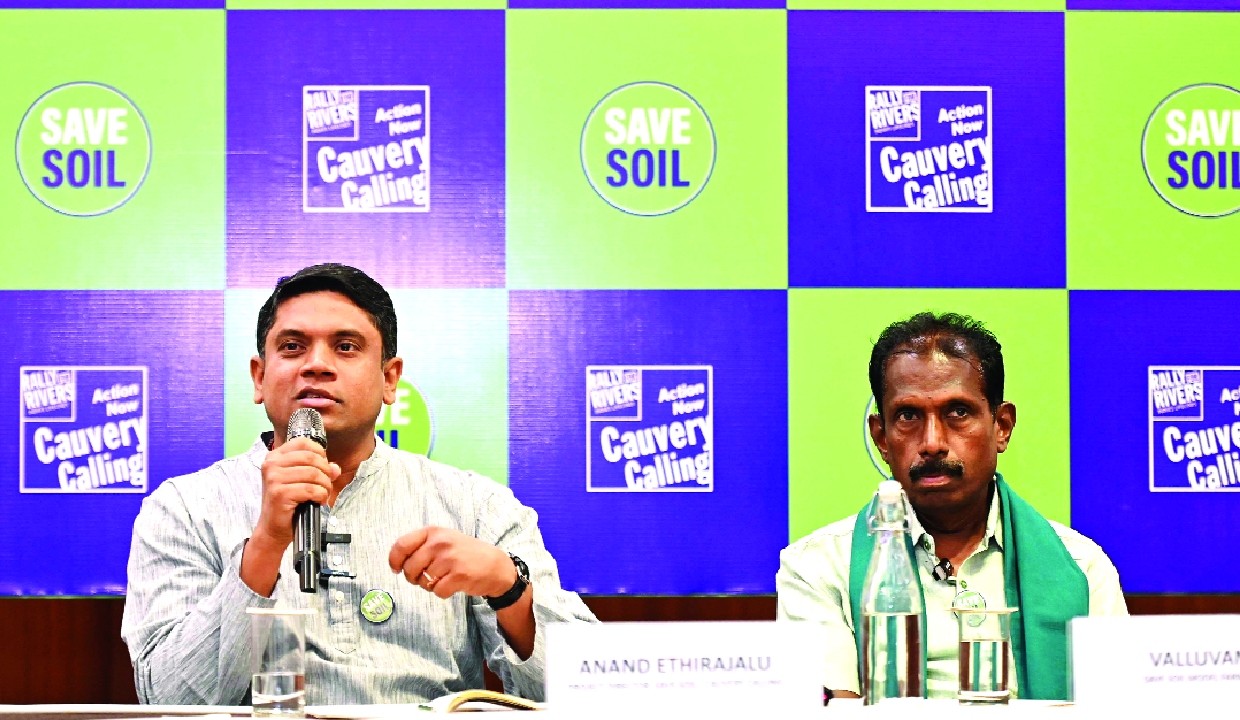
Addressing a press conference in New Delhi, Anand Ethirajal, Project Director of the Save Soil-Cauvery Calling, said the movement, envisioned by Sadhguru, seeks to revive the Cauvery River basin while improving farmer incomes through regenerative and agroforestry-based farming models.
“Thirteen crore trees are not just a number. What it represents is 2.6 lakh farmers who have permanently changed how they farm,” Ethirajalu said, adding that the shift from monoculture farming to tree-based agriculture could help restore river flows, improve soil fertility and secure rural livelihoods.
According to the organisation, the Cauvery River has lost more than 40 per cent of its water flow and nearly 87 per cent of its original tree cover in the past 70 years. The initiative aims to facilitate the plantation of 242 crore trees on private farmland across the Cauvery basin, which supports nearly 8.4 crore people.
Ethirajalu, while narrating his personal journey into agriculture, said his interest in farming began during a school project on food adulteration that made him question the quality of food available even to financially secure families. He later took up organic farming with his father on a five-acre plot in Tamil Nadu.
He said conventional plantation drives on public land often resulted in low survival rates and high maintenance costs, whereas agroforestry created an economic incentive for farmers to nurture trees as long-term assets. “Today, we are planting nearly 37,000 saplings every day,” he said, adding that the programme has recorded average survival rates of more than 72 per cent since 2013.
The movement currently operates large nurseries in Tamil Nadu, including what it describes as Asia’s largest single-site nursery in Cuddalore, and supplies 54 varieties of saplings through 53 distribution centres across Tamil Nadu and Karnataka.
Ethirajalu said high-value timber saplings, including teak, rosewood and mahogany, are provided to farmers at a subsidised rate of Rs 5, while fruit and flower saplings are supplied at Rs 10 each.
Speaking at the event, Valluvan, a UN-recognised farmer from Tamil Nadu, said regenerative practices such as minimal tillage, mulching and cover cropping had significantly improved soil organic carbon levels on his farm.
“I transformed my coconut monoculture farm into a multi-layered food forest with timber, pepper and fruit crops,” Valluvan said, adding that the methods reduced dependence on fertilisers and pesticides while increasing his farm income six-fold and making cultivation more resilient to droughts and floods.
Valluvan added that although he suffered some losses in the first few years of agroforestry, his business scaled in profits later. He mentioned that he lives comfortably with his family and was able to provide a good education for his children.
Additionally, the Cauvery Calling project continues to design training programs for farmers to share knowledge on tree-based agriculture. In parallel, the Save Soil Regenerative Revolution (part of the SS movement) has already reached 40,311 farmers, encouraging them to adopt regenerative practices.