Budget creates career pathways for youth across design, health, tourism
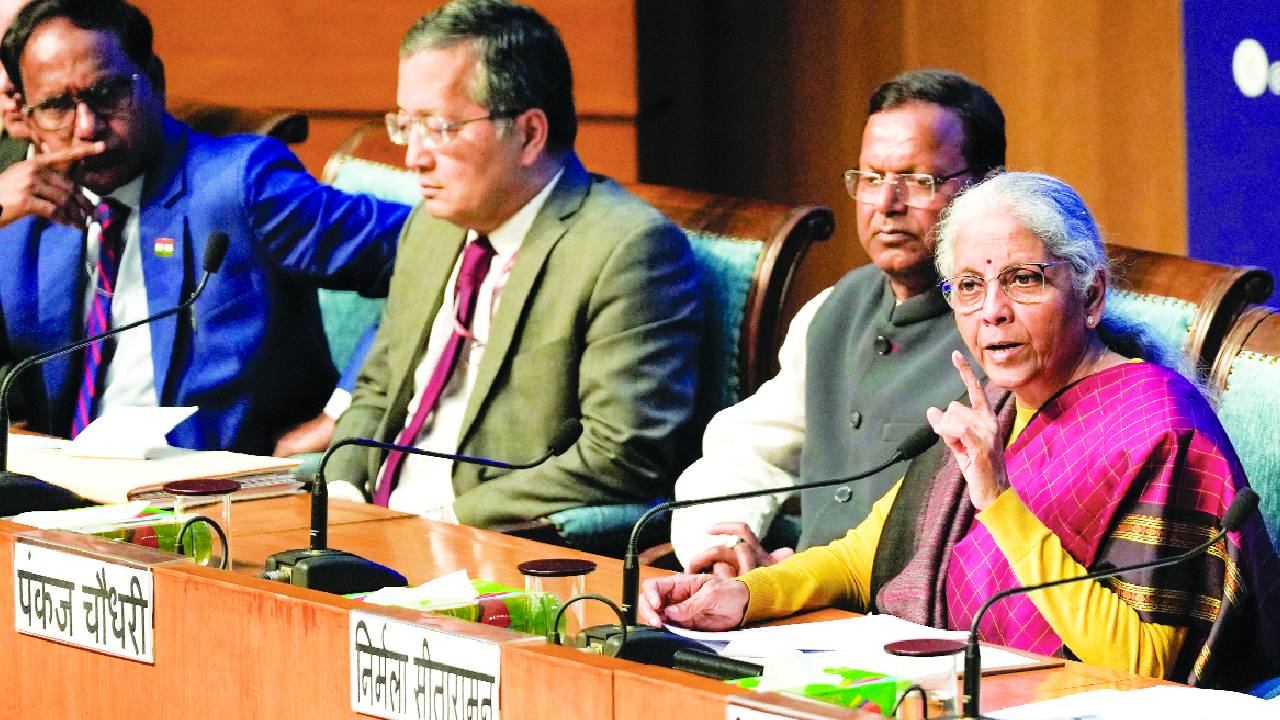
In her speech, Finance Minister Nirmala Sitharaman said that this Union Budget was “a unique Yuva Shakti-driven” one, and several innovative ideas that were shared with Prime Minister Narendra Modi during the Viksit Bharat Young Leaders Dialogue “inspired many of the proposals” in the budget. The areas that help the youngsters include higher education, professional skills, AI-driven initiatives, and even tax-related proposals.
In terms of education, Sitharaman focused on both new and modern themes that enthuse the Indian youth. For example, she talked about content creator labs across 15,000 secondary schools and 500 colleges. These will be under the aegis of the Mumbai-based Indian Institute of Creative Technologies, and prepare the students for entry into the animation, visual effects, gaming, and comics (AVGC) segment. AVGC, according to the finance minister’s projections, will require two million professionals by 2030.
She said that there was a shortage of designers due to the rapid expansion of the design industry. Hence, she proposed to establish a new National Institute of Design to boost design education, and development in the eastern region of India. It is normally literate youngsters, who enter the field, and the youth from the North-East States have a genuine and natural aptitude for design.
Apart from a National Institute of Hospitality, which will attract the youth, and be built by upgrading the existing National Council for Hotel Management and Catering Technology, will function as “bridge between academia, industry, and the Government.”
Five university townships are on the anvil, as per the Budget, which will be set up in the vicinity of “major industrial and logistic corridors.” Such zones will “host multiple universities, colleges, research institutions, skill centres, and residential complexes.Typically, in higher education STEM institutions, students need to study for prolonged hours, and work late at the labs. This causes inconveniences to the women students. Hence, the Government plans to build one girls’ hostel in every district.
Coming to honing skills, enabling the youth to enter new lucrative areas, and prepare the youngsters with AI skills, the finance minister proposed several initiatives. She focused on the services sector as a “core driver of Viksit Bharat.” A high-powered standing committee to facilitate ‘education-to-employment-and-enterprise’ will recommend “measures that focus on the Services sector.”
Apart from looking at areas such as growth, employment, and exports, the committee will specifically “assess the impact of emerging technologies, including AI, on jobs and skill requirement, and propose measures thereof.”
New skilled career pathways will be created in the future. These will include allied health professionals across medical disciplines to add 1,00,000 people over the next five years. Another 1,50,000 young and multi-skilled trained caregivers will form a part of an ecosystem that will encompass health segments like wellness, yoga, and operation of medical and assistive modern devices in the coming year.
Five regional medical hubs, in partnership with the private sector, will become integrated healthcare complexes, which will combine medical, educational, and research facilities to increase education and skilled job opportunities for the youngsters. “These hubs will provide diverse job opportunities for health professionals, including doctors, and allied professionals,” said Sitharaman in her speech.
A pilot scheme to upgrade the skills of 10,000 guides in 20 iconic sites will improve employment chances. The development of ecologically-sustainable trekking and hiking trails in select states such as Himachal Pradesh, Jammu and Kashmir, and Uttarakhand, apart from select locations in the western and eastern ghats, will offer world class experiences, and enthuse the youth.
“A National Destination Digital Knowledge Grid will be established to digitally document all places of significance, cultural, spiritual, and heritage. This initiative will create a new ecosystem of jobs for local researchers, historians, content creators, and technology partners,” said Sitharaman in her speech. Many of them are youth-oriented.
Even in taxation, there was a deliberate focus on the youth. For example, the finance minister reduced the tax collected at source on education, and medical purposes under the liberalised remittance scheme. To address practical issues of small taxpayers like students, young professionals, tech employees, and others, she introduced a “one-time 6-month foreign asset disclosure scheme… to disclose income or assets below a certain size.”
In cases where the taxpayer did not disclose the overseas income or asset, the limit is INR 1 crore, with a 30 per cent tax on the fair market value of the asset, or 30 per cent of undisclosed income plus another 30 per cent in lieu of the penalties. In cases, where income was disclosed, and tax paid, but asset acquired is not disclosed, the limit is INR 5 crore, with immunity from prosecution and penalty with the payment of a fee of INR 1,00,000.