Brazil’s India visit is a spectacle, but is it the right priority?
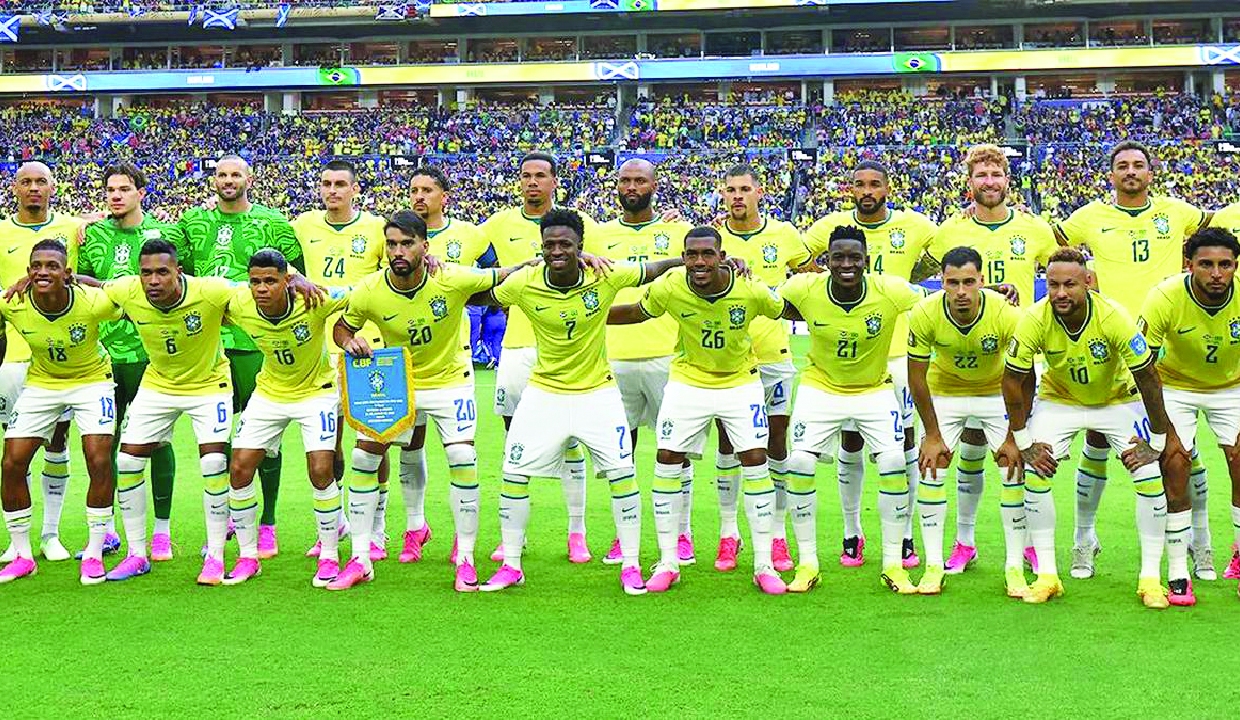
When Brazil step onto the field against India in Kolkata in the first week of October, Indian football will witness one of its most glamorous occasions. Five-time world champions, arguably the most celebrated national team in football history, will finally play on Indian soil in what promises to be a memorable evening for supporters.
For a country where generations have grown up supporting Brazil despite never having any geographical or cultural connection with the South American giants, it is an event of enormous significance. Kolkata, perhaps India’s most football-passionate city, is the ideal venue.
Yet beneath the excitement lies a question that cannot be ignored. At a time when Indian football is desperately trying to arrest its decline, is a high-profile friendly against Brazil really the priority?
India were scheduled to play in the inaugural FIFA Asean Cup that runs between September 24 and October 4 where they were drawn to face Indonesia, Malaysia and Singapore, ranked much closer to India’s 138th than 5th ranked Brazil. Due to this fixture clash with Brazil, the All India Football Federation has decided to withdraw the national team from the ASEAN Cup.
There is, of course, immense value in hosting a team of Brazil’s stature. Indian football has welcomed legends before. In 1977, Pele came to play with his New York Cosmos team in Kolkata. But in more recent times when legends such as Pele and Diego Maradona came, they were largely ceremonial visits. Rarely have Indian supporters had the opportunity to watch one of football’s greatest national teams actually play in India.
The closest comparison remains the 2011 international friendly between a full-strength Argentina and Venezuela in Kolkata. Lionel Messi was on the pitch, the stadium was packed and the atmosphere was electric. While Argentina dominated the game and Messi pulled the strings, even setting up the winning goal, it was clear to those who witnessed the game that it was not played at the same intensity as a competitive international. That is the nature of elite football today.
Any international friendly played during the European club season comes with obvious limitations. Players are released because FIFA regulations require clubs to do so, but their employers remain Europe’s biggest clubs. No manager or player wants to risk a serious injury in a fixture that carries little competitive importance.
That uncertainty becomes even more relevant when considering Brazil’s current squad. Although the Seleção disappointed at the 2026 FIFA World Cup by exiting in the Round of 16, they remain one of football’s biggest attractions. With Neymar no longer part of the national setup, Real Madrid forward Vinícius Júnior has become Brazil’s biggest global star. Given both Brazil’s immense popularity in India and Real Madrid’s enormous following, he would undoubtedly be the biggest draw for spectators.
But Real Madrid enter a season in which they are under pressure to reclaim both La Liga and the UEFA Champions League after two trophyless years. It is difficult to imagine the Spanish giants being particularly enthusiastic about one of their most valuable players going all out in what is effectively an exhibition match. Beyond the football, there is an even bigger issue.
What exactly is the long-term objective behind bringing Brazil to India?
Reports suggest the event could cost in the region of Rs 60-70 crore. Some amount of that expenditure will undoubtedly be recovered through sponsorships, broadcasting revenue and ticket sales. But Indian football has lived with limited financial resources for decades, and every major expenditure naturally raises questions about priorities. Could the same investment have produced greater long-term returns if channelled into grassroots football, coaching education, youth academies, infrastructure or player development? These remain legitimate questions.
It is equally important that the match remains accessible. While Kolkata deserves an occasion of this magnitude, they must ensure that the game’s traditional supporters are not priced out, those who’ve followed Brazil and Indian football for decades.
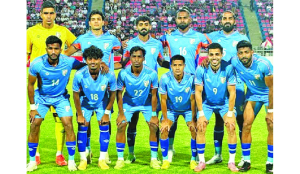
India are currently ranked 138th in the FIFA rankings and, more importantly, failed to qualify for the next AFC Asian Cup. Those realities cannot be masked by one glamorous evening against Brazil. The national team’s immediate objective should be climbing the international rankings and becoming consistently competitive in Asia once again.
None of this is to suggest that hosting Brazil is a mistake. On the contrary, it is a sign that India, one of the world’s largest football-consuming markets, has the ambition to think big. The country should aspire to host football’s biggest names.
If Brazil’s visit is part of a broader vision that includes sustained investment in grassroots football, stronger youth development and regular exposure to top-quality international opposition, it could prove to be a landmark moment. If, however, it ends as a standalone spectacle, remembered only for packed stands and television ratings, Indian football may have celebrated a historic occasion while overlooking the far greater task that lies ahead.
The author is a sports management consultant with over a decade of experience in sports promotion and development. His work across both the private and government sectors gives him a well-rounded view of India’s sports ecosystem; Views presented are personal.