Blasé Capital stock-shock therapy
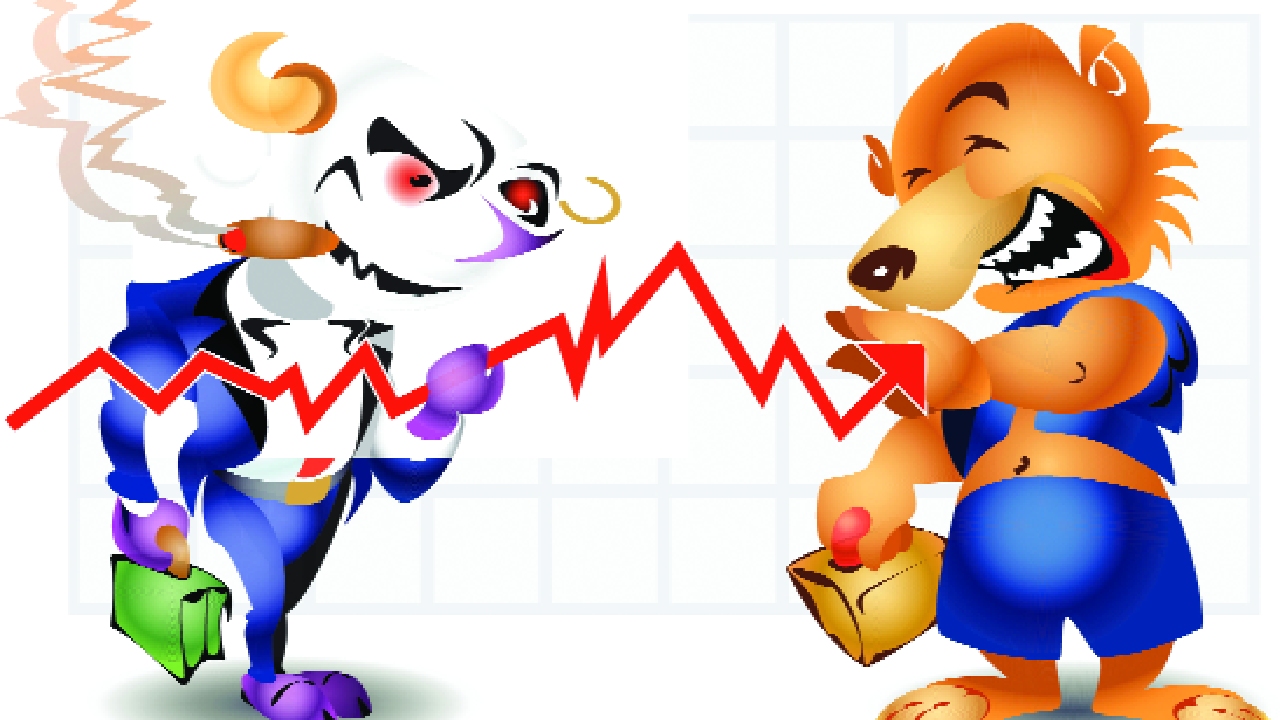
Yesterday, the Sensex, or the Bombay Stock Exchange index, ended up nearly 1,400 points, or almost 1,000 points higher than its intra-day low. It opened 700 points above the previous day’s close, dipped by almost 200 points, traced its upward curve, before it settled down almost 400 points from the intra-day high. The trajectory ostensibly seems to mirror the rapid sequence of geopolitical events, and statements from various sides in the Iran war, but it seems to defy some logic by adding almost two per cent in the end. The topsy-turvy movement reflected the chaos and confusion, but one is not sure why it ended in the green. There is a possible theory. The Sensex is beginning to latch on to any bit of good news, even if it is denied later, and does the opposite at the onset of bad news, which is reversed later. It is as if the dazed investors are being coerced by stock-shock therapy.
One of the major factors, contend experts, for the bull push, or rather pull, was due to the statement by the US president, Donald Trump, which stated that he had extended the deadline for Iran to reopen the strategic and crucial Strait of Hormuz to restart global crude oil supplies. After going back on a 48-hour ultimatum that warned against brutal strikes on power plants, he gave a five-day reprieve. In addition, he maintained that the US diplomats were holding talks with a “respected” Iranian leader, and Iran was interested in a “deal.” Pakistan added a wrinkle, and stated that it would possibly host the bilateral peace talks between the US and Iran. Asian stocks, including the Indian ones, followed the American counterparts the previous night. This showed that Trump was distancing from the war cries, and resorting to peace pipes, as the war shows no signs of ending.
However, after the five-day reprieve statement, Iranian sources dubbed it as fake news, and said that no talks were in progress. Indeed, the fighting continued, as Iran bombarded a few targets, Iran did the same, the US missiles took to the skies, and there was news that a Shia militant group, which supported the Iranian regime, was attacked, and its leader killed. One of the US officials clarified that the five-day window was to not attack Iran’s power plants, as claimed in Trump’s 48-hour ultimatum, but the attacks on non-energy targets will continue. It was clear that there were no signs of peace talks. Pakistan claims had a logical base but
lacked credibility. Although it was a friendly zone for talks, Pakistan was at war with Afghanistan. Indeed, Pakistan sources had warned that it would nuke India if someone interfered in its border war. But the Sensex believed the peace talks, and Indian equities followed the rise in American stocks the previous night.
Global crude prices reflected this off-on statements about war and peace. They came down sharply below $100 a barrel, and hovered around $90, down below $100 for the first time in several weeks. But they went up again to over $100. Obviously, there were fresh fears and concerns about supplies through the Strait after Iran denied Trump’s statements, and the battles continued in the Middle East. But one must say that oil has shown a stubbornness in the recent past. After an initial rise to $120, and fears of $150-200, including Iranian claims that it will become $200, the price has remained around $100. Gold was down for the nth day as the war showed no signs of de-escalating in the future. The downtrend in both the bullion and equities, as with other asset classes, except possibly bonds, is a mystery that few experts can explain. Normally, in crises and periods of tensions, gold goes up as a hedge.
Sensex possibly missed another domestic cue, as it became engaged with what was happening in the US and Iran. According to a media report, “The flash India Composite Purchasing Managers’ Index (PMI), compiled by S&P Global for HSBC, fell to 56.5 in March (2026). This was significantly below the Reuters poll median estimate of 59, and lower than February’s final reading of 58.9, which had been expected to remain largely unchanged…. The manufacturing sector was hit the hardest, with its PMI
dropping to a four-and-a-half year low of 53.8 from 56.9…. The services sector, which makes up the largest share of India’s GDP, also showed signs of slowing with its PMI slipping to 57.2 from 58.1.” The figures indicate a loss of economic-manufacturing momentum, and “underline the potential downside risks to both India’s growth outlook, and global economy.” In the last quarter, which ended months before the Iran war, India’s growth came down from an unusually-high 8.4 per cent to a still-unusually-high 7.8 per cent.
However, what is pertinent is that economists and rating agencies are quickly scaling down the growth in India, and other nations. From 6.7 per cent annual estimates before the war, India’s figure is down below six per cent. This reflects a wiping out of 0.5 per cent within a few weeks. If the war continues, the figure may dip further. Combined with the falling rupee, high inflation, and shortages in crucial products, the economy may go for a spin, even as it faces other challenges.