Blasé Capital SPRING SURPRISES
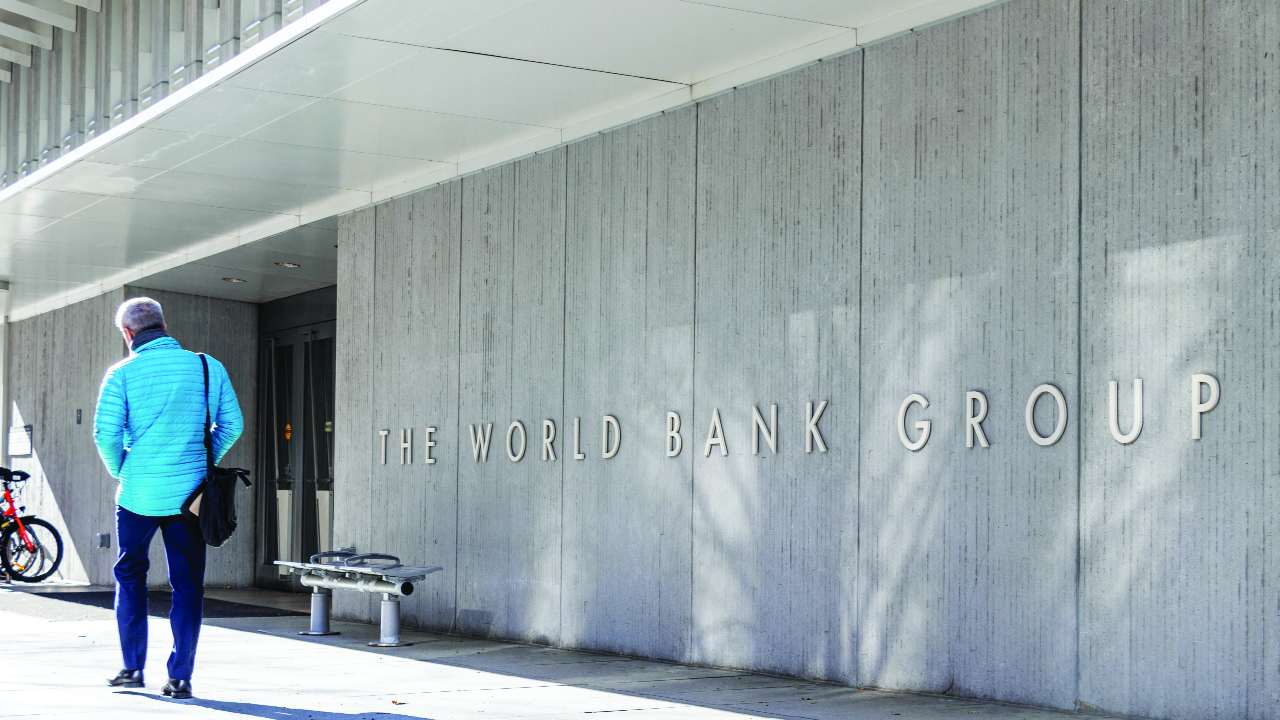
As the global finance-related officials meet this week for the spring meetings of the World Bank and International Monetary Fund (IMF), the focus will be the war, and its economic consequences. The arguments, debates, and discussions will revolve around global growth, inflation, interest rates, shortages, disruptions, and currencies. Yet, there are forces, both internal and external, which wish the two main agencies to talk about other issues that are as important, and more crucial for the long term. The war will get over within weeks, a month, or months, and the economies will get back to normalcy within months, a year, or a couple of years. Yet, as the World Bank president, Ajay Banga, put it, jobs will possibly be the most critical issue over the next 10-15 years. Activist agencies like Oxfam, which recently released a report on IMF’s tax advisories to nations, feel that inequality is what will define the world over the next decade or two, and will make or break it.
Banga estimates that 1.2 billion people will reach the working age in the developing nations in the next 10-15 years, and demand adequate and decent-paying jobs. He feels that based on the current growth trajectories in these nations, they will not be able to generate more than 400 million jobs. Thus, 800 million, or two-thirds of the new workforce will either remain jobless, or be employed in something hateful, painful, and less-paying. It will create public dissent, anger, desperations, frustrations, jealousies, stifled ambitions, even crime. Even more worrisome, the world’s attention is on the short term due to the pandemic, Russia-Ukraine war, Iran war, and trade and tariff battles. Hence, he wants the officials to be engaged with the war, but think seriously about the longer horizon, and issues like jobs. Apart from this, he talks about access to basic amenities like clean water, and electricity in the developing and poor nations. “We have to walk, and chew gum at the same time. Short-velocity cycle is what we are going through. Longer velocity is this job's circumstance,” he said in an interview.
According to the United Nations, more than 100 million people were displaced worldwide in 2025, and were obviously without jobs. These are in addition to the newcomers, who enter the working age. Add to them the mass layoffs across sectors due to tech disruptions. The looming scenario is one of doom as far as employment is concerned. Yet, Banga is confident about the future, and feels that the agencies like the World Bank and IMF, along with experts, will find solutions. “I do not know if you can ever get to a situation of utopia, and everybody is taken care of in the coming 15 years. I would doubt that is going to happen, but if you do not do it, the implications are quite severe in terms of illegal migration, and instability,” he said. One needs to talk urgently to officials and businesses in the emerging markets and poor nations on how they can create local jobs, and those elsewhere.
Oxfam feels that one of the solutions may be for the rich nations, and even middle-income ones to tax the wealthy progressively, i.e., more tax as wealth grows or on higher wealth. In its recent report, it talks about the moves to build a global consensus towards effective and internationally-coordinated taxation of high net-worth individuals. There was a suggestion of a global two per cent minimum tax on billionaires and centimillionaires to raise $300-390 billion. This money can be used by the nations to create jobs, remove inequalities, and raise the incomes of the poor and low-income groups. At the 2024 Spring Meetings, a senior IMF official said, “Many times, one hears calls for taxation targeting the super-rich; one sees calls for wealth taxation. Our position at the Fund is that taxing the returns from wealth is generally less distorting, and more equitable than a wealth tax.” While the IMF has not endorsed net wealth tax, it has displayed a less hostile attitude towards it, and admitted that “there can be a case for using a net wealth tax to complement capital income taxes.”
Yet, in practice, Oxfam found troublesome insights. IMF’s overall global tax advice is “slightly regressive globally, i.e., when putting aside the income level, and location of countries examined. First, the Fund’s policy advice in these years (2022-24) has focused slightly more on direct tax measures, i.e., those that target income (such as personal income taxes, corporate income taxes, and capital gains taxes) and wealth (property taxes and net wealth taxes). In total, 41 per cent of IMF tax advice concerns direct taxes, while advice on indirect taxes (such as consumption taxes and carbon taxes) accounts for around 33 per cent of overall advice. Several factors may play into this, including that (partly due to IMF advice and conditionality) value-added tax is now widespread across the globe. Nevertheless, tax advice is still characterised by a push for regressivity, i.e., shifting the tax burden away from the wealthiest in society at the expense of everyone else.”