Blasé Capital black in RED SEA
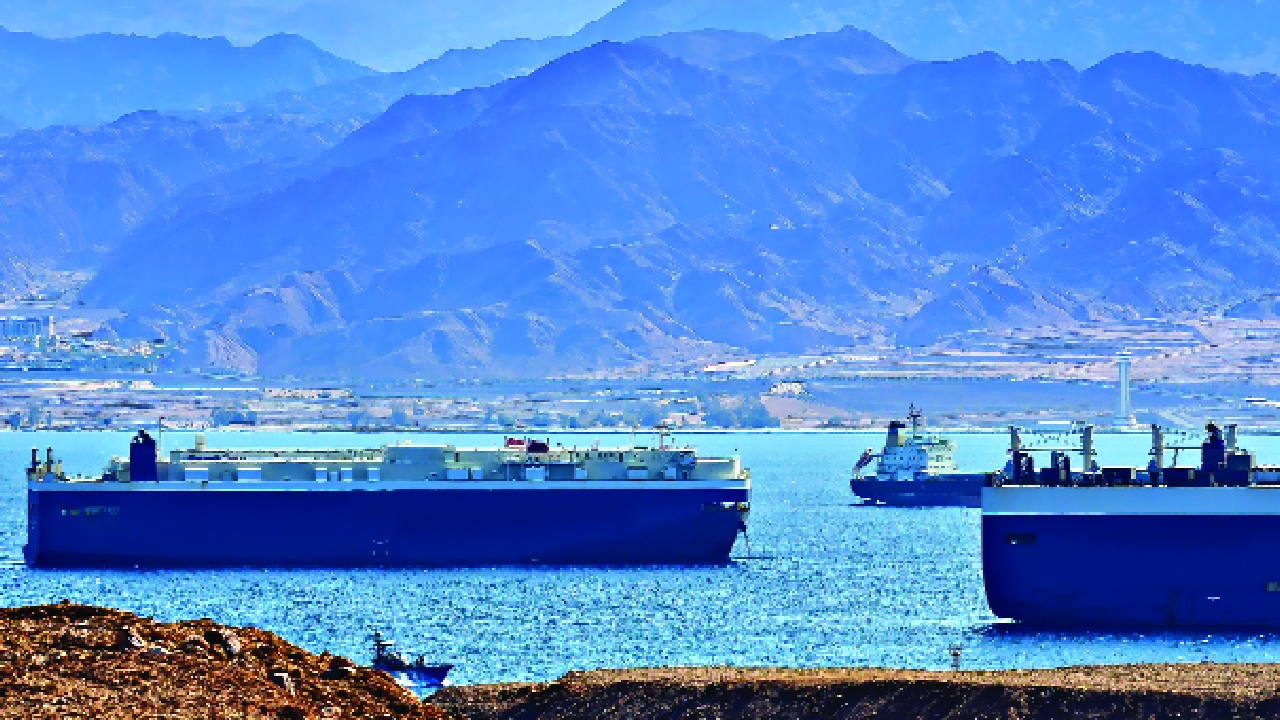
The Strait of Hormuz in the Middle East remains as twisted as ever. The US President Donald Trump told his advisors that he was open to ending the Iran war, even if there was no agreement on the opening of this strategic strait. It should have boosted sentiments. It only restrained global crude prices from rising, although several asset classes behaved violently, with equities up in the US, and stocks down in India. Despite the central bank’s pressure tactics, the rupee took a beating. The markets have heard similar good news from Trump several times. They now await actions, not talk, ground activity, not online texts. Hence, the global attention is still on the Strait, and its future, and whether oil and gas (liquefied one) will lurch back to normal over the next few months. However, the fortunes of the Strait are linked to the Red Sea.
Media reports indicate that “Iran is actively encouraging the Houthis (Iran-backed rebels in Yemen) to prepare for a renewed campaign against shipping in the Red Sea." The objective to expand and enhance the oil-linked leverage that Tehran enjoys against Washington and Jerusalem. If both the Strait and Sea are effectively shut, the oil and economic crises will escalate to another level, and force the hands of Trump, who anyway seeks a quick exit from the Strait. According to media reports, “The Houthis have already shown their willingness to escalate. Their missile launches towards Israel for the first time during the ongoing conflict… marks a symbolic entry…. More importantly, they have warned that they could target vessels passing through the Bab el-Mandeb Strait, a narrow maritime choke point linking the Red Sea to the Gulf of Aden.” Two chokepoints, two straits under siege, and the crisis may blow up exponentially, and drag the US in its war waves.
What is crucial to remember is that the Houthis have done this successfully in the past, albeit before the Iran war. Between 2023 and 2025, according to independent figures, they attacked more than 100 ships, and forced firms to reroute the vessels around South Africa. It raised costs, increased journey time, and spiked insurance. This is exactly what has happened in the case of Strait of Hormuz, except that in this instance the added complication, the major one, is supply disruptions to almost a fifth of the crude oil supplies. Indeed, at present, the Red Sea has emerged as an alternative route to ship oil from Saudi Arabia, which has ramped up production and shipments through a pipeline to a port in the Red Sea. If 25 per cent of oil passes through the Strait of Hormuz, 15 per cent of maritime trade, including oil, passes through the strait in the Red Sea. A double choke point may squeeze Trump’s arm, and possibly other more dangerous places.
For Trump, the saving grace is what he did last year, and we know it well. America launched sustained air strikes against the Houthis and Yemen in 2025. The latter’s economy is still reeling under the shock, and the Houthis are still to regroup to get back to their original strength. After what happened to Iran, although Iran countered, and fought back like a wounded tiger, the Houthis are cagey and doubtful. They want to help Iran, and the attacks on Israel prove it, but they do not wish to target American or Sadi assets, and prod another mad tiger. At present, the US and Saudi Arabia believe that the Houthis will not go that far, and this is what they have communicated to the scared Europeans. But things are changing fast in this fast-changing war. Actions, decisions, texts, and statements are getting garbled. The Houthis can lose grip over the situation, and get entangled in a new sub-war as the messages get lost in translation, and smoke-and-fire.
According to officials, who spoke to a media agency, “The longer the US-Israel war against Iran goes on, the more likely the Houthis are to target the Red Sea.” This, according to the agency, “creates a ticking clock dynamic, where prolonged conflict increases the probability of a second shock.” Even the attacks are not required. Mere threats by the Houthis, and small actions will terrorise the world of oil, and the Red Sea may turn black without changing its colour. Shipping firms, nations, and insurance firms will reassess their options at the mere whiff of another threat, and oil markets may boil over. The global prices, which have steadied due to regular statements of peace, followed by acts of war, may lose their patience, and skyrocket. If oil reaches $150 a barrel, it will be a different ball game. Economies will brace themselves for a wild ride. So will the policy-makers.
For India, the problem is acute, as apart from the Strait of Hormuz, the Red Sea and Suez Canal handle a significant portion of trade with Europe. If the Middle East trade is stalled due to Hormuz, and European one due to the Red Sea, New Delhi will be in grave trouble. “In effect, India would be hit on several fronts, rising import costs, disrupted export routes, and oil prices rising further.”