Blasé Capital ALL THAT GAS
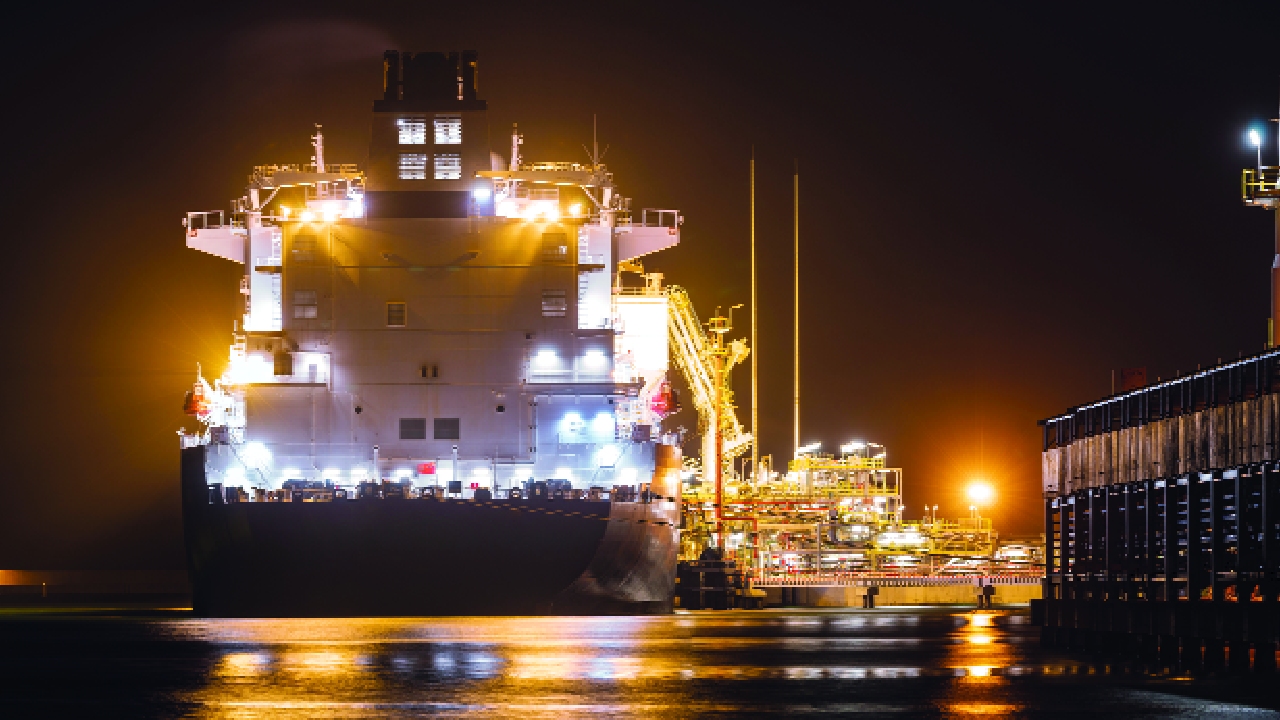
A week ago, the largest terminal for liquefied natural gas (LNG) in the world, Qatar’s Ras Laffan, was brutally attacked by Iranian missiles and drones. Fires raged across the massive complex, which covers nearly 300 sq km, or the size of a large city, according to reports. Within hours, millions of dollars’ worth of investments vanished in thick and huge puffs of smoke and flames. The terminal accounted for a fifth of LNG’s global supplies, and nearly 17 per cent of the nation’s gas infrastructure. Qatar declared force majeure, or an inability to supply the contracted gas to buyers due to factors beyond its control.
Saad Sherida al-Kaabi, CEO, QatarEnergy, which owns the terminal, was categorical when he claimed that global supplies may be impacted “for up to five years.” It may take years to restore the terminal, and get it back to the original operational strength. The problem, according to experts, is that LNG is a different container than a barrel of crude oil. It is a complex structure, which is expensive to build, and as expensive to maintain, and repair. Ras Laffan involved investments of tens of billions of dollars. Hence, the technology and money needed to take care of the war-related damages may take years.
In addition, there is another complexity. The gas fields in Qatar and Iran are linked through an underground system, and are part of the “same massive geological structure.” Together, they form the world’s largest natural gas reserves, which are separated by territorial borders. Hence, more attacks on Iran’s energy facilities, and oil and gas reserves, may further impact future supplies from Qatar. If the US president, Donald Trump, sticks to his original threat to blow up the entire gas field in Iran, there are repercussions. But he has backtracked a bit, although his 15-point peace plan was rejected by Iran.
Possibly, the most affected consumer nations of Qatar’s LNG are in Asia, and include India, China, South Korea, and Pakistan. There are a few European nations that depend on it, and include Italy, Poland, and Belgium. If Ras Laffan stays inactive, or out of the global supplies for years, these nations will feel the pinch years after the war is over. They will need to access additional supplies of crude oil, which is in short supply due to the siege in the Strait of Hormuz, but can be restored more quickly once peace reigns. Russian, American, even Venezuelan oil may become crucial, even as the Gulf hikes post-war supplies.
In the interim period, coal may emerge as the dark horse, the diamond among the energy sources. As gas supplies falter, the premium on it increases, and “some nations will probably go back to using coal. This may especially be the case with India, Pakistan, Bangladesh, and a few other Asian countries that are very sensitive to high fuel prices.” India’s annual coal production crossed a billion tonnes for the second consecutive year, and policy-makers have urged the state-owned near-monopolist to look for ways to further increase supplies.
“Some European countries may even see coal as a cheaper option. Following the events in the Gulf, this ‘spark spread’ (the profit margin from gas-fired electricity) has fallen, narrowing the gap in Europe with the ‘dark spread’ (profit from power using coal),” explains a media report. There are talks of reopening closed-down coal-based plants, both in Europe and America. The coal-related positives will play out in the same manner with alternative fossil fuels like shale gas, and shale light oil, which are available in abundance in the US.
For economic and business reasons, the price hikes in the case of gas are more significant than those in coal in the recent past. Gas prices, according to some estimates, have more than doubled. In comparison, coal prices are up, “but not as much.” Of course, this will imply pushing the entire ‘green’ narrative into the background, at least temporarily. Similar arguments cropped up in the aftermath of the Russia-Ukraine war, when Europe faced a gas supply crisis from Russia. Then too, there was talk of reopening coal-based units, and enhance the use of coal.
Clearly, consumer nations will need to adopt a flexible attitude towards energy security, and energy sources. Long-term strategies related to green energy, and Climate Change, may take a back seat, as the policy-makers grapple with immediate concerns related to shortages. In India, even as the policy-makers claim that there is no shortage of fuel and liquefied petroleum gas (LPG), rules were changed to increase the period for buying a new gas cylinder from three weeks to five weeks. Apart from restrictions on commercial users, such changes enhance the panic situation, and create fears that push consumers to hoard.
According to a media report, “Unlike oil, the LNG shortage has turned from a logistical problem, the closure of Strait of Hormuz, into a structural one. The damage to the Qatari production facility may take several years to repair. This means that gas prices… are likely to remain elevated for some time.” Gas-related economic and business pains will continue despite the ‘coal’ pills. Energy supply chains may forever undergo changes, like logistics did after the pandemic.